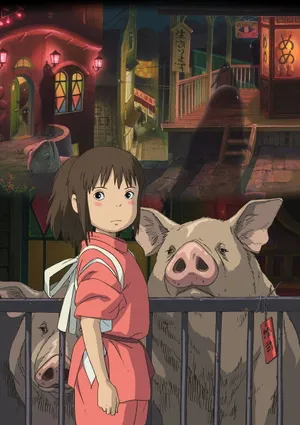
Ten years is long enough for a cultural event to calcify into mythology, and mythology is the enemy of honest criticism. Your Name (2016) — known in Japan as Kimi no Na wa — has accumulated enough of both to make clear analysis genuinely difficult. The film grossed over $380 million worldwide against a production budget of roughly $1.5 million. It dethroned Spirited Away (2001) as the highest-grossing anime film in Japanese history before being surpassed by Demon Slayer the Movie: Mugen Train (2020). It played in multiplex chains from Seoul to São Paulo. At its theatrical anniversary re-release, audiences who were twelve years old in 2016 are returning to watch it again, this time knowing exactly what is going to happen to Mitsuha and Taki — and crying harder for it.
None of that is mythology. All of it is evidence. The question worth asking at ten years is not whether the film was good — it was — but what kind of rupture it actually caused, and whether the industry that inherited that rupture has done anything meaningful with it. The honest answer is more uncomfortable than either the celebrations or the contrarian backlash tend to acknowledge.
What Shinkai Had Already Built, and Why It Wasn't Enough
Makoto Shinkai did not arrive in 2016 from nowhere. He had spent fifteen years constructing a very specific cinematic grammar — hyper-saturated light, the physical ache of distance, romantic longing rendered through meteorological precision — across films like The Place Promised in Our Early Days (2004), 5 Centimeters per Second (2007), and The Garden of Words (2013). Those films were critically admired, modestly distributed, and commercially marginal outside of Japan. They built him a devoted international fanbase while keeping him firmly inside the category labeled "festival anime" — respected, slightly elevated, fundamentally niche.
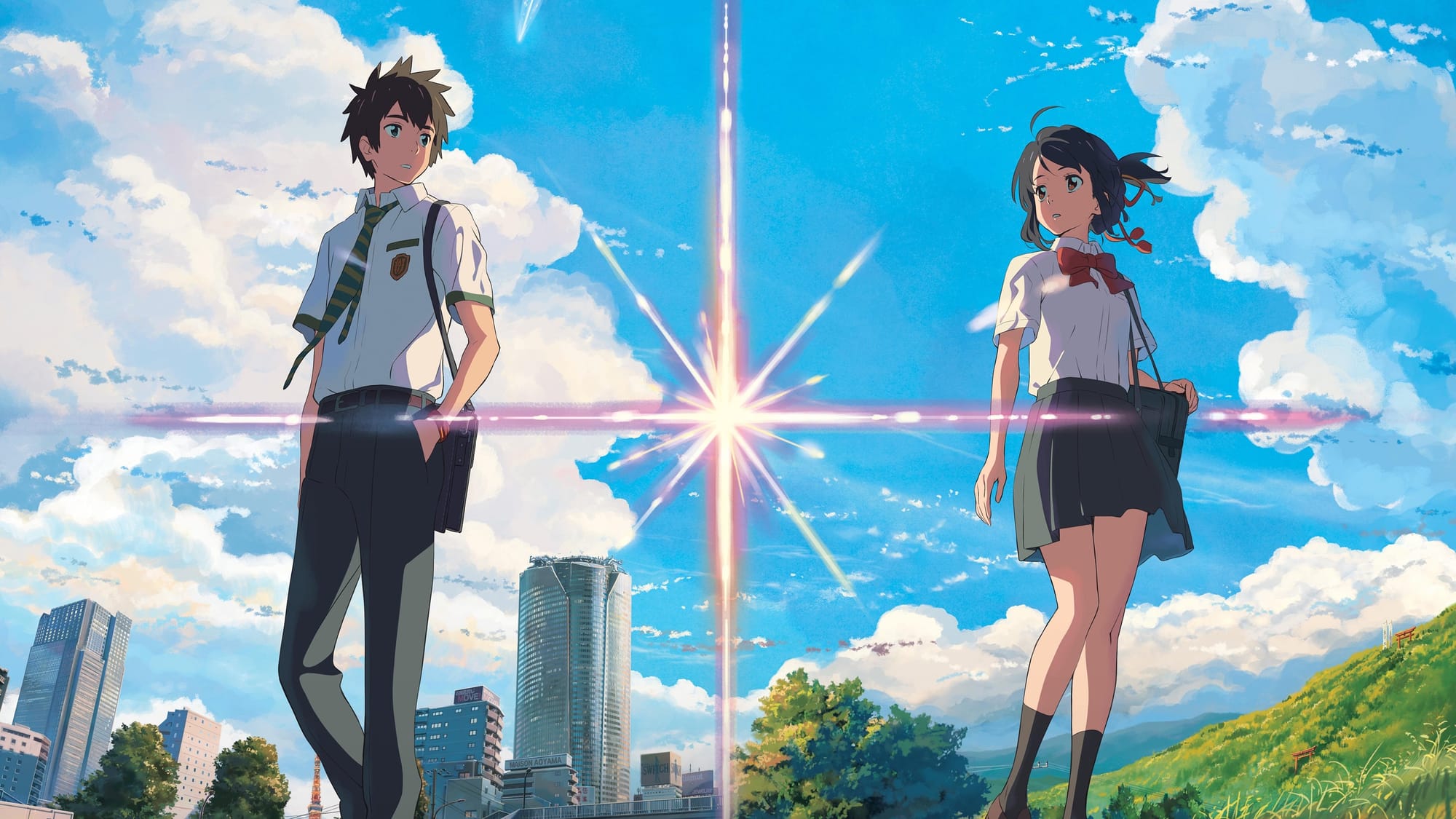
What changed with Your Name was not primarily aesthetic sophistication. 5 Centimeters per Second is, frame by frame, a more exacting work. What changed was structural ambition married to emotional accessibility: Shinkai grafted his signature sensory language onto a body-swap romantic thriller with clean genre propulsion, stakes legible to a global audience, and a third-act pivot — the comet, the diverging timelines, the anguished search across years neither character can fully account for — that hit the precise intersection of spectacle and grief that mainstream cinema had been trying to locate inside animation for a decade without finding it.
He made a film that could be described in a single sentence to someone who had never seen anime, and then confounded every expectation implicit in that description once the lights went down. That is not a small achievement. It is, in fact, a remarkably rare one.
The Ceiling That Was Actually a Floor
The conventional narrative positions Your Name as a ceiling-shattering moment — proof that anime film could compete at the global box office without the institutional weight of Studio Ghibli behind it. That framing is accurate as far as it goes. But it misses what made the rupture structurally consequential: Shinkai did not just raise the ceiling. He established a new floor, and the industry immediately began treating that floor as the only permissible surface to build on.
The years following 2016 produced a wave of anime films organized — sometimes consciously, sometimes by market gravity — around the aesthetic and structural coordinates that Your Name had made legible to global distributors. Stunning environmental animation. Young protagonists caught in a cosmically-scaled metaphysical premise. RADWIMPS on the soundtrack. The romantic register calibrated to the frequency of beautiful, productive sadness. Some of those films were genuinely excellent. Weathering With You (2019), Shinkai's own immediate successor, was a more politically reckless work than Your Name — its ending deliberately refuses the resolution audiences expected — and it grossed $193 million while being discussed almost exclusively in terms of how it compared to its predecessor.
That is the nature of the threshold effect. Once a work establishes coordinates, everything produced in its vicinity gets measured against those coordinates rather than against its own stated ambitions. It is not a failure of criticism. It is a structural consequence of what Your Name made possible and, simultaneously, what it made inevitable.
The Door That Opened and the Room Behind It
What Your Name opened was not merely a market. It opened a proof of concept that the global theatrical audience was willing to engage with anime film on emotional terms that did not require the viewer to already be an anime fan. This was the genuinely new information. Studio Ghibli had demonstrated that anime could produce canonical children's cinema. Your Name demonstrated that anime could produce canonical adult-adjacent romantic cinema — the kind of film that couples see on opening weekend, that people recommend to coworkers, that gets reviewed in general-audience publications as simply a film rather than as a curiosity from a foreign animation tradition.
The room behind that door, however, turned out to be more complex than anyone anticipated. Theatrical anime did scale. Jujutsu Kaisen 0 (2021) grossed over $196 million worldwide. Dragon Ball Super: Broly (2018) shattered franchise records. One Piece Film: Red (2022) became one of the highest-grossing anime films of all time. But these were franchise accelerants — films that extracted and concentrated the existing energy of established IP rather than building new audiences from first principles. They proved that anime film could function as a franchise delivery mechanism at global scale. They did not prove — and did not attempt to prove — that anime could sustain a market for original theatrical narratives the way that Your Name had suggested was possible.
The distinction matters. Franchise films confirm existing fans. Original films recruit new ones. Ten years after Your Name, the pipeline for original anime theatrical narratives with genuine global distribution remains thin. Shinkai himself continues to fill it, almost single-handedly, with Suzume (2022) completing a loose thematic trilogy and grossing $322 million worldwide. Mamoru Hosoda has contributed Belle (2021). Naoko Yamada's A Silent Voice (2016) — released the same year as Your Name and often unfairly subsumed into its shadow — demonstrated a completely different register of emotional precision. But the list is not long, and the gap between what was promised by 2016 and what the industry has delivered into that promise is significant.
Shinkai's Actual Achievement, Separated from Its Reception
The anniversary re-release invites a re-evaluation of the film itself, stripped of its cultural weight. What holds up is more interesting than either the devotees or the skeptics tend to admit.
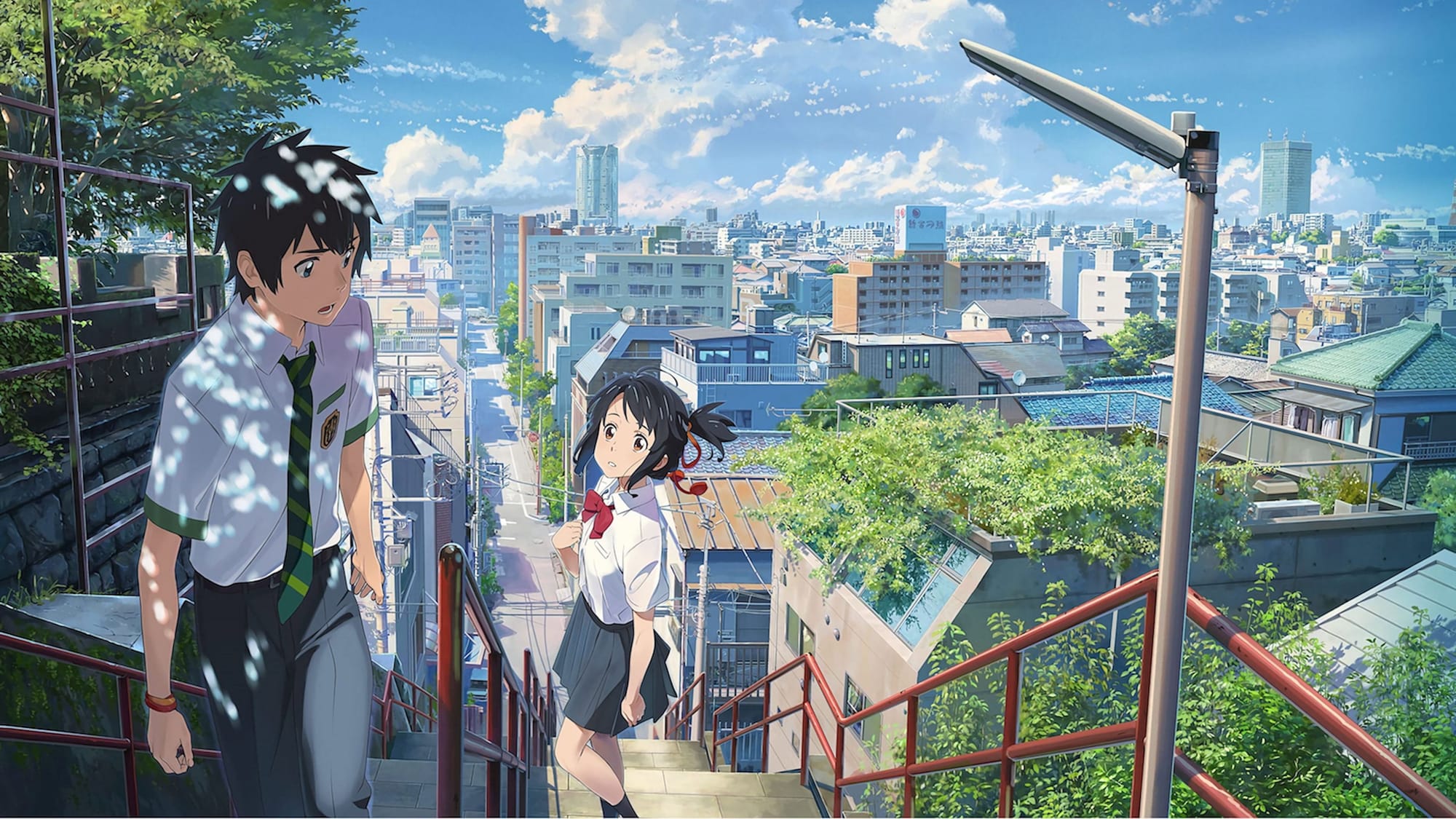
The body-swap mechanic, borrowed freely from decades of Japanese popular fiction, is not where the film's intelligence lives. The intelligence lives in the film's understanding of what it means to know someone through the evidence they leave in your life rather than through direct experience of them. Mitsuha and Taki do not fall in love with each other. They fall in love with the traces of each other — the handwriting in a journal, the rearranged room, the inexplicable muscle memory of a body that has been somewhere your conscious mind cannot access. This is a genuinely unusual romantic premise, and Shinkai executes it with a restraint that his reputation for visual excess sometimes obscures. The famous crater-lake sequence, where the two protagonists finally occupy the same moment in time as the comet falls, is constructed with the precision of someone who knows that maximum emotional impact comes not from extending the moment but from cutting it short.
The film's third act, often described as a structural weakness, is actually a deliberate sacrifice. Shinkai trades internal logic for emotional amplitude and is transparent about the trade. The timelines do not fully cohere under scrutiny. They cohere under feeling, which is a different kind of coherence and one the film earns through everything it has constructed in the preceding eighty minutes. Whether that trade is aesthetically defensible is a reasonable debate. What is not reasonable is pretending the trade was made accidentally, or that a film of this technical precision is guilty of carelessness.
What Has Not Come Through the Door
The most searching question raised by the tenth anniversary is not about Your Name itself. It is about what the industry chose to do with what Your Name demonstrated.
The global appetite for original anime theatrical narratives — not franchise extensions, not IP delivery mechanisms, but films that propose new emotional and narrative territory — was real in 2016, and there is no credible evidence it has disappeared. What has happened instead is that the production and distribution infrastructure surrounding anime film has consolidated around the safer categories: franchise amplification, sequel delivery, the reliable monetization of existing fan communities. These are rational economic decisions. They are also, cumulatively, a failure of nerve.
The directors who could occupy the space that Your Name identified — filmmakers working in the register of original theatrical narrative with genuine crossover potential — are not absent from the industry. They exist. They make films. Those films frequently struggle for distribution outside Japan in the way that Shinkai's pre-2016 films struggled, as though the industry absorbed the lesson of Your Name's success without absorbing the mechanism that produced it: a filmmaker with a fully formed aesthetic vision, a script built for emotional impact rather than IP recognition, and the institutional trust to make the film without franchise scaffolding.
Your Name was not a fluke of marketing or timing, though both helped. It was the consequence of a director who had spent fifteen years building toward a moment of synthesis. The lesson is not that anime film can be commercially successful at global scale. The lesson is that it can be commercially successful when a director is given the space and time to build toward something that only they could have made. That lesson is simple to articulate and apparently very difficult to institutionalize.
The Threshold, Held Open
A threshold is only a threshold for the first person who crosses it. For everyone who comes after, it is just a door — already open, already assumed, already incorporated into the architecture. Ten years on, the door that Your Name opened is still there. The question is not whether anime cinema can return to the side it occupied before 2016. It cannot. The question is whether the industry will continue to stand in the doorway admiring the view, or whether it will walk through and build something on the other side.
Mitsuha and Taki spend most of their film searching for a name they cannot remember, reaching for a person they cannot quite locate in time. The industry that inherited their film has been doing something similar — reaching toward the proof of concept that Your Name provided, unable to fully close the distance. The tenth anniversary does not resolve that. It measures it. And the measurement, honestly taken, reveals a gap that no amount of anniversary re-release sentiment can paper over — and that the next ten years will either close or confirm as permanent.
The film was always about the terror of forgetting something important just as you are reaching for it. It turns out the industry took that theme rather more literally than Shinkai intended.