On October 19, 2026 — the exact date that marks ten years since Yuri!!! on ICE first aired on TV Asahi — Crunchyroll's Anime Nights program screened the first five episodes of the series in select theaters across the United States and Canada, for one night only, at seven o'clock local time. Tickets were on sale. Fans showed up. And the promised film — Yuri!!! on ICE the Movie: Ice Adolescence, announced in April 2017, delayed, revised, delayed again, and finally cancelled outright in April 2024 — was nowhere in sight. What arrived instead was something older and more honest: the original twelve episodes, the complete and singular story, the show that made the film feel necessary in the first place.
 Official teaser
That tension is the whole subject. A theatrical anniversary built not on expansion but on repetition. A franchise that generated enormous cultural energy and then, for seven years, pointed that energy at a sequel that would never arrive. The one-night screening is not a consolation prize, exactly — but it is a document of what happens when an incomplete franchise is forced to reckon with a complete work. And the reckoning is more interesting than the absence.
Twelve Episodes That Were Enough
Yuri!!! on ICE (2016) ran for twelve episodes on TV Asahi, from October 6 to December 21 of that year, produced by MAPPA and directed by Sayo Yamamoto with story composition and draft writing by manga artist Mitsuro Kubo. The premise is deceptively simple: Yuri Katsuki, Japan's number one figure skater, suffers a humiliating loss at the Grand Prix Final and considers retiring, until his idol, five-time world champion Victor Nikiforov, appears at his family home in Hasetsu and offers to become his coach. What unfolds over those twelve episodes is a sports narrative that keeps dismantling its own genre expectations — not by ignoring them, but by redirecting them inward, toward anxiety, longing, shame, and the specific terror of performing love in public.
The voice cast headlined by Toshiyuki Toyonaga as Yuri Katsuki, Junichi Suwabe as Victor Nikiforov, and Koki Uchiyama as the younger Russian rival Yuri Plisetsky gave the show its emotional register: Toyonaga's Katsuki perpetually on the edge of collapse, Suwabe's Victor enigmatic and warm in equal measure, Uchiyama's Plisetsky a furious counterweight to both. The writing never condescended to the sport itself. Choreography for the skating sequences was handled by Kenji Miyamoto, whose involvement lent the animated routines a technical credibility that real-world skaters noticed.
The show was not quiet about what it was doing. Episode 7 — in which Victor and Yuri rush toward each other after Yuri's free skate at the Cup of China, the scene cutting in such a way that the kiss is present by implication rather than direct view — broke something open in the discourse around anime and queer visibility. The fandom for the Victor/Yuri pairing exploded after that episode, and many people who had not previously engaged with anime at all were drawn to the series by the relationship. Episode 10, in which the two exchange matching gold rings in Barcelona and a Thai skater congratulates them on their marriage, completed the arc without ever requiring a formal declaration. The show trusted its audience to read what was on screen.
This was not incidental. When Yuri!!! on ICE premiered in 2016, there wasn't much queer representation in anime outside of the Boys' Love and Girls' Love genres, which themselves often misrepresented the queer experience. Sports anime specifically attracted queer fanbases because of their structural emphasis on emotional intimacy between characters of the same gender, but that intimacy was almost never made explicit. Yuri!!! on ICE made it explicit — not through genre labeling but through character logic. Katsuki and Nikiforov were not two men in a queer anime. They were a figure skater and his coach who happened to be in love, and the show built its entire emotional architecture around that love without treating it as a deviation from genre norms. The result was something critics and scholars have returned to repeatedly: a work in which queerness is not the subject but the condition, not the problem but the premise.
The distinction that kept being articulated — that Yuri!!! on ICE was not a queer show that happened to be about ice skating, but an ice skating show that happened to have queer protagonists — sounds like a semantic distinction until you consider how rarely anime had managed that inversion before 2016. It matters enormously which direction the subordination runs. When queerness is the subject, the narrative is always at risk of reducing its characters to their identity. When it is the condition, the characters get to be full human beings whose desires are one dimension among many.
The Awards That Confirmed the Rupture
The industry confirmed what the audience had already sensed. Yuri!!! on ICE won the Tokyo Anime Award's Animation of the Year prize, and swept every single one of its nominated categories in the inaugural Crunchyroll Anime Awards. That inaugural ceremony, held in 2017 for work from the 2016 season, was itself a new institution — the Crunchyroll Anime Awards had not previously existed — and Yuri!!! on ICE dominated it so completely that the show became inseparable from the ceremony's founding moment. The opening theme "History Maker" by Dean Fujioka won Best Opening Sequence; "You Only Live Once" won Best Ending Sequence; the kiss scene in Episode 7 won Most Heartwarming Scene; MAPPA won Best Animation. The show did not merely win awards. It defined the categories.
"History Maker" deserves its own paragraph as a cultural artifact. The English-language opening, sung by the Japanese-American musician Dean Fujioka, was anomalous in a medium where English-language themes were rare and usually decorative. Here the language choice signaled ambition — this was a show positioning itself as international from the first frame — and the song itself had the quality of an event. There was a time where "History Maker" was everywhere; Fujioka was ranked fifth on Google Trends for the year in 2016. The opening animated sequence, in which Katsuki, Nikiforov, and Plisetsky skate in slow-motion through falling snow and golden light, remains one of the most formally elegant pieces of title-sequence animation the medium produced in that decade.
The real-world skating community paid attention. The series was praised by professional figure skaters, to the point that Japanese figure skating duo Miu Suzaki and Ryuichi Kihara performed one of the show's songs during the 2018 Winter Olympic Games. Olympian Yuzuru Hanyu, after retiring from competitive skating, performed a full routine to "History Maker" at a live show in Japan with Fujioka present. These were not minor gestures from the margins of the skating world. Hanyu is one of the most decorated figure skaters in history. His tributes to Yuri!!! on ICE validated the show's technical ambition in the most direct terms possible: the athletes the show was depicting recognized themselves in it.
What MAPPA Was, and What the Show Made It
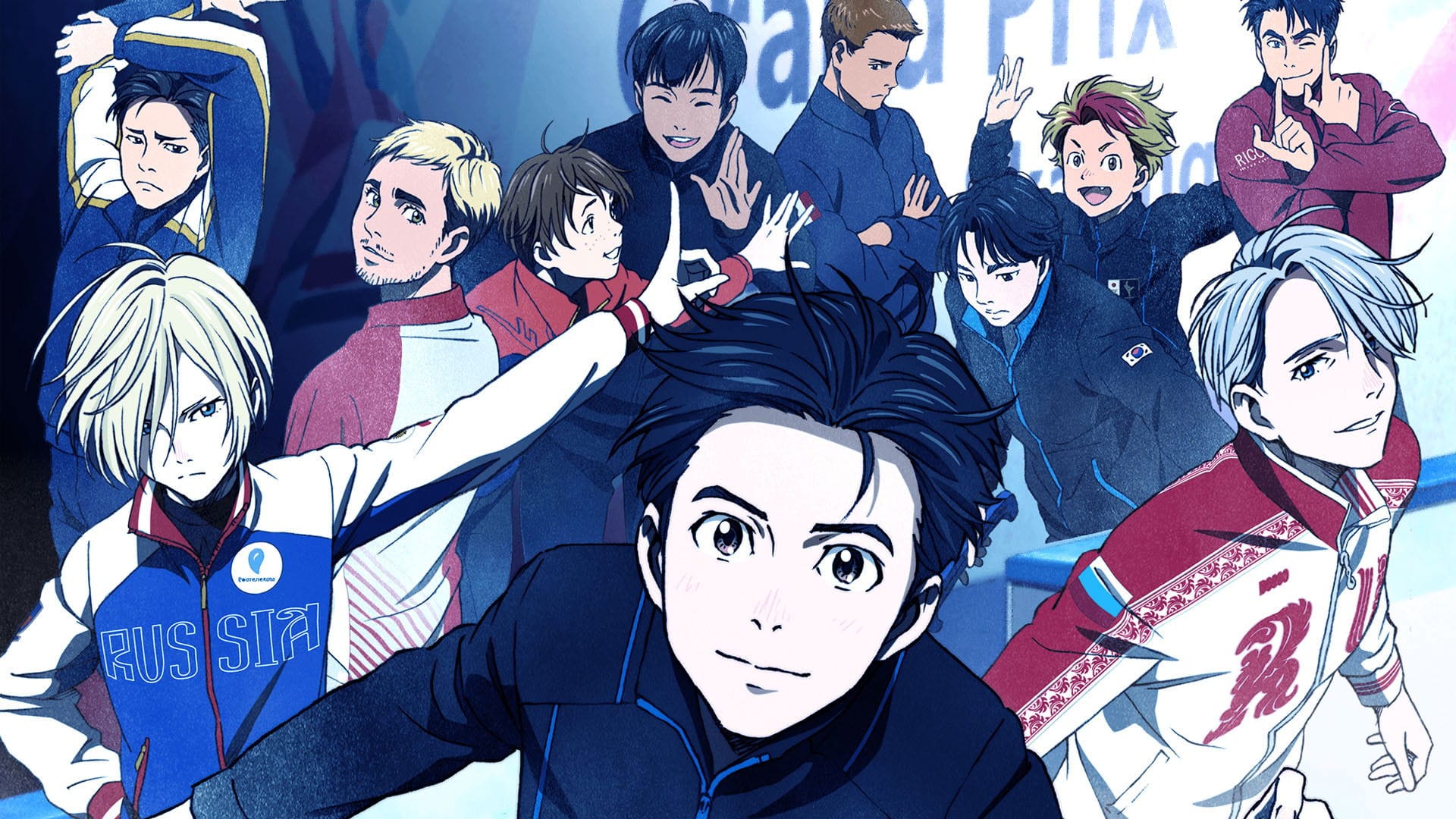
To understand what Yuri!!! on ICE meant to the anime industry, you have to understand what MAPPA was in 2016. Founded in 2011 by former Madhouse producer Masao Maruyama, the studio had grown from a boutique outfit into one of Japan's more recognized animation producers, but it had not broken through internationally. Its early output was ambitious in scope — the jazz-inflected coming-of-age drama Sakamichi no Apollon (2012), directed by Shinichiro Watanabe, is still cited as a quietly exceptional work — but modest in reach. The studio that would eventually animate the final season of Attack on Titan, produce Jujutsu Kaisen, and adapt Chainsaw Man was, as of autumn 2016, not yet a household name in the Western fandom.
Then Yuri!!! on ICE aired. MAPPA's current president Manabu Otsuka, in an interview, recalled: "We had a complex that we didn't have any hits and didn't know how to make them… the first time we had any fruit was when Yuri!!! on ICE was broadcasted." The observation is remarkable in its candor — a studio president describing his own company's pre-2016 work as fruitless — and it locates the show precisely as the hinge on which MAPPA's identity turned. Before October 2016, MAPPA was a studio trying to find itself. After December 2016, it was the studio that made Yuri!!! on ICE, and everything that followed was built on that foundation.
The irony embedded in that success is worth dwelling on. Despite the massive popularity of Yuri!!! on ICE, MAPPA's actual profit return was very low compared to the show's cultural reach, due to the distribution structures in place at that time. The studio that the show made famous did not, in the short term, benefit financially in proportion to its impact. This would contribute to the strategic shifts that defined MAPPA's subsequent years — a re-orientation toward profitability and risk reduction that observers have connected, with some bitterness, to the eventual fate of the promised film. The show gave MAPPA the momentum that would lead to Kakegurui (2017), Banana Fish (2018), Dorohedoro (2020), and then, in swift succession, Jujutsu Kaisen, the final season of Attack on Titan, and Chainsaw Man — the "big three" that transformed MAPPA into a global brand. MAPPA's breakthrough year was 2016 with the premiere of Yuri!!! on ICE, and the studio has been on the rise ever since. That trajectory is real, and its origin point is the twelve episodes that screened this week in American multiplexes.
This context matters for any honest accounting of the anniversary. The studio that is now synonymous with some of the most technically demanding and globally consumed anime of the last five years built its reputation on a show about a anxious Japanese figure skater and his Russian coach falling in love. The genre diversity — from sports romance to shonen action to prestige horror — reflects the expanded confidence that the original success made possible. MAPPA did not simply make Jujutsu Kaisen. MAPPA made Yuri!!! on ICE, and then was capable of making Jujutsu Kaisen.
The Film That Was Always Promised
The announcement came at the Yuri!!! on Stage event in April 2017 — a completely new original film was in production. The staff announced the film in April 2017; it was originally targeting a 2019 release. The title was revealed at a concert event in July 2018: Ice Adolescence. A short trailer was released. Then came the delay — September 2019, the film was pulled from its planned 2019 opening "in order to substantially scale up the content more than originally planned," according to the official announcement at the time. Then came 2020, and COVID, and an extended production silence. A second trailer arrived in November 2020 with a statement that production was "still ongoing with the aim of further enriching the film" — but no release date was given.
The waiting became its own genre of fan experience. Seven years is a long time to hold a promise. It is longer than many anime series run. It is longer than the gap between the original series and the moment it became a cultural touchstone. The audience that had watched Yuri!!! on ICE in 2016 as college students was in their late twenties and early thirties when the cancellation finally arrived. The show had aged with them, and so had the hope for more of it.
On April 19, 2024, the production committee and MAPPA announced the cancellation of Ice Adolescence, citing "various circumstances" that made completion impossible despite multiple discussions and adjustments. The statement was formal and brief. It apologized to fans. It offered no specifics. The opacity of "various circumstances" left the door open for speculation, and the speculation arrived immediately.
Producer Hideo Katsumata later addressed the cancellation more directly, confirming that the project's demise was not due to financial issues or scheduling, but rather creative conflict behind the scenes — irreconcilable disagreements between the key creative figures that made it "impossible to proceed with production." Katsumata described the internal situation as deeply personal, involving sensitive matters he could not fully disclose, and his comments aligned with earlier reports that the production had gone through multiple revisions before the committee ultimately gave up. The film that fans had been promised for seven years ended not with a budget crisis or a pandemic excuse, but with a creative rupture between the people who had made the original work.
That is a harder fact to process than a production casualty. Money can be found. Schedules can be cleared. Creative incompatibility between the director, the writer, and the studio that employed them — particularly when the creative vision is as singular as Sayo Yamamoto's — is not a problem that resolves with time or goodwill. The film was never going to exist in the form that the original demanded. The committee and staff eventually reached the only conclusion available to them.
The Structure of Unfinishedness
The word "cancelled" applied to Ice Adolescence has encouraged a reading of Yuri!!! on ICE as an unfinished franchise, a story interrupted before its continuation could arrive. That reading is understandable. It is also, examined carefully, incorrect — or at least it conflates two different kinds of incompleteness.
Yuri!!! on ICE as a twelve-episode television series is complete. It has a beginning, a sustained dramatic arc, and an ending. Yuri Katsuki enters the narrative in crisis and exits it transformed, having skated his best program, having claimed the silver medal at the Grand Prix Final, having exchanged rings with Victor Nikiforov in a Barcelona restaurant, having heard the word "marriage" applied to them by a third party and not denied it. The emotional promises the show makes are kept. The character is not stranded mid-journey. He arrives.
What the film would have offered was additional story — a prequel focusing on Victor's younger years, according to widely discussed details about Ice Adolescence's premise. That is not the same as completion. Prequels do not complete originals; they expand them. The story that Yuri!!! on ICE tells about Yuri Katsuki does not require Victor Nikiforov's backstory to be fully told. Victor functions in the series as a kind of force of nature — glamorous, mysterious, emotionally unpredictable, arriving at the beginning and transforming everything. His opacity is structural. A prequel that explained him might have been wonderful. It would also, by explaining, have changed the register of the original. What is withheld in the series is part of how the series works.
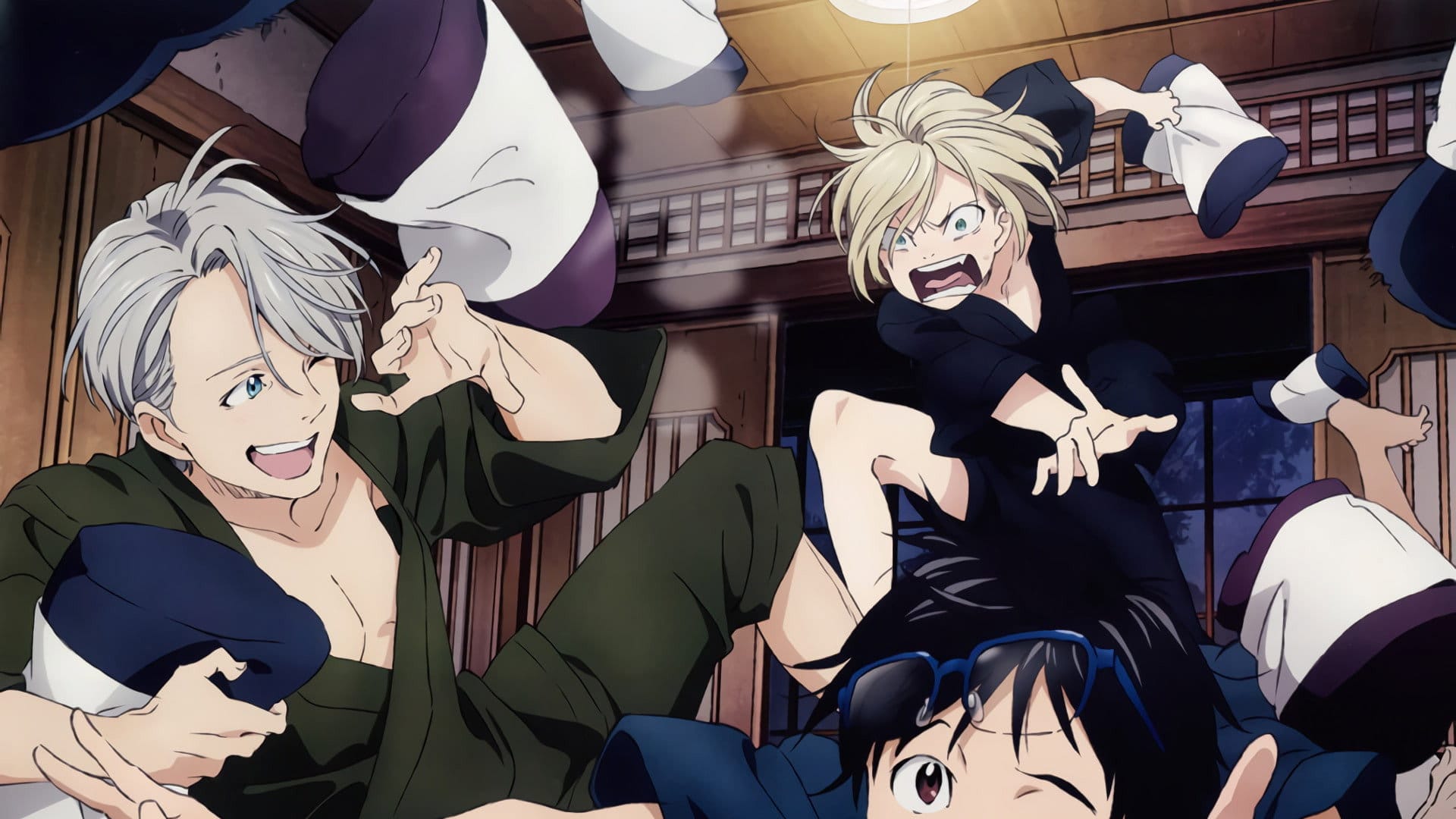
This is not an argument that the fans were wrong to want more, or that the cancellation was not a genuine loss. It was. The loss is real: a creative team that built something extraordinary was denied the chance to extend it, and seven years of anticipation collapsed into a two-paragraph statement citing "various circumstances." That is genuinely sad. But there is a difference between loss and incompleteness, between wanting more and needing more. Yuri!!! on ICE does not end in a place that requires rescue. It ends in a place that earns its ending.
The one-night theatrical screening, in this light, is not a substitute for Ice Adolescence. It is a return to what the franchise actually is — the twelve episodes, the full arc, the kiss in episode 7, the rings in episode 10, the final free skate, the closing image. Since the Yuri!!! on ICE franchise has ended, with no plans for a movie or second season, other titles could satisfy the desire for similar stories — but nothing quite replicates what the original did, because what it did was specific to its moment, its creative team, and its formal choices. The screening reminds you what those choices were.
Legacy Without Sequel
Legacy is usually discussed in terms of what a work made possible — the shows that came after it, the doors it opened, the norms it shifted. For Yuri!!! on ICE, that accounting is straightforward and substantial. Sports anime after 2016 became more willing to engage with the emotional intensity of same-gender relationships on their own terms. The queerbaiting that had characterized titles like Free! — the sustained implication of romantic feeling between male characters without any narrative commitment — became harder to sustain uncritically once a sports anime had simply done the thing. Not all subsequent sports anime followed; many continued in the older mode. But the baseline shifted. The show had established that a sports narrative with explicit queer protagonists could sweep awards, generate global fandom, and make a studio famous. The argument that such stories were too niche to take seriously had lost its footing.
Queer representation in anime after 2016 is a complicated picture. The gains are real but uneven. Studios continued to deploy queerbaiting as a low-risk strategy for attracting a specific audience without committing to anything that might alienate another. The Boys' Love genre continued to exist in its semi-separate commercial ecosystem, with its own conventions and its own audience. What Yuri!!! on ICE had done — inserting queer protagonists into a mainstream sports narrative, in a way that was visible to audiences who had not sought out queer content — was not automatically replicated. It remained somewhat anomalous. But anomalies, in creative industries, function as proof of concept. The show proved the concept.
The show also proved MAPPA's concept — that the studio could produce work of real emotional and technical sophistication, not just competent genre product. MAPPA might currently be dominating with huge titles like Jujutsu Kaisen, Attack on Titan, and Chainsaw Man, but it was Yuri!!! on ICE that brought the studio to its current spotlight. The studio that now handles some of the most commercially consequential anime franchises on earth — properties with merchandise empires and film tie-ins and global streaming deals — first demonstrated its capabilities to a worldwide audience through twelve episodes about a skater who was afraid of disappointing the person he loved. The scale is different. The craft is continuous.
There is something worth noting about how the anniversary has been structured. The anniversary projects may not confirm a second season or a replacement film, but they represent the most substantial Yuri!!! on ICE activity in years. Crunchyroll is not selling the audience something new. It is offering them a theatrical experience of what already exists — five of the twelve episodes on a large screen, in the dark, with an audience of people who loved the show enough to buy a ticket to watch it again. That is a different kind of event from a sequel premiere, and it is an honest one. It does not pretend to fill the gap that Ice Adolescence left. It acknowledges the gap by presenting the original as the thing worth returning to.
This is how legacies actually work, as opposed to how the industry likes to narrate them. The industry narrative of legacy is always forward-facing: the original as prologue, the franchise as the main event, the IP as the permanent engine. The honest narrative is more static. Sometimes the original is the whole story. Sometimes twelve episodes are enough not because sequels are impossible but because what the twelve episodes contain is complete in itself — not exhausted, but closed, the way a good piece of music is closed even when you want it to go on longer. You play it again because it is good, not because it is unfinished.
The Show That Resisted the Machine
There is a version of the Yuri!!! on ICE story that reads as straightforward industrial tragedy: promising original property fails to sustain itself as a franchise, creative collapse prevents sequel, anniversary is managed downward into a theatrical revival of existing content. That version is accurate as far as it goes. The film collapsed. The franchise is dormant. The anniversary is modest.
But there is another version, which is that Yuri!!! on ICE accomplished what almost no twelve-episode anime original accomplishes: it said exactly what it needed to say, in the time it had, with the creative team it had, and it changed the conversation permanently. It did not require a sequel to validate itself. The sequel was wanted — genuinely, by fans, by the creators, perhaps by the studio — but its absence does not diminish what the original did. The original made MAPPA. The original altered the terms on which sports anime could engage with queerness. The original won every category at the first Crunchyroll Anime Awards and was praised by Olympic figure skaters. The original produced an opening theme that trended globally and an episode-7 moment that became a cultural reference point.
That the franchise could not sustain the momentum into a film is a failure of production, not a failure of the work. Separating those two things matters. The production committee and MAPPA explained that the cancellation came after internal discussions due to "various circumstances" — and despite continuous efforts and adjustments, they could not proceed. The "various circumstances" were creative, personal, and irresolvable. They had nothing to do with the quality of the original twelve episodes. Those episodes remain what they were in 2016: urgent, formally intelligent, emotionally generous, and — in their treatment of two men in love — historically significant.
A decade on, with a one-night theatrical anniversary instead of a film premiere, the question the show asks is not whether it deserved more. It probably did. The question is whether a work that changes what is possible in its medium requires continuation to justify what it changed. The answer, evident in every subsequent sports anime that navigated same-gender intimacy differently because of what Yuri!!! on ICE had done, in every Crunchyroll Awards ceremony that built on the template the show's inaugural sweep established, in every MAPPA production that was made possible by the studio's 2016 breakthrough, is clearly no.
The show that couldn't get its movie still means everything it ever meant. The ice doesn't care about the sequel. It only holds the skate that's actually there.