There is a specific kind of cultural maneuver that looks, at first glance, like pure aesthetics — a photo op, a statement accessory, a very cool piece of cover art — and reveals itself, months later, to have been a strategic opening move. The black-and-white photograph on the cover of Charli xcx's album Music, Fashion, Film (2026) is exactly that. Shot in April in New York by filmmaker and frequent collaborator Aidan Zamiri, it places musician John Cale, fashion designer Marc Jacobs, and director Martin Scorsese in a stark kitchen — one titan for each word in the title. Charli herself is nowhere in the frame. She is the invisible center of gravity, the host who assembled the room and then stepped out of it. Now she has stepped into Scorsese's room instead.
Sources confirmed to Variety on October 22, 2026 that Charli xcx has joined the cast of Scorsese's upcoming film What Happens at Night, alongside Leonardo DiCaprio and Jennifer Lawrence. The role is a cameo; its specific character is being kept under wraps. But the context around it tells a story that a cameo announcement alone cannot contain.
The Cover as Contract
When the Music, Fashion, Film artwork was revealed in June 2026, the obvious reading was conceptual: each man a monument to his medium, assembled as a thesis statement about where Charli's ambitions now pointed. Cale — co-founder of the Velvet Underground, avant-garde composer, art-world fixture — stood for music's experimental past and its relationship to the visual. Jacobs was fashion's reigning ironist, comfortable in the space where commerce becomes statement. And Scorsese was cinema at its most canonical: a living argument that the medium is still capable of moral weight.
What was less discussed at the time was the operational logic underneath the symbolism. Music, Fashion, Film is, at its core, a record about collaboration as creative method — an homage, as one review put it, to the way some of the best art in history was created: "through true collaboration and friendship, through scenes and schools and kitchens full of people making things together." Andy Warhol's Factory. The New York School. The Beats. The cover didn't just invoke those lineages — it enacted them. Charli got three people from three separate industries into a room they had no obvious reason to share, and made that the art.
The question was always whether the gesture would remain symbolic or whether it would have practical consequences. Seven months later, we have an answer.
What the Film Actually Is
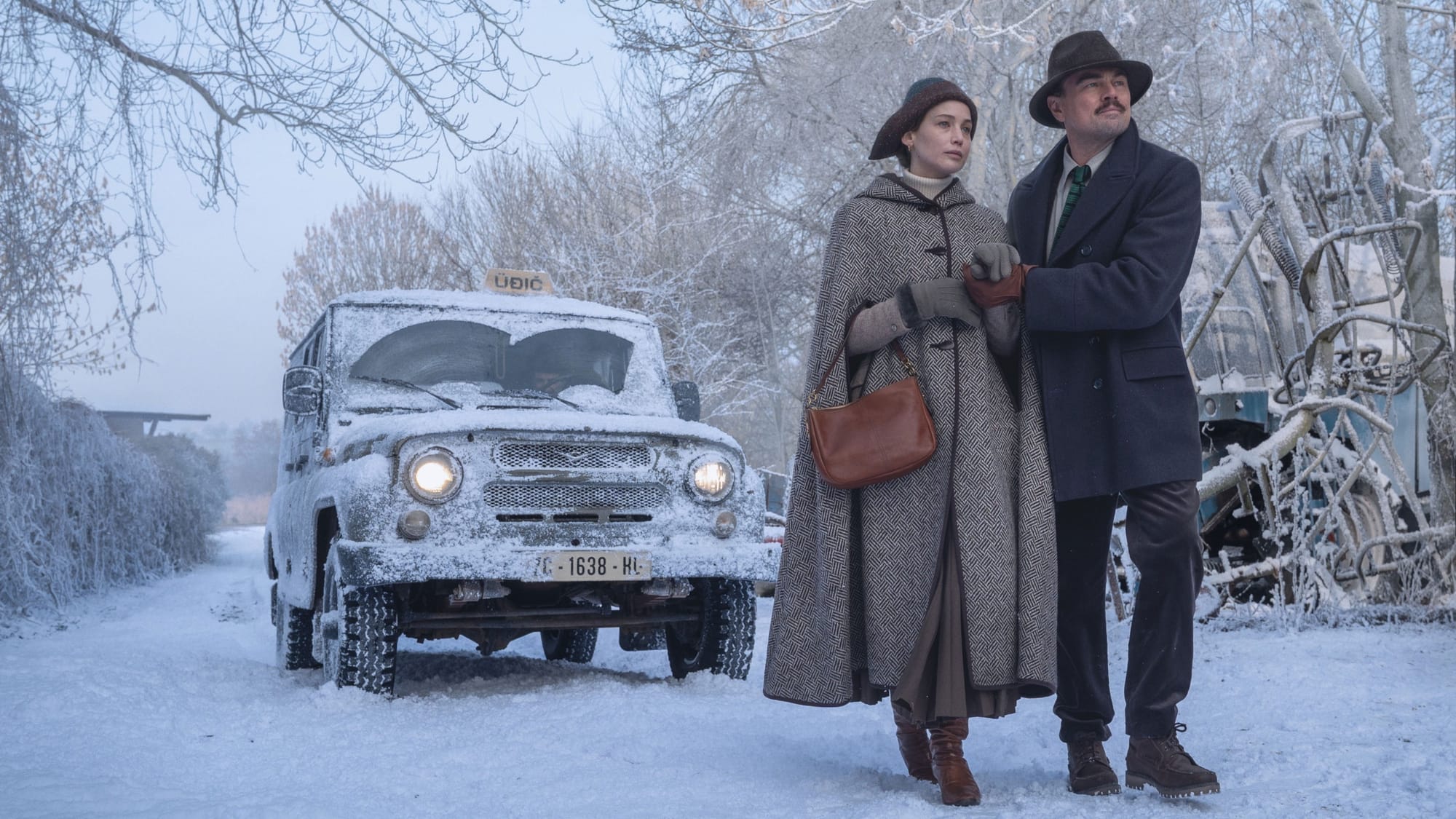
What Happens at Night is not a vanity project or a commercial exercise. Based on the 2020 novel of the same name by American author Peter Cameron, it follows a married American couple who travel to a small, snowy European town to adopt a baby, a journey during which they begin to understand less and less about themselves. The film has been described as a gothic psychological horror feature — a genre Scorsese has not inhabited before, and one that marks a striking departure from the epic historical register of his last film, Killers of the Flower Moon (2023).
The screenplay is by Patrick Marber, best known for Closer (2004). The cinematographer is Rodrigo Prieto. Thelma Schoonmaker — Scorsese's editor since Raging Bull (1980) — returns. The production is a co-venture between Apple Studios and StudioCanal, a continuation of the Apple relationship established on Killers of the Flower Moon. DiCaprio and Lawrence are both producers as well as stars. The supporting ensemble includes Mads Mikkelsen, Patricia Clarkson, and Jared Harris — a cast assembled with the kind of specificity that signals craft rather than spectacle.
Into this, Charli xcx arrives. The plot, as reported, involves the couple encountering an eccentric singer at the hotel where they stay. Whether or not that is Charli's role, it would fit with a remarkable precision: the pop star whose entire creative era has been defined by the collision of disciplines, dropped into a Scorsese psychological horror that stages its dread in a sealed, snow-bound European setting. The atmosphere of the film — described by some observers as somewhere between Kubrick's The Shining (1980) and Scorsese's own Shutter Island (2010) — is genuinely suited to her aesthetic sensibility, a world of elegant surfaces over threatening interiors.
The Acting Career That Got Here on Its Own Terms
It would be wrong to read this purely as Scorsese doing Charli a favour repaid. Her film career is not a novelty wing of her music operation. She has appeared in four films in 2026 alone: The Moment — a mockumentary in which she plays a fictionalized version of herself and received a story credit — I Want Your Sex, The Gallerist, and Faces of Death. The range is deliberate: a Gregg Araki psychosexual thriller, a Cathy Yan art-world satire led by Natalie Portman and Jenna Ortega, a Daniel Goldhaber horror remake. These are not cameos in friend's projects. These are working relationships with directors who have specific aesthetic programs — and Charli is consistently cast because those programs have room for what she brings: a kind of performative self-awareness that reads on screen as character rather than persona.

The Moment premiered at Sundance at the start of the year. Its director, Zamiri, is the same person who photographed the Music, Fashion, Film cover. The film's mockumentary form — a fictionalized Charli navigating the weight of post-Brat fame — made explicit what the album cover had implied: that she understands the mechanics of her own image well enough to turn them into narrative material. That is, at bottom, what actors do.
The Music, Fashion, Film tour itself — an all-arena run that opened September 11 in Philadelphia and closes October 23 in Las Vegas before moving to a six-date European leg beginning in Dublin in February 2027 — runs parallel to all of this film activity, not in competition with it. The two tracks are complementary: the tour affirms the music while the film work builds a credibility that is structurally different from what record sales or streaming numbers can provide. Film has different gates. Getting through them requires directors who want you, not just your audience.
Why This Specific Closing of the Loop Matters
Pop stars making cameos in prestige films is not, by itself, news. What distinguishes this moment is the directionality: Charli didn't lobby to be in a Scorsese film; she put Scorsese on her album cover first, as part of an argument she was making about where she wanted to operate culturally. Then, three months after the album's July release, the director appeared on her call sheet. The art-world gesture preceded the industry outcome. The concept generated the credential.
That sequence matters because it says something about how creative authority actually transfers between disciplines in this moment. The old model — pop star finishes album cycle, takes meeting at a studio, accepts supporting role — hasn't disappeared, but it is no longer the only route. The new version involves building a case through association, collaboration, and deliberate positioning before any formal offer is made. The cover makes the argument visually: John Cale, Marc Jacobs, and Martin Scorsese in a stark black-and-white kitchen — an image collapsing avant-garde art, high fashion, classic film, and crunchy guitar music into one room. The casting announcement is what happens when that argument lands.
The film's gothic register — isolation, disintegrating self-knowledge, surfaces that conceal rather than reveal — also happens to rhyme with themes Charli has been exploring in her own work. Music, Fashion, Film closes with legendary director David Cronenberg chanting "No one lasts forever" into the static, a deliberately existential full stop. For an artist who built an entire era around the collision of celebrity and impermanence, stepping into a Scorsese horror about a couple who travel to the edge of themselves and find nothing recognizable there is not a strange detour. It is, arguably, the most coherent next move available.
Charli xcx put Martin Scorsese on her album cover. Martin Scorsese put Charli xcx on his call sheet. Whether that reciprocity was planned or emergent is almost beside the point. What counts is that the cover image — three men, a kitchen, one invisible host — turned out to be less a piece of graphic design than a document of intent. The album became the audition. The tour is still running. The film has no release date yet. Everything is in motion, which is the only condition under which this kind of career actually works.