Rakugo does not rush. A single performer sits center stage, a fan in one hand, a small cloth in the other, and conjures entire worlds through posture, voice, and breath alone. It is, by design, an art form that trusts an audience to slow down and listen. Akane-banashi (2026), the anime adaptation of the manga by writer Yuki Suenaga and illustrator Takamasa Moue, has operated by the same logic — measured, confident, and quietly extraordinary. Now it has earned its next chapter.
 Official trailer
TV Asahi revealed a teaser trailer, key visual, and January 2027 start window for Akane-banashi Season 2 during a special livestream on October 25, 2026. No exact premiere date has been locked, but the broadcast will air on TV Asahi's IMAnimation programming block across its 24 affiliate stations plus BS Asahi. The season's animation production, direction, and core creative staff remain unchanged from Season 1. Two new voice cast members were also announced: Taku Yashiro as Asagao Konjakutei and Yoji Ueda as Hassho Tsubakiya, both new faces entering the rakugo world alongside Akane.
What Season 2 will adapt is, structurally, the series' most consequential turn. Season 2 will cover the Apprentice Training Arc, in which Akane graduates from high school and officially enters the rakugo world as a disciple of Shiguma Arakawa, adopting the stage name Akane Arakawa. TV Asahi's own description frames what follows as the Zenza Arc — Akane arriving at Yasaka-tei, a traditional rakugo theater, to begin formal training surrounded by shin'uchi headliners. The move from secret student to licensed apprentice is not merely a story beat; it is the moment the series' central tension — between inherited tradition and individual voice — stops being theoretical and becomes professional.
What Season 1 Built
Akane-banashi began its manga serialization in Weekly Shonen Jump on February 14, 2022, and has since expanded to 24 collected volumes as of October 2026. The premise is precise: teenager Akane Osaki aims to reach the highest rank in rakugo — partly to avenge her father, who was expelled from the profession six years before the story begins. The rakugo sequences are supervised by professional rakugoka Kikuhiko Hayashiya, lending the series an authenticity that its structural ambition demands.
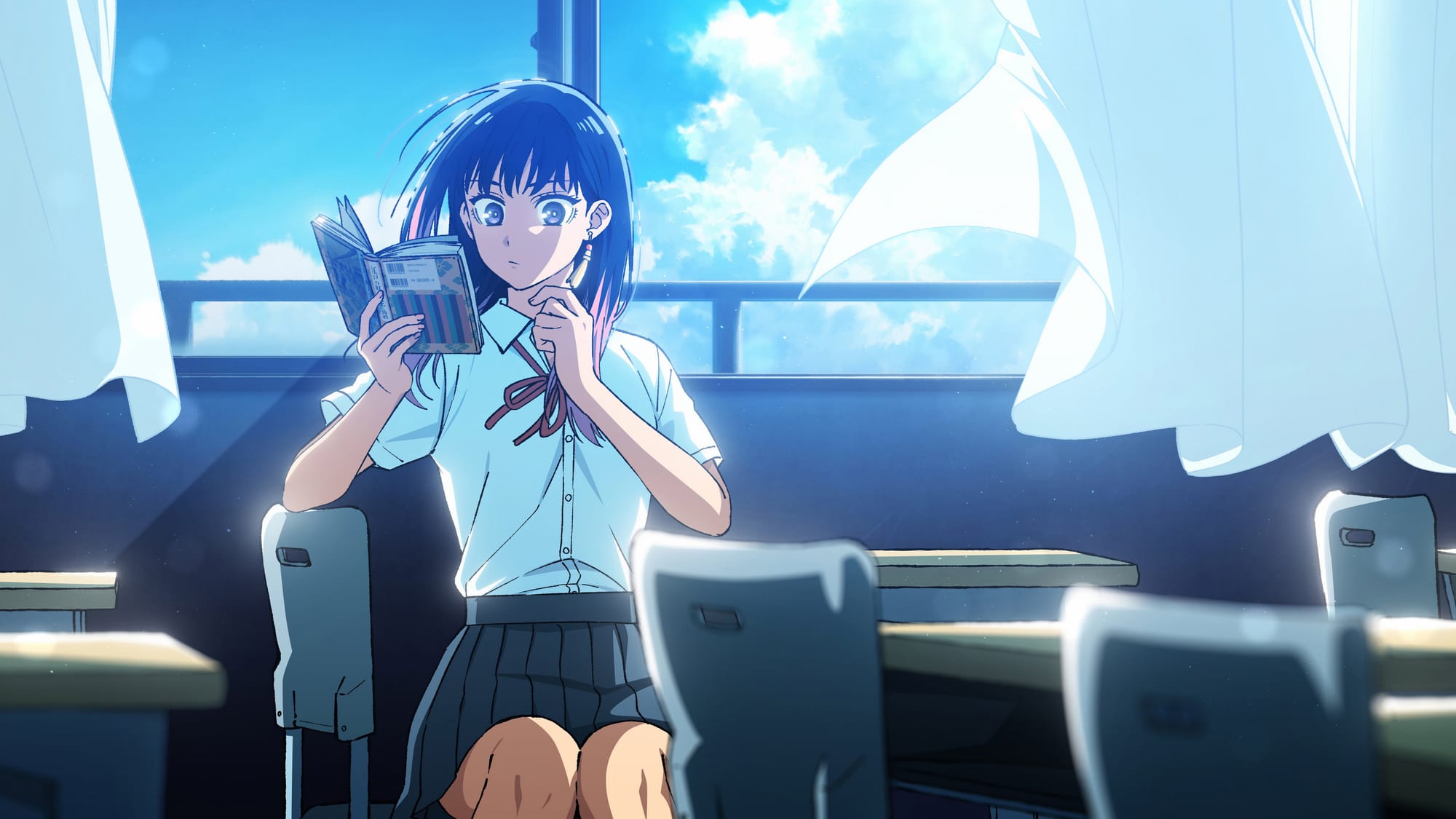
The anime adaptation — produced by Studio ZEXCS, directed by Ayumu Watanabe (Summer Time Rendering, Children of the Sea), and starring Anna Nagase as Akane — premiered on April 4, 2026, and ran 12 episodes through June 20. The English dub, produced by Bang Zoom! Entertainment, was made available on Netflix. The co-director is Yu Harima, character design and chief animation direction came from Kii Tanaka, and series composition was handled by Michihiro Tsuchiya — a team that returns intact for Season 2.
Reception to Season 1 was notably warm. The manga had already proven highly successful with both critics and readers, becoming a staple of Weekly Shonen Jump since its 2022 launch, and the anime adaptation was widely credited with executing that material faithfully — expanding select chapters with original material while compressing others cleanly. What the production got right, above all, was tone: it understood that the drama of watching someone perform rakugo badly, then improve, is no less kinetically compelling than a fight sequence when the stakes are defined clearly enough.
The Jump Anomaly That Earned a Second Season
Akane-banashi is, by any honest account, a strange fit for its platform. Weekly Shonen Jump — the magazine that houses One Piece, Jujutsu Kaisen, and decades of battle-forward genre hits — does not typically incubate stories about a teenage girl mastering a 400-year-old oral storytelling tradition. The series is unusual in shonen manga in that it stars a young woman and is not particularly action-oriented. And yet its structural language is pure shonen: rivalries are coded as battles, training arcs function like technique acquisition, and each rakugo performance is staged as a one-on-one confrontation with measurable stakes.
This translation — traditional art form rendered in battle manga vocabulary — is what makes Akane-banashi formally interesting rather than merely culturally earnest. It does not treat rakugo as a curiosity. It treats rakugo as its fighting system, and constructs its tension accordingly. The series earned the praise of One Piece creator Eiichiro Oda and Evangelion creator Hideaki Anno — a range of endorsements that signals the story is working on more registers than one.
The comparison point that keeps surfacing in critical discourse is Showa Genroku Rakugo Shinju (2016), the Studio DEEN josei adaptation that remains the medium's other significant engagement with rakugo. The two series are genuinely different instruments. Rakugo Shinju is a melancholic, adult historical drama about tradition dying alongside the men who carry it. Akane-banashi is a coming-of-age story about tradition being reborn through a young woman who was never supposed to be allowed inside it. The formal differences matter: a josei drama and a shonen competition series ask different questions about the same art form, and the anime landscape is capacious enough to hold both.
What the Teaser Signals
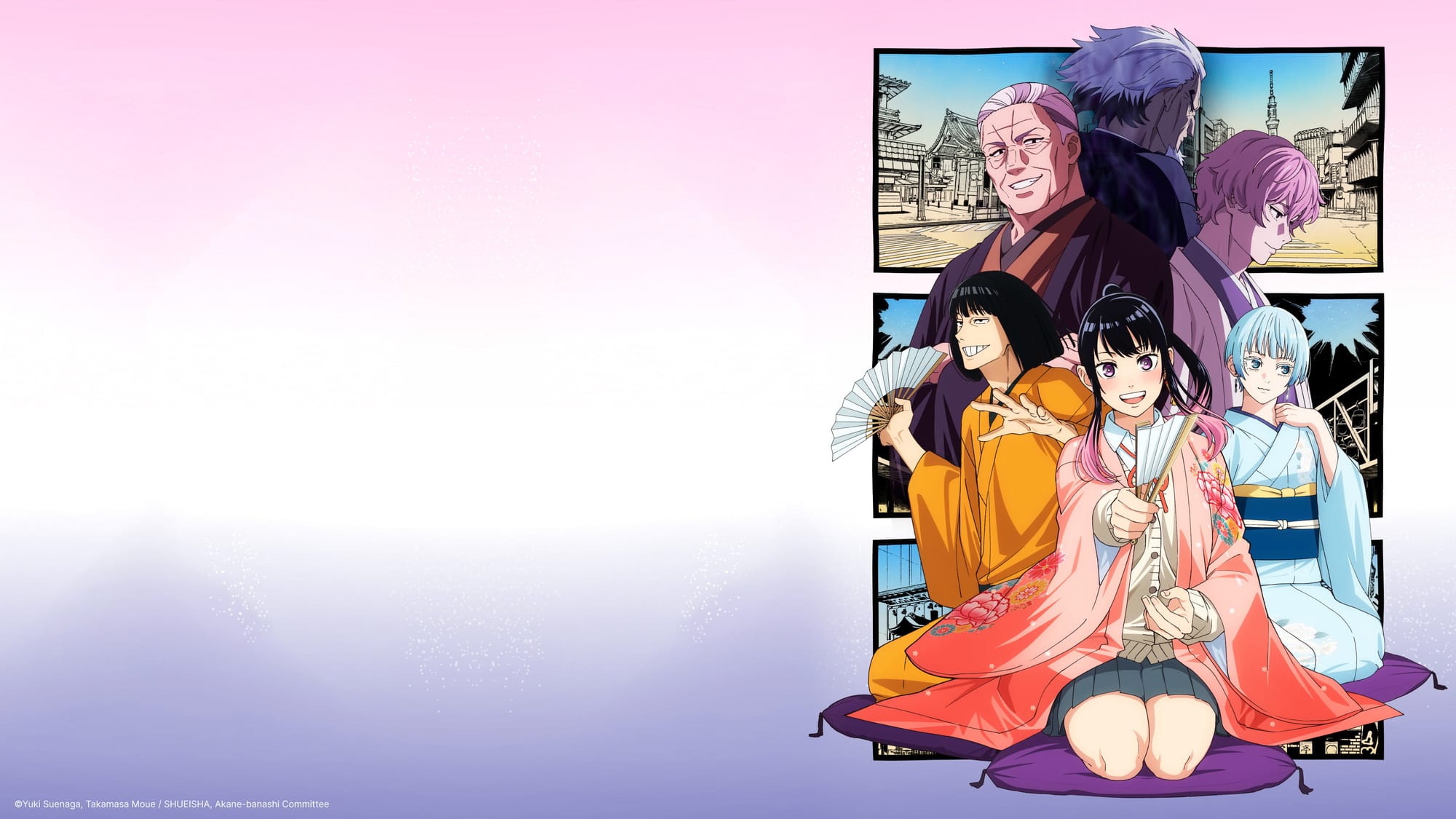
The Season 2 teaser does not overplay its hand. A key visual and a short trailer — standard pre-season assets — are not the same thing as a confident production showing its finished work. What they do confirm is continuity: same studio, same director, same compositional voice. The addition of Taku Yashiro as Asagao Konjakutei and Yoji Ueda as Hassho Tsubakiya suggests the Zenza Arc introduces rival performers who will pressure Akane's development in the way that defined her Season 1 encounters. In rakugo terms, the Zenza Arc is where the opening act proves whether it belongs on the same stage as the headliners.
The January 2027 premiere window places Akane-banashi Season 2 in the winter season — historically a competitive broadcast slot. That TV Asahi is returning the series to the same block without restructuring the creative team is itself an institutional statement. Second seasons in anime are not guaranteed; they are earned, and they carry the implicit claim that the first season built an audience worth continuing for. Akane-banashi made that case across 12 episodes with enough control and formal ambition that the only reasonable question was when, not whether.
Much like the way Kaiju No. 8's continuation came in a form that surprised expectations, the shape of a sequel announcement can tell you something about how a property is valued. Akane-banashi's return is straightforward — same format, same creative team, more story — and that conservatism reads as confidence. The production is not trying to expand or repackage. It is simply continuing, because the thing it is doing works.
Rakugo storytelling, as performed on stage, ends not with applause but with silence — the pause after the punchline before the audience catches up. Season 1 of Akane-banashi landed its final episode and held that pause. The January 2027 premiere window is the audience catching up. The story resumes.