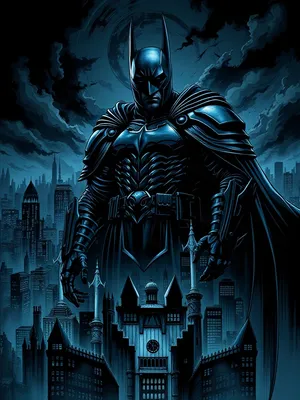
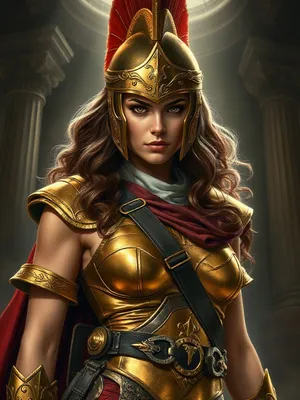
The number that defined the Midnight Universe's October was one million. Three first issues collectively exceeding one million retailer orders before a single copy reached a reader is a figure that demands a structural reading, not just a commercial one. It tells you what the market believed the imprint could be. What the February 2027 solicitations — released this week for Midnight Spider-Man #5, Midnight Fantastic Four #5, and Midnight X-Men #5 — tell you is what it is actually becoming.
The answer, at issue five, is three distinct horror engines that have not yet been asked to share the same track. Whether that patience is structural wisdom or a delay of the line's most compelling promise depends on what happens in the months that follow.
A Launch Built on Deliberate Isolation
All three titles debuted on October 7, and they were the only Marvel titles released that day. That decision was not incidental. It was a signal about the imprint's intended weight — a cleared calendar, a solo spotlight, a statement that this was not supplementary publishing. The three books were positioned as a giant jumping-on point for new readers, the hope being that the Midnight Universe could do for Marvel what the Absolute Universe has done for DC Comics. The framing was ambitious even before the orders came in.
Marvel Comics announced that Midnight Spider-Man #1, Midnight Fantastic Four #1, and Midnight X-Men #1 collectively surpassed one million copies ordered ahead of their October 7 release, and second printings of all three launch issues were scheduled to arrive in comic shops on October 28. The million-copy milestone came just two weeks before readers got their first full taste of the new universe, which Marvel is positioning as a long-term interconnected publishing line rather than a short-lived event.
Midnight Spider-Man #1 is written by Phillip Kennedy Johnson with art by ScieTronc. Benjamin Percy writes Midnight Fantastic Four #1, drawn by Kev Walker, while Jonathan Hickman and Matteo Della Fonte lead Midnight X-Men #1. Three writers, three artists, three sub-genres of horror operating under a single imprint banner — and, critically, a coordinated plan for what happens when they eventually meet.
What February's Solicitations Actually Show
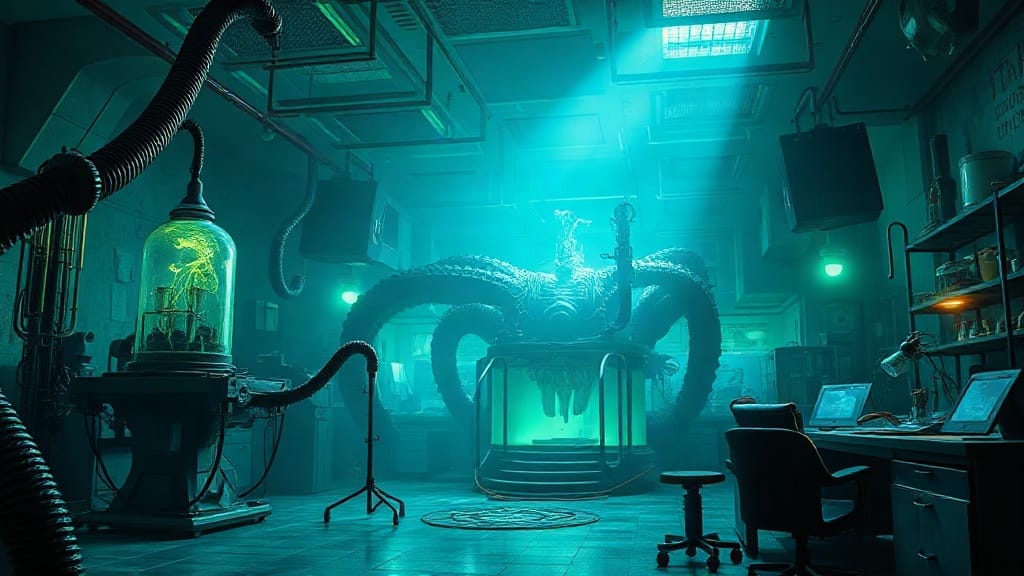
Arriving in February 2027, Midnight Spider-Man #5, Midnight Fantastic Four #5, and Midnight X-Men #5 will continue reimagining some of the publisher's most recognizable heroes through supernatural horror, disturbing transformations, and a dangerous new world. The solicitation copy for each title is worth reading not for what it reveals, but for what it avoids.
In Midnight Spider-Man #5, Oscorp's second-generation monstrosity is loose, and its first prey is Spider-Man. Meanwhile, the mutation that created Spider-Man has spread to a new host, with shocking results. This is body horror as contagion narrative — the spider-mutation's spread outward from Peter Parker is not just a plot escalation, it is a structural one. Johnson is building a world where the horror condition replicates, creating pressure on the imprint to eventually respond to its own sprawl.
In Midnight Fantastic Four #5, written by Benjamin Percy with art by Marcelo Ferreira, everyone is looking to Reed for answers and tensions rise the longer he cannot produce them. Meanwhile, a new threat stalks the woods surrounding Storm Systems HQ. The shift to Marcelo Ferreira from Kev Walker's debut-issue work is the kind of interior art change that rarely gets flagged in solicitations but always registers with attentive readers. Percy is now past the opening statement; the question is whether the book's cosmic-horror angle can sustain dramatic momentum without Walker's distinctive register.
Midnight X-Men #5, written by Hickman with art by Matteo Buffagni, sees Ronin meet Reaver, an infernal compact made in Hell, with scores to be settled — but the Peace Must Hold. The phrase "the Peace Must Hold" reads as Hickman doing what Hickman does: constructing political scaffolding inside a horror genre frame, making the macro-structural drama the engine beneath whatever immediate threat presents itself. It is X-Men as treaty-state horror, which is either the most Hickman thing imaginable or the most reassuring sign that the book has genuine identity.
The Crossover Question and the Ten-Month Clock
The February solicitations confirm the imprint is functioning. They do not yet confirm it is building toward something. That confirmation has to come from the creative teams' stated intentions — and one voice in particular has been clearest about the timeline.
Speaking on the Battle of the Atom podcast, Hickman said the creative teams already have a plan for how the books will eventually intersect, but Marvel is deliberately giving each series room to establish itself first. "We have a plan for how the books are gonna touch," Hickman said. "I would not expect that in the first ten months, but sometime around then perhaps we're gonna do something that might be pretty cool and the books might start, you know, lightly touching each other."
Hickman explained that keeping the books relatively independent early on is particularly important because of how different the three series are, adding: "It's important that we not screw with the vibes here early on."
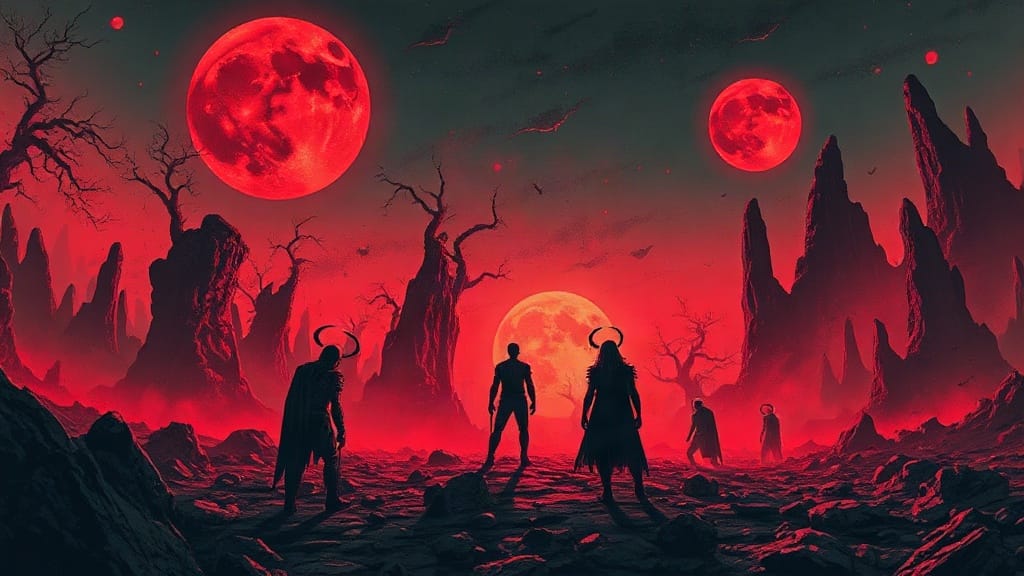
Ten months from the October 7 launch places meaningful crossover activity somewhere around August 2027. February's fifth issues represent roughly month four. The line is, by that math, less than halfway to the moment where its interconnected premise becomes visible to readers. That is a long time to sustain commercial momentum on launch energy alone — and the one-million-order figure, however extraordinary, reflects retailer bets placed before a single issue was read.
What we do know is that the three writers are actively coordinating their respective corners of the universe. Percy revealed that they meet over Zoom once or twice a month, have participated in story summits with Marvel editorial, and communicate through a shared Slack. The books are being kept distinct early on, but Percy confirmed the larger plan is for the Midnight Universe to eventually grow and interconnect.
Johnson even revealed that he is keeping Hickman's plans in mind while developing Midnight Spider-Man. If something in his story could potentially benefit Midnight X-Men, he will bring it to the group. That is shared-universe infrastructure operating at the writing-room level rather than the editorial mandate level — which is a healthier foundation than Marvel has had for some of its previous interconnected imprints, but it still requires execution to validate the intent.
The Structural Precedent Worth Watching
The comparison that keeps surfacing — Marvel's Midnight against DC's Absolute Universe — is worth taking seriously rather than dismissing as marketing rhetoric. DC's Absolute line succeeded precisely because it committed to strong standalone identities before pressing for convergence. The Absolute Batman reached its own milestone moments by trusting that readers would follow a character-driven horror-adjacent reimagining without needing constant crossover prompts. The lesson is that the standalone work has to be good enough to earn the convergence moment rather than depend on it.
At issue five, that is precisely the test the Midnight Universe is running. The new line takes Spider-Man, the Fantastic Four, and the X-Men into an interconnected horror setting. Its opening stories include a grotesque transformation for Peter Parker, scientific discovery turning dangerous for the Fantastic Four, and a cursed future for mutantkind in Midnight X-Men. Each of those premises has enough narrative runway to sustain months of independent development — and the February solicitations suggest each is using that runway differently, at different speeds, with different horror registers.
The risk is not that the books are bad. Early responses suggest they are not. The risk is that the launch momentum — built on a single coordinated debut week, a stripped Marvel release schedule, and a marketing campaign that cleared the field — cannot be replicated month to month. Sustained Marvel publishing ambition has collapsed before under its own structural weight, and the Midnight Universe's promise of an ongoing interconnected line rather than a finite event is exactly the kind of promise that requires an unusual combination of editorial discipline and creative patience to deliver.
The February solicitations do not answer whether that discipline exists. But they do confirm the imprint is still asking the right questions — and that, at month four, is not nothing. The clock Hickman set is running. What arrives around month ten will determine whether the Midnight Universe was a launch or an infrastructure.