Eight years is a long time to disappear. In an industry that treats silence as irrelevance, David Robert Mitchell has done something increasingly rare: he waited until he had something worth saying. The End of Oak Street (2025) opens today, and its arrival feels less like a release than a reckoning — for Mitchell, for the kind of cinema he represents, and for an audience that has spent a decade wondering whether It Follows (2014) was a lightning strike or a signal.
The Weight of the Gap
Mitchell's last film, Under the Silver Lake (2018), was a Los Angeles noir fever dream that arrived to a famously fractured reception — pulled from its original release slot, re-edited, eventually released to an audience that didn't quite know what to do with it. It was too strange for genre comfort, too committed to its own logic to be dismissed as mere provocation. Time has been kind to it. But its commercial and critical ambivalence almost certainly shaped what came next: silence, development, and a deliberate retreat from the machinery of expectation.
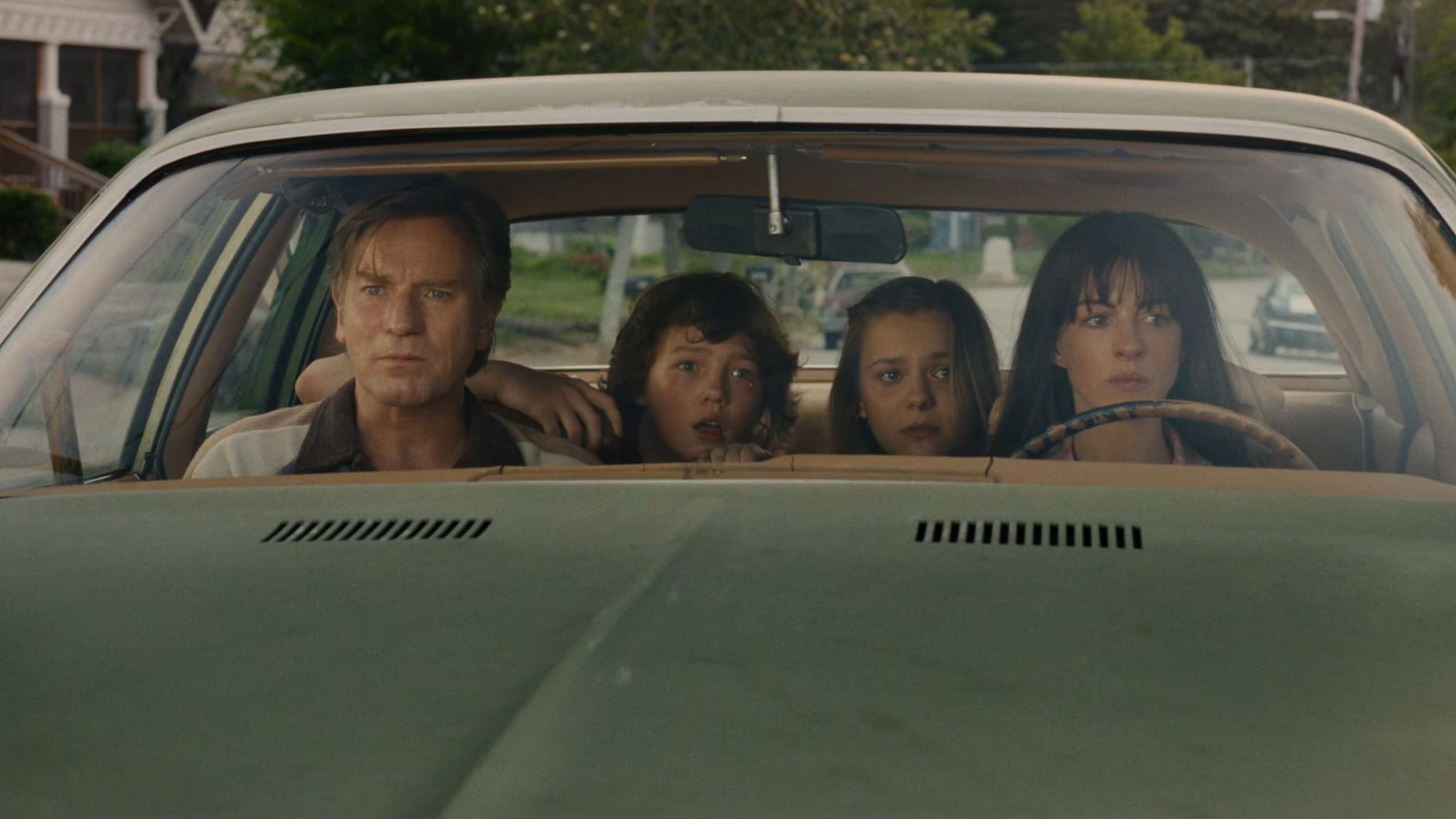
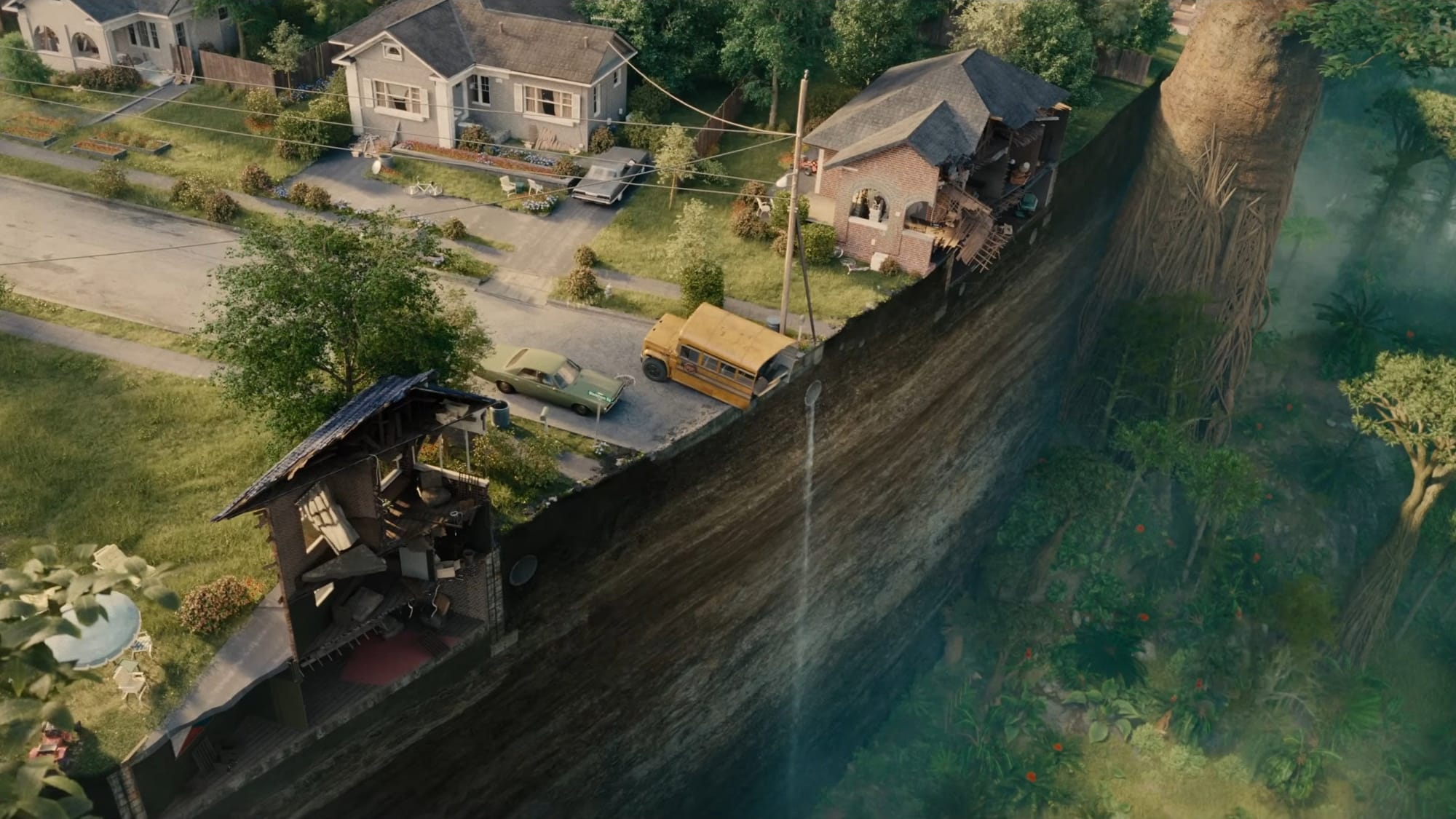
That retreat produced The End of Oak Street. The film stars Anne Hathaway and Ewan McGregor as parents trapped with their children in a suburban home as something vast and incomprehensible begins dismantling the world outside. The premise carries the DNA of cosmic horror — the Lovecraftian tradition of humans rendered insignificant by forces beyond comprehension — but Mitchell has never been interested in horror as spectacle. In It Follows, the monster was grief and sexual anxiety wearing the skin of inevitability. Here, the threat appears to be something closer to entropy itself: not a creature, but a condition.
The Genre Pivot as Statement
The shift from sun-scorched neo-noir to domestic cosmic horror is not as discontinuous as it appears. Mitchell's filmography — including his debut The Myth of the American Sleepover (2010) — has always circled the same preoccupation: the moment when the familiar world reveals its underlying wrongness. Suburban lawns, swimming pools, summer nights. The threat was always already inside the postcard. What changes in The End of Oak Street is scale. The wrongness is no longer local or metaphorical. It is literal and universal.
Casting Hathaway and McGregor is itself a statement. Both are actors whose commercial legibility gives studios cover, but whose best work — Eileen (2023) for Hathaway, Salmon Fishing in the Yemen (2011) and his stage work for McGregor — demonstrates a willingness to subordinate star charisma to psychological specificity. Mitchell isn't casting for marquee protection. He's casting for the particular texture of people pretending to hold together when they are not.
Auteur Cinema in the Franchise Corridor
The deeper question The End of Oak Street forces is structural. How does a filmmaker like Mitchell — not an indie purist, not a studio journeyman, but something awkwardly in between — sustain a career across an eight-year gap in an industry that has reorganized itself almost entirely around IP, sequels, and algorithmic audience capture?
The answer, increasingly, is genre. Cosmic horror, survival thriller, domestic dread — these are categories with built-in audience intent that give distributors a handle on something otherwise difficult to market: an auteur film about the limits of human meaning. Mitchell is not the first to use genre as a Trojan horse for art-cinema concerns. What distinguishes him is his refusal to let the genre mechanics become the point. The dread in his films is never resolved by plot. It is metabolized by atmosphere.
That approach carries real commercial risk. Under the Silver Lake demonstrated what happens when an audience arrives expecting one kind of film and receives another. Mitchell knows this. The eight-year gap suggests he built The End of Oak Street with that lesson in mind — not by compromising the vision, but by choosing a container robust enough to hold it.
What Opens Today
Whether The End of Oak Street (2025) succeeds commercially matters less than what its existence confirms: that the space for this kind of filmmaking — deliberate, atmospheric, formally serious, unwilling to explain itself away — has not closed. It has contracted. But contraction is not extinction. Mitchell's return is evidence that the long silence was not defeat. It was, in the vocabulary of his own films, the moment just before something unmistakable walks through the door.