The headline reads like a win, and in the narrow frame of a single weekend, it is. Clayface (2026), directed by James Watkins from a screenplay by Mike Flanagan and Hossein Amini, opened to an estimated $24M–$25M domestically, claimed the number one spot from 3,458 North American theaters, and pulled an A- CinemaScore — a grade horror films almost never receive. James Gunn posted to Threads that he was "really proud of this," pointing out that Sinners remains the only horror movie ever to score a straight A, and that only three horror releases in recent years have matched the A- that Clayface now joins. The audience responded. The film works. But neither of those facts is the most interesting thing about this weekend.
 Official trailer
The most interesting thing is the budget. At a reported $44 million, Clayface cost DC Studios roughly a quarter of what Supergirl (2026) consumed. That distinction reframes every other number in the conversation. A $24M opening is not impressive for a studio that launched its rebooted universe with Superman (2025) — which opened to $125 million domestically and closed at $618.7 million worldwide on a $225 million budget. But Clayface was never competing in that category. Its break-even point sits somewhere between $80M and $100M globally. That is a number this film has a credible chance of reaching before it leaves theaters.
The Wreckage It Had to Escape
To understand what a $24M weekend actually means, you need to look at what preceded it. Supergirl opened to $37.1 million in June and finished its entire worldwide run at $126.4 million against a budget of $170M–$186M. By any reasonable measure, it lost money. The studio spent four times what Clayface cost, aimed for a four-quadrant blockbuster, and ended up with a rotten 52% on Rotten Tomatoes and a B- CinemaScore — the worst grade a DCU title has received under Gunn and Safran's stewardship.
Clayface arrives as the corrective, or at least the attempt at one. It carries a 75% critics score on Rotten Tomatoes, a 95% audience score, and that A- CinemaScore — matching the grade Superman earned in 2025 and tying Logan, The Batman, and Man of Steel in DC's own historical ledger. For a Welsh character actor relatively unknown to American mainstream audiences — Tom Rhys Harries, playing the disfigured actor Matt Hagen — to carry a DC film to those reception metrics is not a small thing. It suggests that the creative infrastructure Gunn assembled here, which includes Watkins and Flanagan's complementary horror sensibilities and Matt Reeves as a producer, actually functions.

The Creative Architecture
Clayface is built on an unusual confluence of talent for a studio superhero release. Watkins directs, Flanagan and Amini wrote the screenplay from a story Flanagan developed, and Matt Reeves — the architect of the separate Batman corner of DC's future — is among the producers, alongside Gunn and Safran. The cast around Harries includes Naomi Ackie, Eddie Marsan, David Dencik, and Max Minghella, a roster that leans British and character-driven rather than star-powered. This is, emphatically, not a movie that was greenlit because its lead guaranteed international pre-sales.
Watkins positioned the film as a genre release first and a comic book entry second — the studio released it squarely in the Halloween corridor, a choice Watkins has described as intentional, designed so the film could breathe as horror rather than get boxed in as superhero product. That positioning paid off in the audience composition: 73% of opening weekend viewers were 18–34, with Latino and Hispanic audiences strong at 35%. PLFs — premium large formats — delivered close to half the weekend gross despite no IMAX availability, which had been locked into a second week by Street Fighter. The west overperformed relative to norms. The film found its audience with precision.
What the Math Actually Proves
The more consequential argument being rehearsed in the box office results is not whether DC is back. It is whether the studio's path forward runs through spectacle or through genre. The evidence of 2026 is clear: an attempt at spectacle with Supergirl produced a financial catastrophe. A body-horror villain origin film made for $44 million — which some reports put as low as $30M for production alone — opened smaller but is positioned to actually profit. Supergirl needed to gross around $340M–$370M worldwide just to clear its production and marketing costs. Clayface needs roughly $100M.
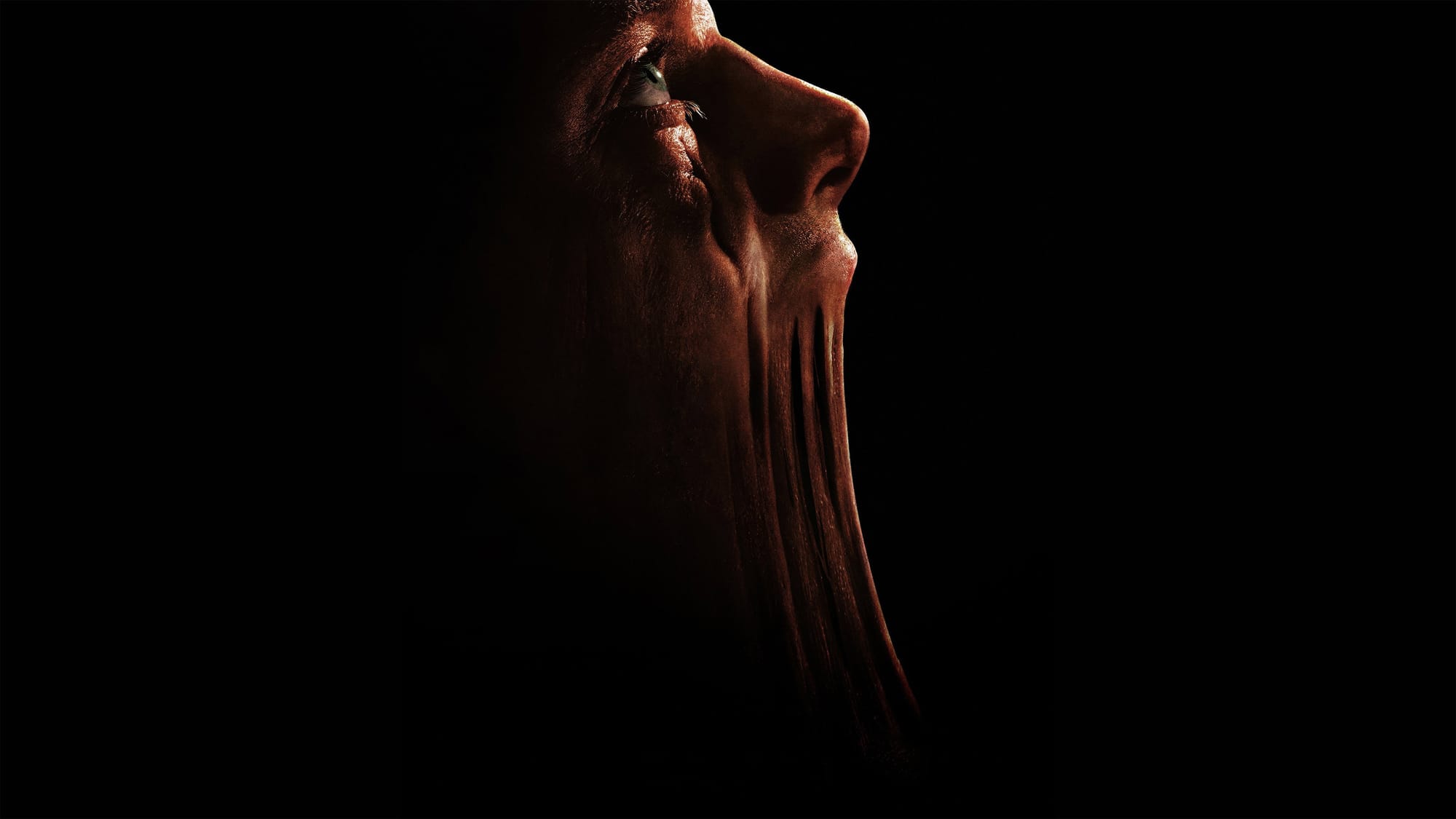
That arithmetic is the strategic argument hiding inside a weekend box office report. The MCU spent the last two years learning a version of the same lesson — that audience fatigue isn't a genre problem, it's a cost-structure problem. When films need $600M in global receipts to be considered successful, the margin for creative risk collapses entirely. Clayface was given a margin for risk. It used it. Flanagan's script reportedly pitches the origin as tragedy rather than empowerment — a rising actor whose body is turned to clay through an experimental treatment administered after a gangster's disfigurement — and the critical consensus suggests that register landed. Early comparisons to The Fly and Darkman are the kind of shorthand that helps a film travel through word-of-mouth.
There is also a precedent question worth examining. This is not the first time a villain origin story has outperformed expectations relative to its budget. The first Joker remains one of the highest-return films in comic book history. The lesson was available. Studios just kept not applying it. What Gunn and Safran appear to have done — intentionally or not — is structure Clayface so that audience satisfaction, not spectacle, carries the financial weight. An A- CinemaScore is the studios' most reliable early signal of word-of-mouth legs. If Clayface holds through November the way its audience scores suggest it should, the domestic total could settle anywhere from $65M–$80M, pushing the global number toward and potentially past break-even before streaming rights are calculated.
DC's Viability, Reframed
None of this means DC is stable. Superman was a genuine creative and commercial success, but its budget meant the margin was thinner than the gross implied. Supergirl was a failure by every metric. Clayface is a qualified success, and the qualification matters: it works precisely because it was made small. The question is whether DC can sustain a slate that mixes mid-budget genre films like this one with the larger tentpoles the franchise still needs to build audience infrastructure. A universe built only on $44M films cannot carry the interconnective weight that a cinematic universe requires. But a universe that never makes $44M films — that always swings for $170M–$225M — cannot survive the inevitable misfires.
What this weekend offers is not a rescue. It is a data point: genre discipline, a compressed budget, and a creative team allowed to work in their register can produce DC films that audiences actually like and studios can afford to lose. That is a modest conclusion. It is also the most important one DC Studios has gathered since Superman opened in 2025. The A- grade Clayface earned matches Superman's exactly. The budgets are separated by $180 million. That gap is where the real argument lives. For more context on how a parallel DC comics property has been managed as franchise infrastructure, see our analysis of the Clayface #1 comic as a pre-release mechanism. And for the cautionary tale playing out just one screen over this weekend, the second-weekend collapse of Street Fighter confirms the math that doesn't work when budgets and returns misalign.