The second weekend is where the studio spin stops and the arithmetic begins. Street Fighter (2026) opened on October 16 at number one with $30.8 million domestic across 3,575 theaters and $51.1 million worldwide — numbers that technically constitute a win in the standings column but signaled trouble from the moment they printed. The hoped-for target, widely reported ahead of release, was $70 million globally. The film arrived at $20 million short of that figure. Now, one week later, the second-weekend data has landed, and the picture it draws is considerably darker.
 Official trailer
Paramount and Legendary's video game movie took in $2.7 million on its second Friday, down 79 percent from opening day, with an estimated weekend total of $9.5 million — a drop of approximately 69 percent from the opening frame. Ten days into release, Street Fighter has $47.8 million domestic and sits in fourth place at 3,575 theaters. For a film that cost $82 million to produce, that trajectory is not the shape of a recovery story.
The comparison points are not flattering. Masters of the Universe fell 69.7 percent in its second weekend and took in $8.9 million; Mortal Kombat II held better, dropping 65.2 percent for a $13.4 million second weekend. Street Fighter lands right on the He-Man number and holds worse than Mortal Kombat II — and both of those movies bombed. The peer group for this kind of drop is not a list anyone at Legendary wanted to join.
The warning signs were audible before the second weekend even arrived. On Monday, A24's documentary You Can See Everything took the number-one spot in America with $2.5 million, while Street Fighter fell to $1.8 million on the daily chart. It was the first film this century to be the number-one film in America while playing in under 1,000 theaters. A video game blockbuster losing the daily box office to a limited-release documentary, four days after opening in 3,575 venues, is the kind of data point that forces the recalibration of every projection downstream.
The profitability math has never been generous. Legendary and video game developer Capcom co-financed the film for $82 million, with Paramount only on the hook for distribution. That structure shifts the financial exposure squarely onto Legendary and Capcom's shoulders — and the standard industry multiplier for break-even, once prints, advertising, and distribution fees are folded in, sits between 2x and 2.5x the production budget. With a reported production budget of $82 million, Street Fighter has an estimated theatrical break-even range of approximately $164 million to $205 million. Its worldwide gross of roughly $55 million represents approximately 27 to 34 percent of that target, and its theatrical run has not yet reached its estimated break-even range. At the current trajectory, the film is heading for approximately $110 million worldwide and a loss of $50 million or more.
The audience-versus-critic split, meanwhile, reads less like a vindication and more like a narrowly averted catastrophe. Rotten Tomatoes shows 41 percent from critics and 79 percent from audiences. That gap — nearly 40 points — usually signals a film that serves its core base while leaving general audiences cold. A B- CinemaScore compounds the problem: it's the grade that predicts soft word-of-mouth, not the passionate repeat viewership a franchise-builder needs. For a film counting on legs to claw toward respectability, B- is structurally limiting.
The film's creative path was never smooth. Legendary Entertainment acquired the live-action film and television rights to Street Fighter in April 2023, with Capcom co-producing from the outset. Danny and Michael Philippou were announced as directors before dropping out in June 2024, with Kitao Sakurai joining the following February. The long-gestating project was originally set at Sony as part of Legendary's pact with the studio and moved to Paramount once the initial deal expired. Director swaps, studio migrations, and compressed production timelines — principal photography began in August 2025 and ended in November — are the biographical markers of a project that never fully settled. The final film, directed by Sakurai and written with T.J. Fixman, carries the seams of that turbulence.
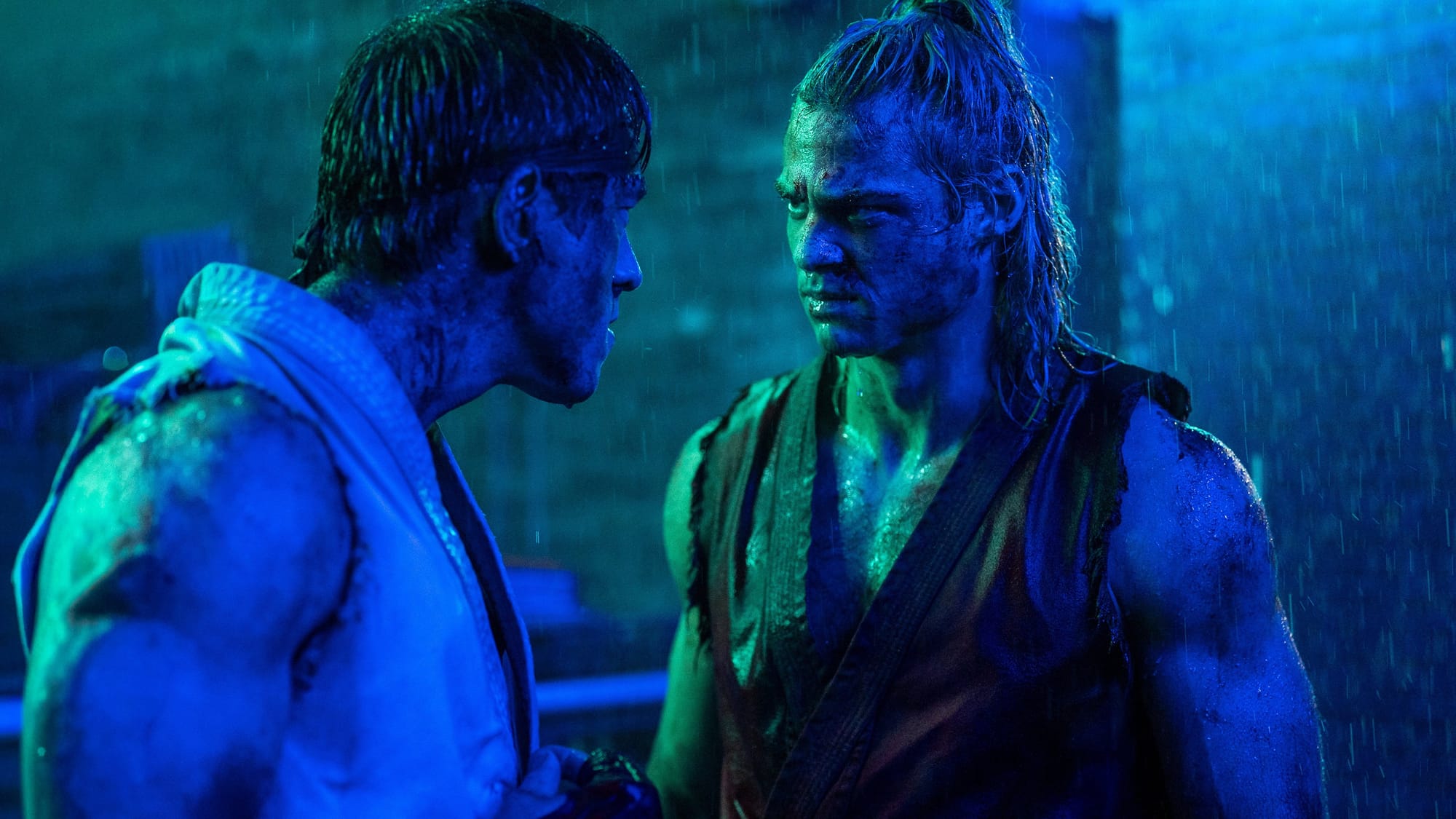
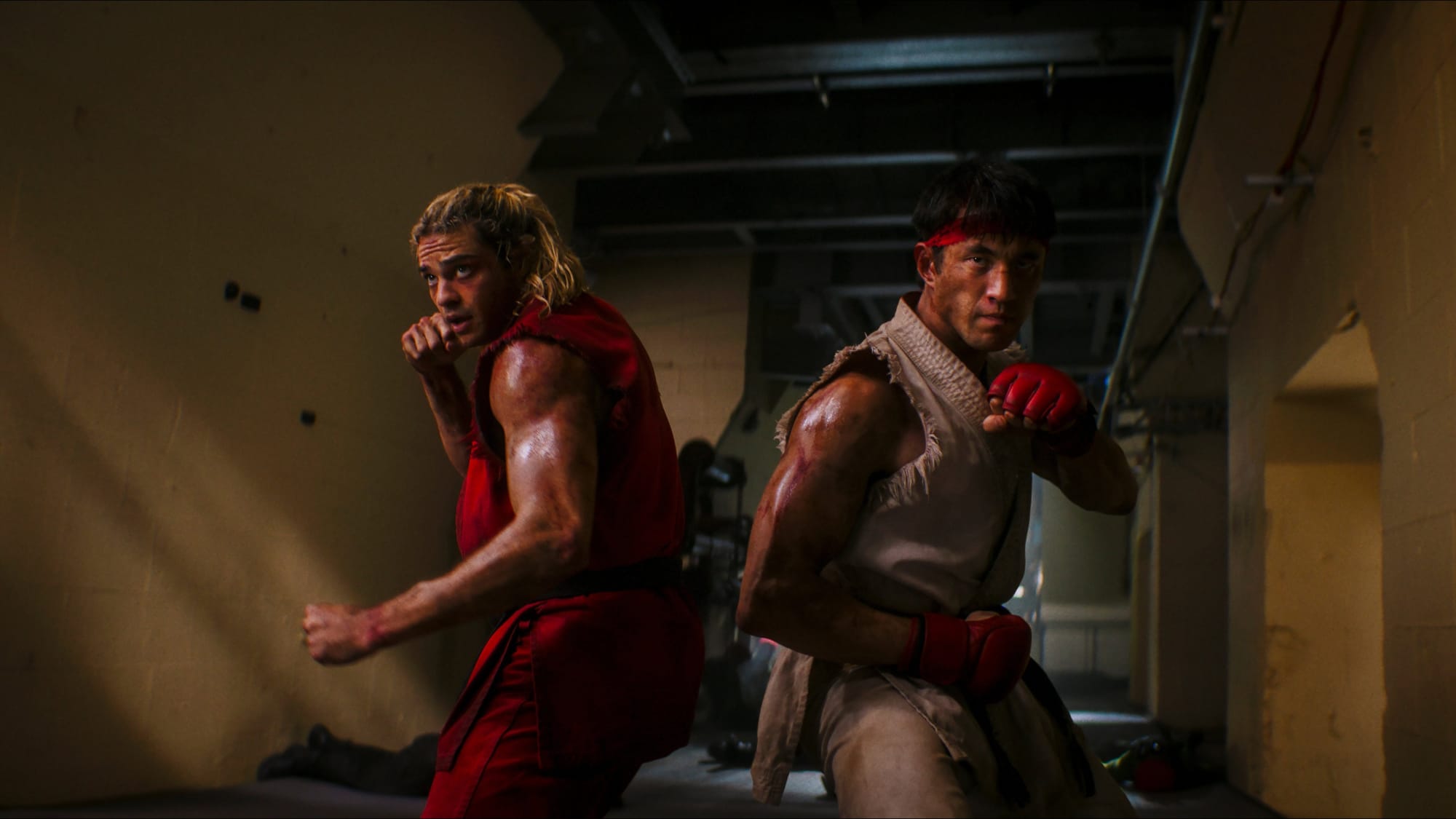
The Paramount release stars Andrew Koji as Ryu, Noah Centineo as Ken, and Callina Liang as Chun-Li, alongside a stunt-cast bench that includes Jason Momoa and Roman Reigns. The ensemble was aggressively marketed — Paramount was surely hoping the cast's social media footprint, featuring several action stars and WWE personalities, would translate to ticket sales. It generated noise without generating urgency, which is its own category of marketing failure. The awareness was high. The conversion rate was not.
Context matters here. Street Fighter is the third movie based on the Capcom video game series. The first, Street Fighter (1994), directed by Steven E. de Souza and starring Jean-Claude Van Damme and Raúl Juliá, cost $35 million and grossed $99.4 million worldwide — nearly three times its production budget — a result that looks considerably more comfortable in retrospect than it did at the time. Despite the mostly negative critical response, the film was a commercial hit and has since found a cult following. The irony that the Van Damme version, long treated as a cautionary tale of camp excess, now outperforms the 2026 reboot in the one metric that matters most — return on investment — is not lost on the industry. That 1994 film also demonstrated that ancillary revenue has a long tail for genre IP: as recently as 2024, the film was still making Capcom income every year from ongoing licensing and residuals. That precedent is the argument Paramount and Legendary are now making quietly to anyone who asks about the 2026 version's future.
Deadline's global box office report cites people in the know who say the $82 million production will be fine in the end once ancillary revenue is counted. That is the studio line, and it is not entirely dishonest — home video, streaming licensing, and international television deals can meaningfully reduce losses on a film with recognisable IP. But "fine in the end" is not how you build a franchise. It is how you avoid writing down a loss. Not unlike how Mortal Kombat II failed to firmly secure a future for that franchise with its box office opening, things are currently in an uncertain place, and subsequent weeks are going to determine whether this property can finally become a hit movie franchise. That verdict is already tilting.
The second-weekend hold was always going to be the first real diagnostic. A 69 percent drop with a B- CinemaScore, in a marketplace where Clayface just opened and You Can See Everything is expanding nationwide, is not a diagnostic that points toward recovery. It points toward a film that peaked on its first Friday and is now declining faster than the comparable titles that also failed. The ancillary bet is real — IP of this scale has genuine downstream value — but it asks audiences and studios to treat theatrical as a promotional cost rather than a revenue source. That is a rationalization, not a strategy. The second weekend of Street Fighter (2026) did not confirm whether the film can survive. It confirmed what survival, in this case, will actually mean.
For a longer view on what Kitao Sakurai was attempting with the material, and why critics and the franchise faithful arrived at such different verdicts, read Kynari's opening-day analysis. And for a parallel case study in what happens when video game IP migrates successfully to film and finds its audience abroad, the Resident Evil (2026) story offers a different set of lessons entirely.