Twenty years ago this week, on October 6, 2006, Warner Bros. released a Boston crime picture about two moles, one planted by the police inside the Irish mob and one planted by the mob inside the police. The Departed opened at number one, went on to gross $291.5 million on a $90 million budget, and four months later gave Martin Scorsese the Academy Award for Best Director that the industry had spent a quarter of a century failing to hand him. It is the film that finally made him an Oscar winner. It is also, two decades on, the clearest picture we have of a kind of Hollywood movie that has almost stopped being made.
A Hong Kong Thriller, Rebuilt in Southie
The Departed began as a purchase. In January 2003, Warner Bros. and producers Brad Grey and Brad Pitt paid Media Asia $1.75 million for the remake rights to Infernal Affairs (2002), Andrew Lau and Alan Mak's tightly wound thriller about a triad informant inside the Hong Kong police and an undercover officer inside the triad. Screenwriter William Monahan moved the story to South Boston, and Scorsese signed on after reading his script.
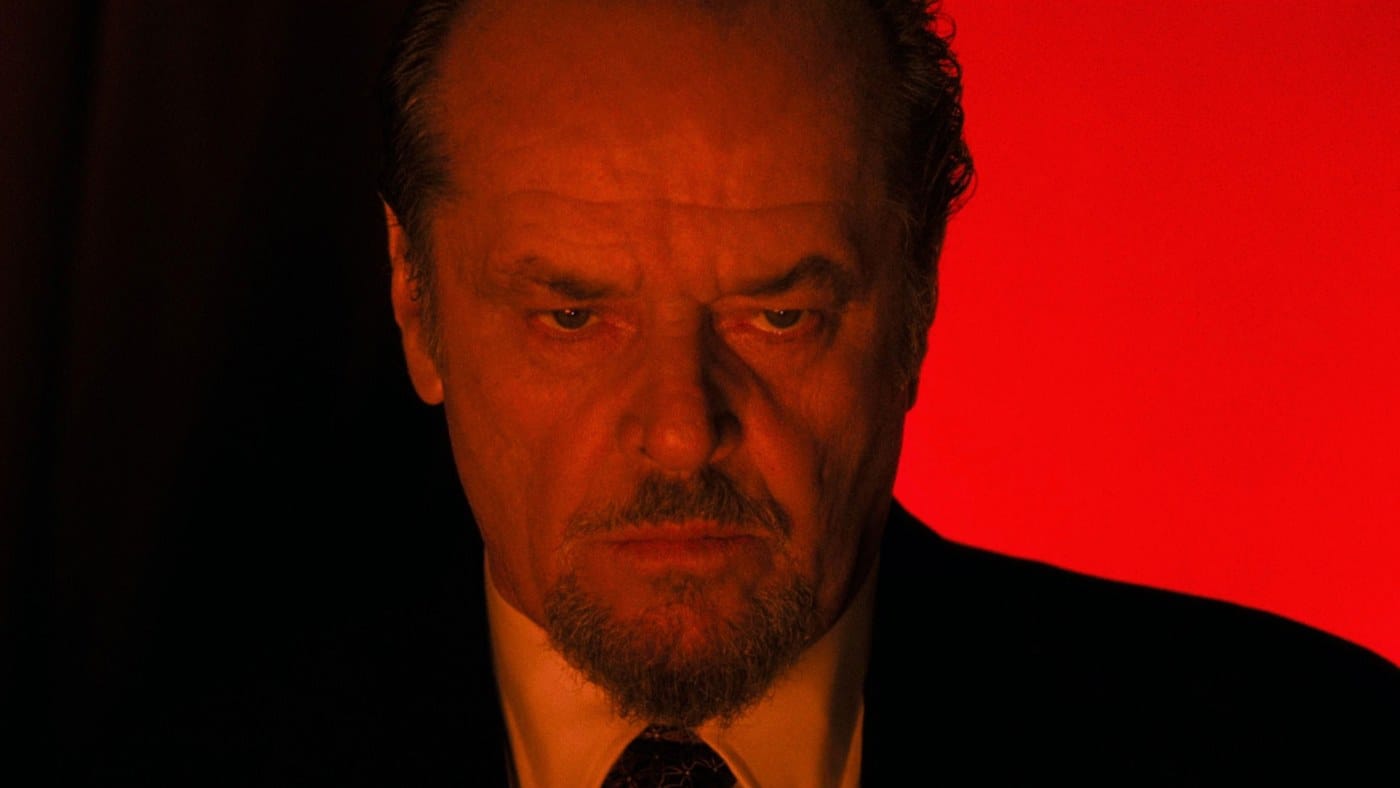
Pitt was originally meant to play Colin Sullivan, the mob's man in the Massachusetts State Police. He stepped back, saying the part needed a younger actor, and stayed on as producer. Matt Damon, who grew up in the Boston area, took the role. Leonardo DiCaprio became Billy Costigan, the trooper sent undercover. And Jack Nicholson, asked to play the crime boss Frank Costello, wanted something more than a standard gangster. Monahan's answer was Whitey Bulger, the real Boston mobster who operated for years as a protected FBI informant. That single choice gave the remake its spine: in Scorsese's version, the corruption does not stop at two moles. It runs all the way up.
The original's makers were gracious and a little competitive about it. Andrew Lau said he still preferred his own film but thought the Hollywood version was pretty good. Andy Lau, one of Infernal Affairs' stars, felt the remake was long enough to contain all three films of the original trilogy. Both points are fair. The Departed runs 151 minutes, and it is louder, crueler and more profane than its source. It is also more interested in why the characters lie than in how.
Identity as a Death Sentence
What Scorsese found in the material was a story about men who become the lie they are living. Costigan, a cop playing a criminal, is coming apart; Sullivan, a criminal playing a cop, is thriving. Roger Ebert compared their need for approval from the people they deceive to Stockholm syndrome, and he was right. Both men want to be loved by the father figures they are betraying, Martin Sheen's Captain Queenan on one side and Nicholson's Costello on the other, and both are destroyed by it.
The film's visual grammar keeps telling you how this will end. Scorsese borrowed an X motif from Howard Hawks' Scarface (1932), marking characters for death: in the cross-beams of a walkway, the taped windows of the building Queenan walks into, a lit X on Sullivan's office wall, the elevator where Costigan's luck runs out. The final shot, a rat crawling along Sullivan's windowsill with the State House dome behind it, was mocked at the time as too literal. Scorsese said it was not meant to be taken literally, but as an image of a culture of suspicion that felt very American in the years after 9/11. Twenty years later, the rat looks less like a joke and more like a thesis statement.
The craft around it is extraordinary. Thelma Schoonmaker's editing keeps a sprawling double narrative moving at the speed of a phone call. Michael Ballhaus, in his last collaboration with Scorsese, shoots Boston as a city of glass and stairwells. Howard Shore wrote a guitar score built around a tango, which Scorsese described as dangerous and lethal, with nods to the zither of The Third Man. And the soundtrack turned Dropkick Murphys' "I'm Shipping Up to Boston" into one of the most recognizable needle drops of the decade.
The Oscar That Arrived Late
At the 79th Academy Awards, on February 25, 2007, The Departed won four Oscars: Best Picture, Best Director, Best Adapted Screenplay for Monahan and Best Film Editing for Schoonmaker. For Scorsese it was the first win after a string of losses that had become an industry embarrassment. Raging Bull had lost to Ordinary People; Goodfellas had lost to Dances with Wolves. The trophy was handed to him by Francis Ford Coppola, Steven Spielberg and George Lucas, three peers from the generation that had remade Hollywood in the 1970s.
The criticism started immediately and has never quite stopped. Plenty of commentators called it a lifetime achievement award given to a lesser film. Scorsese, typically, got there first: he joked that he had finally won because it was the first movie he had made with a plot. There is truth in both views. The Departed is not Taxi Driver or Raging Bull. It is a genre machine, built to entertain, with a cast of stars doing their loudest work. But that is precisely what makes it interesting now. The Academy did not reward Scorsese for his most personal film. It rewarded him for proving he could make a studio hit on his own terms, which is a harder trick than it sounds.
The Last of the Adult Blockbusters
The number that matters most in 2026 is not the Oscar count. It is the opening weekend. The Departed took $26.9 million in its first three days, becoming Scorsese's fourth film to debut at number one, and it remains the most recent Best Picture winner to have opened in first place. An R-rated crime drama for adults, with no franchise, no costumes and no sequel plan, beat everything else in the country on its first weekend. A sequel script was written and then shelved, partly because Scorsese had no interest in sequels at all.
That is the film's real legacy, and it is a slightly melancholy one. The mid-budget star-driven thriller that The Departed represents has spent twenty years being squeezed out of theaters, first by franchises and then by streaming. The handful of directors who still get to make films at that scale for a mass audience now have to be brands in their own right, as Christopher Nolan has proven with The Odyssey. And the films that awards season now rewards, as this year's festival circuit shows, rarely open at number one.
Like the Kubrick films that took decades to be understood, The Departed has also been reappraised. In 2021 the Writers Guild ranked Monahan's script 30th on its list of the best screenplays of the century so far, and in 2025 The New York Times placed the film 31st among the best movies of the 21st century. Scorsese and DiCaprio went on to make Shutter Island, The Wolf of Wall Street and Killers of the Flower Moon together, and each of those films owes something to the freedom The Departed's success bought them.
Watch it again at twenty and the rat on the windowsill still lands. So does the sense of a filmmaker taking a genre engine, tuning it to the limit and running it through a whole city's moral rot. It was not Scorsese's greatest film. It may have been his most perfectly timed one. The full production history is on Wikipedia, and the original that inspired it is well worth seeking out: Infernal Affairs is as lean as the remake is lavish.