Stanley Kubrick finished 2001: A Space Odyssey (2001: A Space Odyssey, 1968) and Rock Hudson walked out of the premiere. The audience at the first press screening reportedly booed. MGM executives, who had spent forty years building the most powerful studio apparatus in Hollywood, watched the film in silence and concluded they had financed an expensive mistake. Kubrick cut nineteen minutes from the print the following day — not because he agreed with them, but because he understood something they did not: that the film was already untouchable, and the cuts were cosmetic concessions to a war he had already won.
This is the founding logic of what could be called the Kubrick Method. Not a production philosophy. Not an aesthetic manifesto. A structural relationship between the work and the culture that receives it, one in which rejection is not a failure signal but a diagnostic tool. The more complete and uncompromising the work, the more violently the contemporary audience tends to resist it — and the more durably the culture eventually absorbs it.
The Anatomy of First Contact
The pattern holds across virtually every major film in Kubrick's catalog. Lolita (Lolita, 1962) was dismissed by critics who found it either too timid or too indulgent. Dr. Strangelove or: How I Learned to Stop Worrying and Love the Bomb (Dr. Strangelove, 1964) was called tasteless and dangerous in the middle of the Cold War; Newsweek worried it would damage morale. La naranja mecánica (A Clockwork Orange, 1971) was banned in the United Kingdom for over two decades — not by censors, but withdrawn by Kubrick himself after copycat violence claims created a media siege around his family. Barry Lyndon (Barry Lyndon, 1975) was received as a glacial, self-indulgent failure and nearly destroyed his commercial reputation. El resplandor (The Shining, 1980) was nominated for two Razzie Awards. Full Metal Jacket (Full Metal Jacket, 1987) was considered a lesser entry, a partial film, a missed opportunity. Eyes Wide Shut (Eyes Wide Shut, 1999) was called anti-erotic, tedious, and overlong — a disappointing final act for a legend.
Every single one of those films now occupies a permanent position in the critical canon. Several are studied as defining examples of their genre. The gap between first reception and final verdict is not a matter of years — it is a matter of decades. And the gap is not random. It is structural.
Why Difficulty Is Not the Point
The easy explanation is that Kubrick made difficult films and audiences need time to adjust to difficulty. This explanation is wrong, or at least insufficient. Plenty of difficult films from the same era — by Bergman, by Tarkovsky, by Antonioni — were received with immediate critical reverence, even when they found limited commercial audiences. Difficulty alone does not produce the Kubrick effect. Something else is operating.
What Kubrick did, consistently and almost methodically, was build films that refused to confirm the emotional contract the audience arrived with. He did not simply challenge viewers intellectually. He denied them the release they had paid for. El resplandor is a horror film that refuses catharsis. La naranja mecánica is a film about violence that makes the audience complicit rather than righteous. Barry Lyndon is a costume drama that removes all warmth from a genre defined by warmth. 2001 is a science fiction epic that replaces narrative resolution with cosmological ambiguity. Eyes Wide Shut is an erotic thriller that withholds eroticism and suspense simultaneously.
In each case, Kubrick identified the dominant emotional expectation of the genre he was working in and surgically removed it. What remained was not emptiness — it was a different kind of pressure. The films still operate on the viewer, still accumulate tension, still generate meaning. But they deliver none of it in the expected currency. The audience leaves the theater feeling cheated, unsettled, vaguely angry. That anger is, in retrospect, evidence of contact.
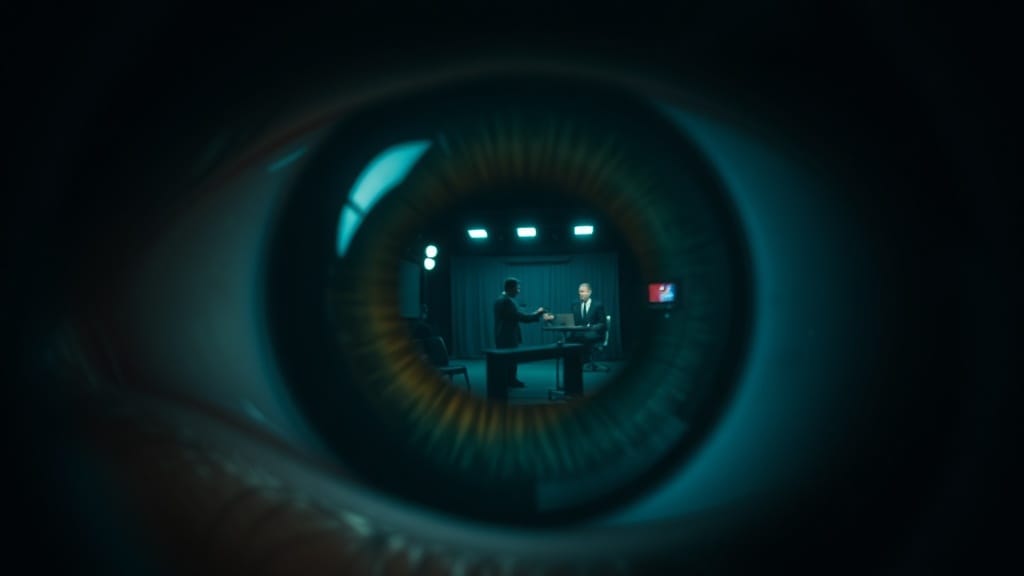
The more complete and uncompromising the work, the more violently the contemporary audience tends to resist it — and the more durably the culture eventually absorbs it.
The Preparation Problem
There is a temporal dimension to the Kubrick Method that has nothing to do with artistic merit and everything to do with cultural readiness. Kubrick was a filmmaker who worked between three and seven years on each project. During that production interval, culture moved. Audiences changed. The conversation shifted. By the time any Kubrick film arrived in theaters, it had been conceived for a world that no longer quite existed — and it was simultaneously too strange for the present and too precise to be dismissed as mere eccentricity.
Full Metal Jacket arrived in 1987, a decade after the main wave of Vietnam cinema, two years after Platoon had already given audiences the cathartic war film they needed. Kubrick's film, split almost schizophrenically between Parris Island and Hue, seemed structurally broken to critics who wanted coherence. What they missed was that the structural break was the argument: war does not have a second act that resolves the first. The film's apparent flaw was its thesis.
Eyes Wide Shut was completed and released in 1999, the same summer as the first The Blair Witch Project and the rising dominance of ironic, kinetic cinema. Kubrick's final film was slow, deliberate, and entirely sincere in its investigation of marital desire and social performance. It was not the film the culture was prepared to receive. It remains one of the most quietly devastating explorations of bourgeois repression in American cinema.
Control as Epistemology
Kubrick's obsessive control over every element of production — the thousands of takes, the personal supervision of distribution, the refusal to leave England for the last twenty-seven years of his life, the architectural precision of every frame composition — is usually discussed as personality. As pathology, even. A brilliant man who could not stop. What this framing misses is that the control was epistemological. It was a method of knowing.
Kubrick believed, demonstrably, that meaning in cinema was not carried by performance or story alone but by the accumulated pressure of every decision: the angle of light, the rhythm of a cut, the distance between a camera and a face, the temperature of a color palette. Barry Lyndon was shot partly by candlelight using modified NASA lenses because Kubrick determined that artificial lighting would produce a different relationship between the viewer and the eighteenth century. This was not perfectionism. This was a theory about how cinematic images carry historical information.
The consequence of that theory is that his films are extraordinarily resistant to superficial engagement. They do not yield their logic easily. A viewer who is not willing to surrender to the film's own temporal architecture — to let Barry Lyndon breathe at the speed of a painted portrait, to let 2001 silence the human drama for cosmic scale — will experience the film as a malfunction. The film is not malfunctioning. The viewer's expectations are.
The Legacy Mechanism
Why do Kubrick films recover so completely and so universally from initial rejection? The answer lies in the nature of what they leave behind. A film engineered to deliver immediate emotional satisfaction tends to age according to the shelf life of that emotion — which is, in most cases, short. A film that refuses the immediate transaction and instead builds pressure through precision, ambiguity, and structural argument tends to grow in retrospect, because the viewer brings new frameworks to each encounter and finds the film capable of absorbing them.
El resplandor has generated an entire secondary culture of interpretation — some credible, some conspiratorial, all of it evidence of a film that refuses to be closed. Room 237, the 2012 documentary cataloging theories about the film's hidden meanings, is itself a testament to the productive instability Kubrick built into the material. Whether any specific theory is correct is almost beside the point. The film generates genuine interpretive energy because its ambiguities are not accidental — they are load-bearing.

The same dynamic operates in 2001, where the question of what HAL represents, what the Monolith does, and what the Star Child signals has sustained serious intellectual engagement for over five decades. Not because Kubrick refused to answer — but because the film's visual and structural language provides enough evidence for multiple coherent readings, each of which illuminates something real. That is not vagueness. That is density.
What the Pattern Demands
The Kubrick Method, understood clearly, is not a template. It cannot be replicated by simply making slow films, or withholding emotional resolution, or exercising obsessive control over a production. Those are symptoms, not causes. The cause is a filmmaker who had a genuine and developed theory about how cinema produces meaning, who was willing to subordinate every commercial and social consideration to that theory, and who had the contractual leverage — earned through early commercial successes and sustained through careful negotiation — to protect the work from intervention.
Most filmmakers do not have that leverage. Most filmmakers do not have that theory. The ones who approximate it — Paul Thomas Anderson with There Will Be Blood, David Lynch with Mulholland Drive, Jonathan Glazer with La zona de interés (The Zone of Interest, 2023) — tend to produce work that follows a similar trajectory: uncomfortable first reception, slow critical rehabilitation, eventual canonical status. The method is not Kubrick's alone. But he is its purest case, the one in which every film in a career of thirteen features followed the same arc without exception.
That consistency is the most remarkable fact about him. Not that he made great films. That he made great films that were reliably rejected first, reliably recovered later, and reliably became more significant with each passing decade. The rejection was not accidental. The recovery was not charity. Both were consequences of the same thing: a body of work built at a frequency the culture needed time to tune into.
The Verdict That Keeps Arriving
Rock Hudson walked out of the 2001 premiere in 1968. By 2002, the American Film Institute had placed it eighth on its list of the greatest American films ever made. By the time Kubrick died in March 1999, six days after delivering the final cut of Eyes Wide Shut, critics were already beginning the process of retrospective elevation that would, within a decade, position him as perhaps the most technically accomplished director in the history of the medium.
He did not live to see the full rehabilitation. He did not seem to require it. The films were made to survive their first reception, not to be celebrated by it. That is the method, and that is the legacy: a systematic demonstration that the distance between a masterpiece and its recognition is not a failure of the work — it is a measure of how far ahead of its audience the work was built to land.
The world hates first. Then it catches up. Kubrick always knew which side of that equation he was working on.