There is no algorithm that greenlit The Odyssey (2025). No franchise scaffolding, no shared universe, no pre-sold IP in any contemporary sense of that phrase. What Christopher Nolan brought to studios was a 24-book Ancient Greek poem, composed sometime in the 8th century BCE, featuring a protagonist who takes a decade to sail home from a war. And audiences have now handed that film $1.1 billion dollars — and counting.
The number itself is almost secondary. What it indexes is something harder to manufacture: deferred trust, finally cashed in at scale.
The Ledger That Got Him Here
Nolan has been building this account for over twenty years. Memento (2000) established that he would not condescend to his audience. The Dark Knight (2008) proved that formal ambition and mass-market spectacle were not mutually exclusive. Inception (2010) asked viewers to hold four nested dream levels in their heads simultaneously and grossed over $800 million. Interstellar (2014) spent its final act inside a tesseract and became a cultural event. Dunkirk (2017) stripped war cinema down to pure duration and sensation. Oppenheimer (2023) ran three hours, opened against a pink plastic cultural juggernaut, and became the highest-grossing biographical film in history.
Each of those films asked something of its audience. Each time, the audience paid. What The Odyssey represents is the compound interest on every one of those transactions. By the time Nolan announced he was adapting Homer, the deal was already half-done. Audiences did not need to know what kind of film it would be. They knew what kind of filmmaker would be making it.
What the Source Material Actually Offers
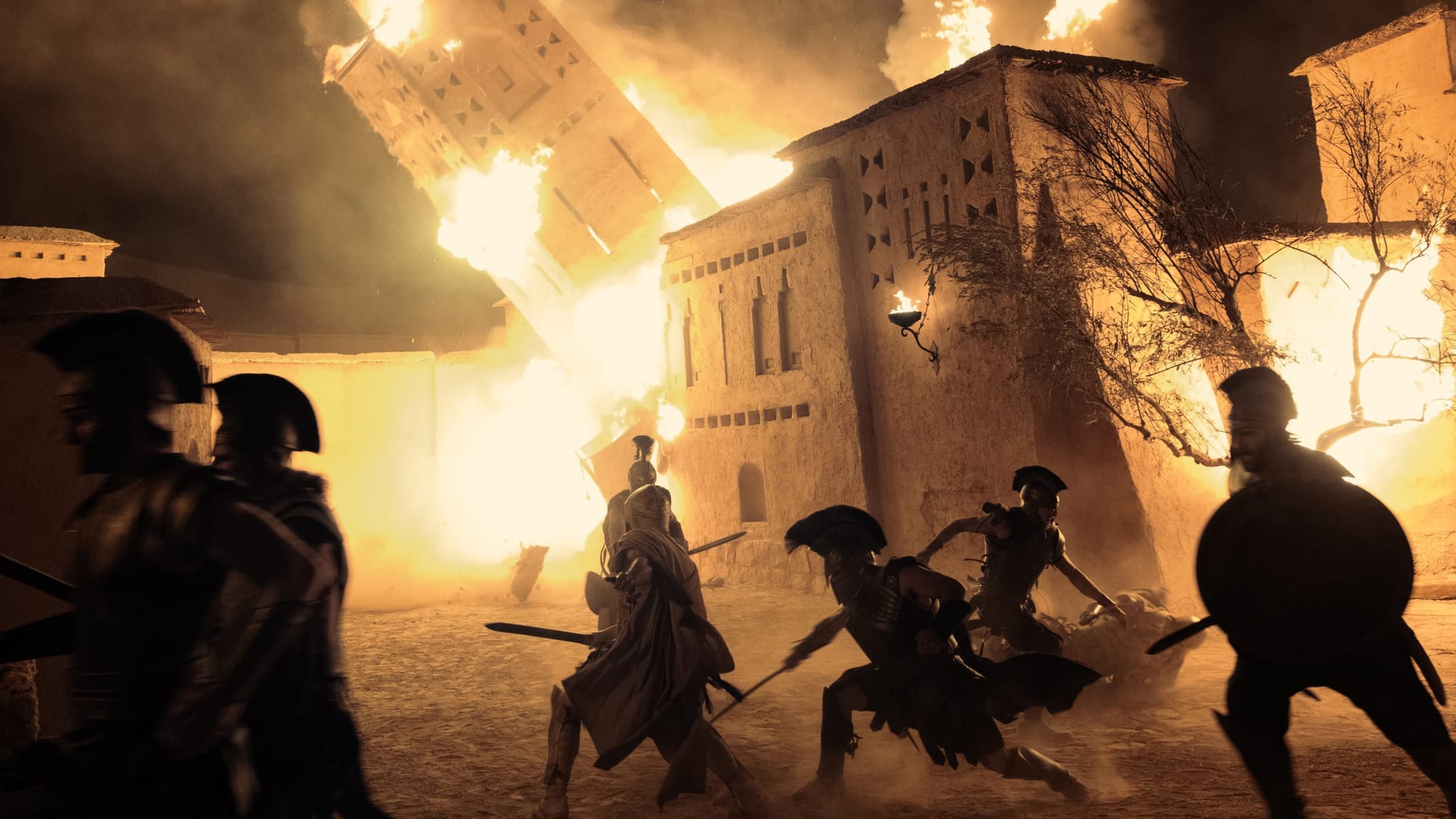
It would be a mistake to dismiss the poem itself as incidental. The Odyssey is not some dusty classroom obligation — it is a story about a man who cannot go straight home, who is detained by gods, monsters, grief, temptation, and his own ego. It is a story about the violence of prolonged absence and what survives it. Those are not niche concerns. They are among the oldest emotional frequencies human beings transmit to one another.
Nolan has always been drawn to stories structured around time — its compression, its distortion, its cruelty. Homer's poem, which moves between Ithaca, Olympus, and the wine-dark sea with the chronological confidence of a writer who invented narrative digression, is nearly purpose-built for his preoccupations. The source material is not a liability to be overcome. It is the engine.
The IMAX Dimension
Screens sold out through October. China opening this week, representing a market that historically treats Western prestige cinema with significant indifference. These are not the footprints of a film riding nostalgia or a pre-existing fan base. They are the footprints of an event — the specific cultural gravity that forms when a filmmaker, a format, and a story achieve some rare alignment.
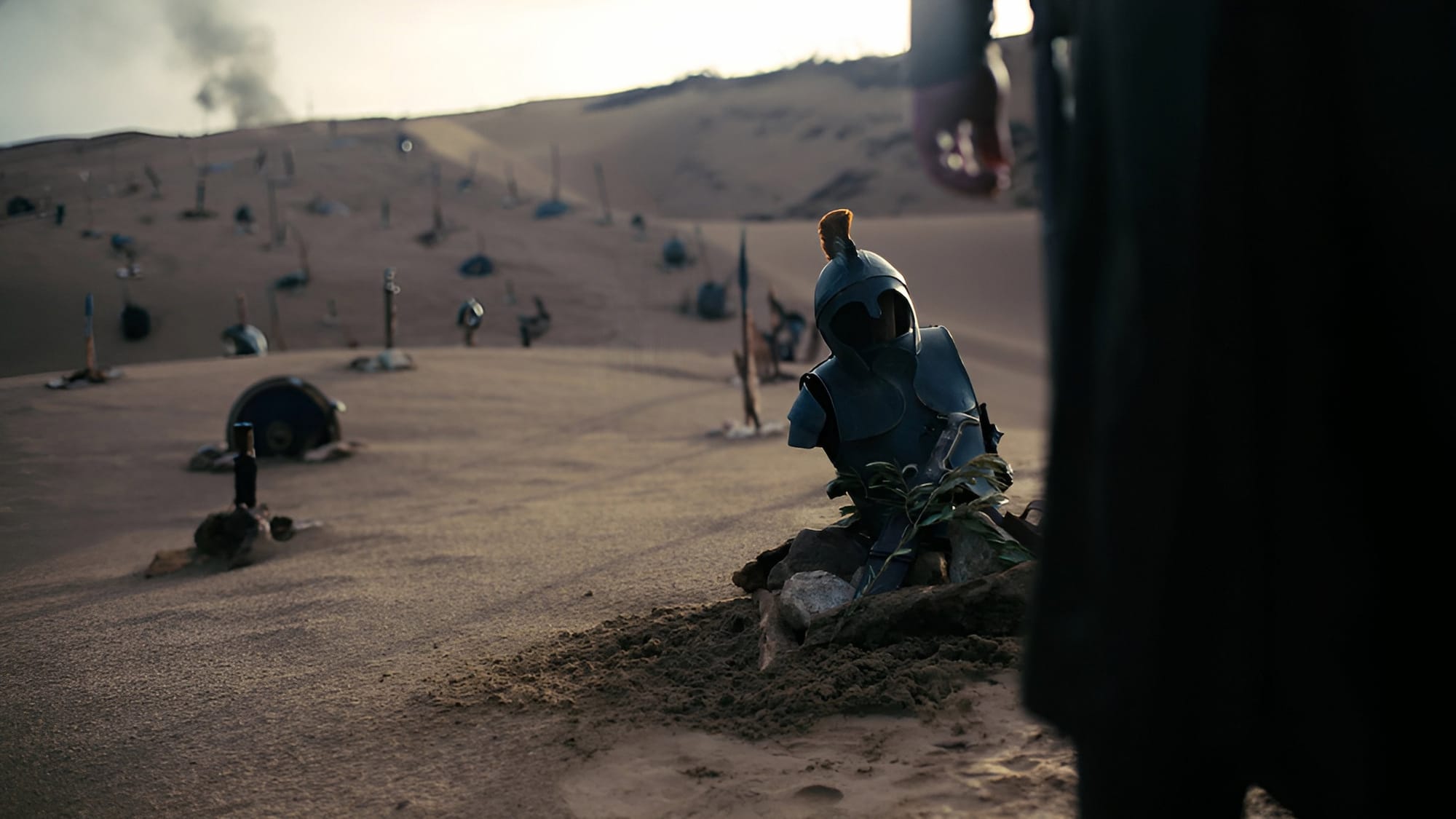
Nolan shot The Odyssey on IMAX film. That is not a marketing decision. It is an argument about what cinema is supposed to do to a body sitting in a dark room. The surging IMAX numbers are audiences voting, with their time and money, for an experience that cannot be approximated on a phone screen. In a media landscape that has spent fifteen years insisting that the theatrical window is a relic, The Odyssey is behaving like a counterargument.
What $1.1 Billion Is Actually Measuring
Box office figures are blunt instruments. They cannot distinguish between a film people loved and a film people attended out of obligation, between a cultural moment and a marketing blitz. But some numbers carry more signal than others.
The Odyssey had no sequel to set up. It had no character audiences had already paid to see eleven times. It had no safety net of brand recognition in any modern commercial sense. What it had was a director who has never made the same film twice, an ancient poem that has survived three millennia precisely because it understands what people are afraid of and what they want, and an audience that has learned, over twenty years, to show up when that director calls.
That is not a box office story. That is a argument about the relationship between artistic credibility and commercial permission — about how trust, accumulated slowly and through genuine risk, eventually becomes the most bankable thing in the room.
Nearly 3,000 years after someone first sang these lines aloud, Odysseus is still filling the house.