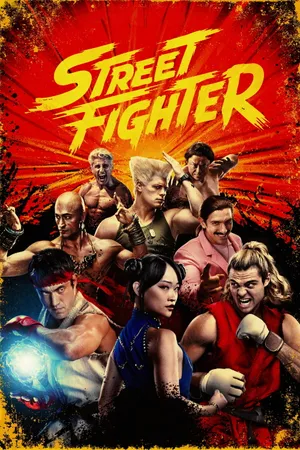
Fifteen days before release, Street Fighter (2026) is fighting the wrong opponent. The film Legendary and Capcom have spent three years assembling — directed by Kitao Sakurai, set in 1993, stacked with WWE stars, a UFC fighter and Jason Momoa as Blanka — is not really competing against the October box office. It is competing against its own history, and the early numbers suggest that history is winning the first round.
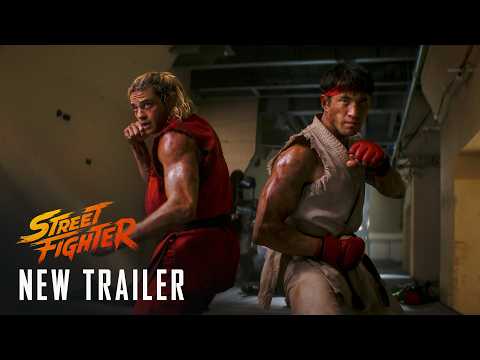 Official trailer
The Tracking Problem
The industry's read on the film is lukewarm in a very specific way. Presales, according to tracking reported in late September, sit between two recent benchmarks: stronger than Masters of the Universe, weaker than Mortal Kombat II. Opening-weekend projections are split, from around $20 million at the conservative end to $30–37 million at the optimistic one.
The more telling figure comes from audience research. About six and a half weeks out, Street Fighter sat at 39% awareness and 39% interest on The Quorum — almost exactly where Masters of the Universe stood before its disappointing debut. Mortal Kombat II, by comparison, was at 50% awareness and 52% interest in the equivalent window. That gap is the difference between a film people are planning to see and a film people have merely heard of.
The comparisons are not flattering on either side. Mortal Kombat II opened to $38.5 million in May and reached $129.4 million worldwide on an $80 million budget — a respectable result for a fighting-game adaptation. Masters of the Universe opened to $29.3 million and finished at $113 million worldwide against a budget north of $170 million. Street Fighter is tracking toward the zone between those two outcomes, and which side of the line it lands on will depend almost entirely on what it actually costs and how audiences talk about it after the first Friday.
The Ghosts of 1994 and 2009
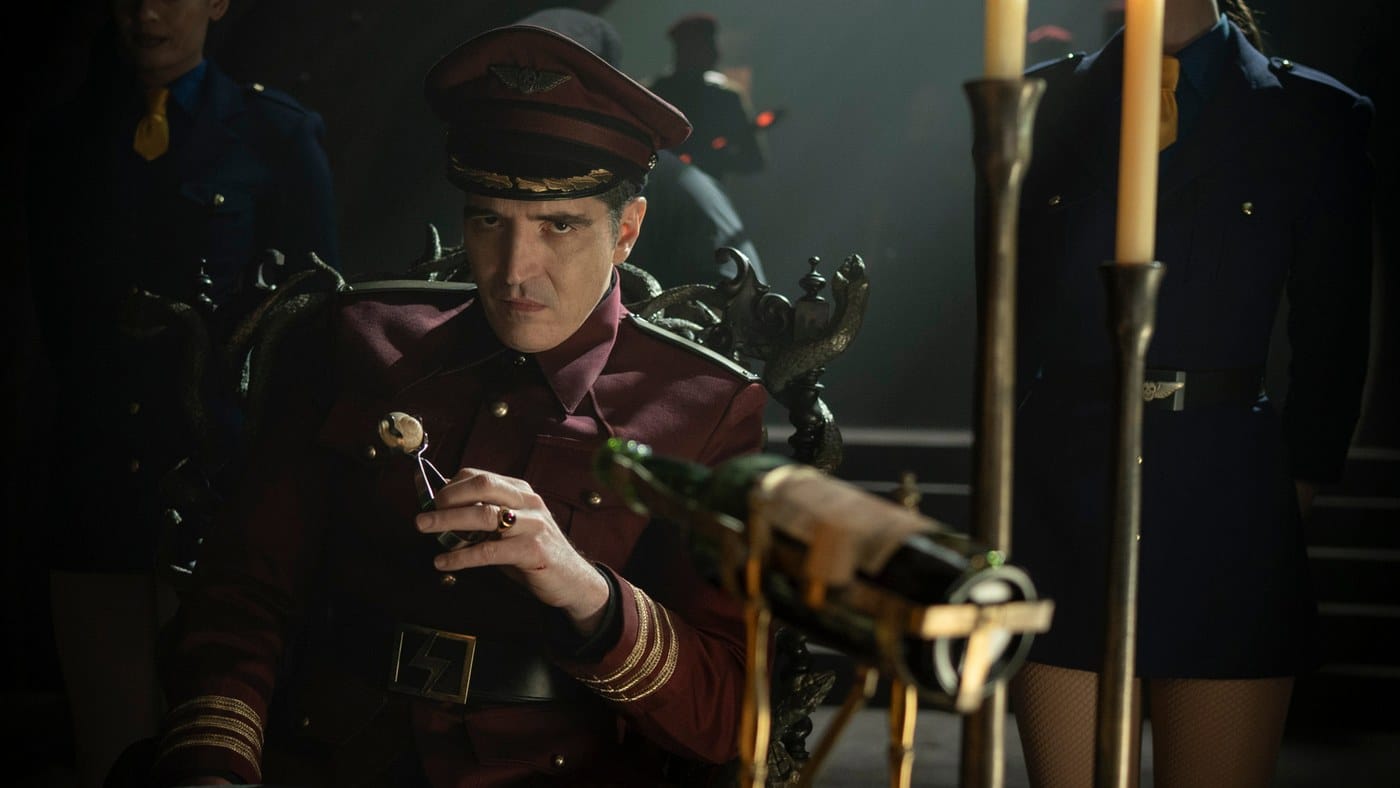
The reason the stakes feel so heavy is that Street Fighter has been here twice before, and both times it lost. Steven E. de Souza's 1994 film grossed $99.4 million worldwide on a $35 million budget — a commercial success by the standards of its moment — while earning an 11% score on Rotten Tomatoes. It survives in memory mostly through Raúl Juliá's operatic M. Bison, a performance delivered by an actor who died two months before the film opened and to whom it is dedicated.
The 2009 attempt, Street Fighter: The Legend of Chun-Li, did not even have camp to fall back on. It made $12.8 million worldwide against a $50 million budget and holds a 3% critics' score. Between them, the two films established a reputation the brand has never escaped: the most influential fighting game ever made is also one of Hollywood's most reliable punchlines.
We traced that history in detail when the new trailer arrived in September. The question now is whether audiences have noticed that this version is built differently.
What Has Actually Changed
On paper, a great deal. The production has been through real turbulence — the Philippou brothers, hot off Talk to Me, were in talks to direct before leaving in June 2024, and the film moved from Sony to Paramount when Legendary's distribution deal expired, sliding from a March 2026 date to October 16. But the version that emerged has a clear point of view.
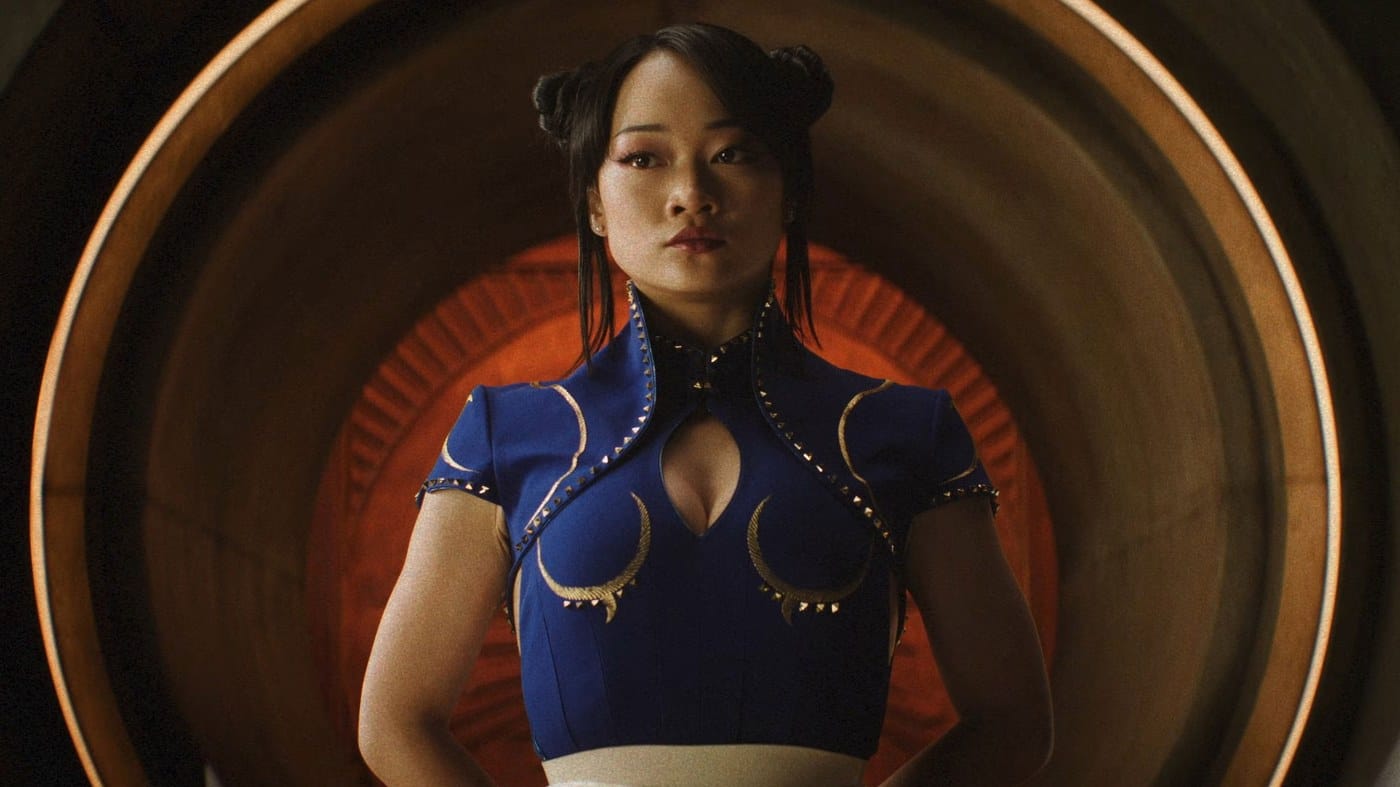
Sakurai, best known for the anarchic comedy of The Eric Andre Show and Bad Trip, is making an action comedy that knows exactly how absurd its source material is. The script by T.J. Fixman and Sakurai sets the World Warrior Tournament in 1993, the year the arcade cabinets were everywhere, with Andrew Koji's Ryu and Noah Centineo's Ken recruited by Callina Liang's Chun-Li to confront David Dastmalchian's M. Bison. Around them, the casting reads like a deliberate embrace of spectacle: Roman Reigns as Akuma, Cody Rhodes as Guile, 50 Cent as Balrog, Orville Peck as Vega, UFC featherweight Alexander Volkanovski in a supporting role.
That is not a film pretending to be prestige cinema. It is a film betting that the camp the 1994 version stumbled into can be a design choice rather than an accident — the same calculation that helped Mortal Kombat II find its footing this spring.
Why the First Weekend Matters More Than Usual
Video game adaptations no longer need to apologize for existing. The past few years have proven that audiences will turn out for them, and that directors with a real voice can bend a franchise without breaking it — the debate that followed Zach Cregger's Resident Evil was about authorship, not legitimacy. Street Fighter does not have to prove the genre works. It has to prove that this particular brand can shed thirty years of embarrassment.
Tracking measures intent, not quality, and a 119-minute PG-13 IMAX release with a cast this recognizable has room to outperform if word of mouth turns. But the numbers suggest the audience has not yet been persuaded that 2026 is different from 1994. Sakurai's film has two weeks to make that argument, and one weekend to win it.