On July 15, 2016, Netflix dropped all eight episodes of an unknown show created by two brothers from Atlanta. There was no theatrical campaign, no press tour worth remembering, no cultural infrastructure to receive it. By August, Stranger Things (Stranger Things, 2016–2025) was the most-talked-about piece of television on the planet. Nine years later, in December 2025, its fifth and final season concluded a cycle that had lasted longer than most presidencies, reshaped the economics of streaming, and installed nostalgia as the dominant grammar of prestige pop culture. The show is now history. What it leaves behind is the real story.
The Binge Bomb and the Birth of the Cultural Event
Before Stranger Things, Netflix had produced prestige television — House of Cards, Orange Is the New Black — but none of it had functioned as a collective cultural detonation. The Duffer Brothers' series introduced something the platform had not yet manufactured at scale: the appointment-viewing paradox. A show released all at once that everyone watched simultaneously anyway, not because they were scheduled to, but because the conversation demanded it. The water-cooler moment, supposedly killed by on-demand streaming, returned — only now the cooler was Twitter, Reddit, and TikTok, and it ran 24 hours.
Netflix understood immediately what it had. The company began measuring success not in ratings — a metric it had largely refused to publish — but in cultural penetration: search volume, social mentions, merchandise licensing, theme park deals. Stranger Things taught the industry that a streaming series could function as a franchise anchor without a prior IP base, without comic books, without a cinematic universe to plug into. It built its own mythology from borrowed parts — Stephen King paperbacks, Spielberg cinematography, Carpenter synthesizers — and the synthesis was original enough to own.
The implications were seismic. Within two years of the show's debut, every major studio was repositioning its streaming ambitions around the franchise-first model Stranger Things had demonstrated. Disney+ launched with The Mandalorian. HBO Max greenlit House of the Dragon. Paramount+ banked on Halo. The logic was identical: build a world, seed it with nostalgia or legacy IP, and let the audience do the marketing. Not all of them succeeded, but all of them were chasing the same blueprint — one written in Hawkins, Indiana, in a basement that smelled like Dungeons & Dragons and existential dread.
Nostalgia as Narrative Infrastructure
The critical conversation around Stranger Things spent most of its first three seasons debating whether the show's nostalgia was genuine or cynical. The question was always slightly wrong. Nostalgia in Stranger Things was never set decoration. It was the structural load-bearing wall.
The Duffer Brothers were not children of the 1980s — they were born in 1984, toddlers for most of the decade they were reconstructing. What they built was not memory but mythology: a version of the eighties filtered through the films, novels, and television that had already transformed that era into legend. The show was nostalgic for nostalgia itself, which meant it could land with equal emotional force on viewers who had lived through the decade and viewers born two generations after it ended. That universality was not accidental. It was engineered.
This distinction matters because it explains why the formula proved so durable — and so widely imitated. The show's nostalgia did not rely on specific cultural references that aged out; it relied on emotional archetypes that don't. The group of misfit children. The absent or incompetent adult authority. The monster from a world parallel to the ordinary one. The sacrifice that costs exactly as much as it needs to. These are not eighties conventions. They are mythological constants. The Duffer Brothers dressed them in Ghostbusters costumes and put Kate Bush on the soundtrack, but the skeleton underneath was always older and sturdier than any particular decade.
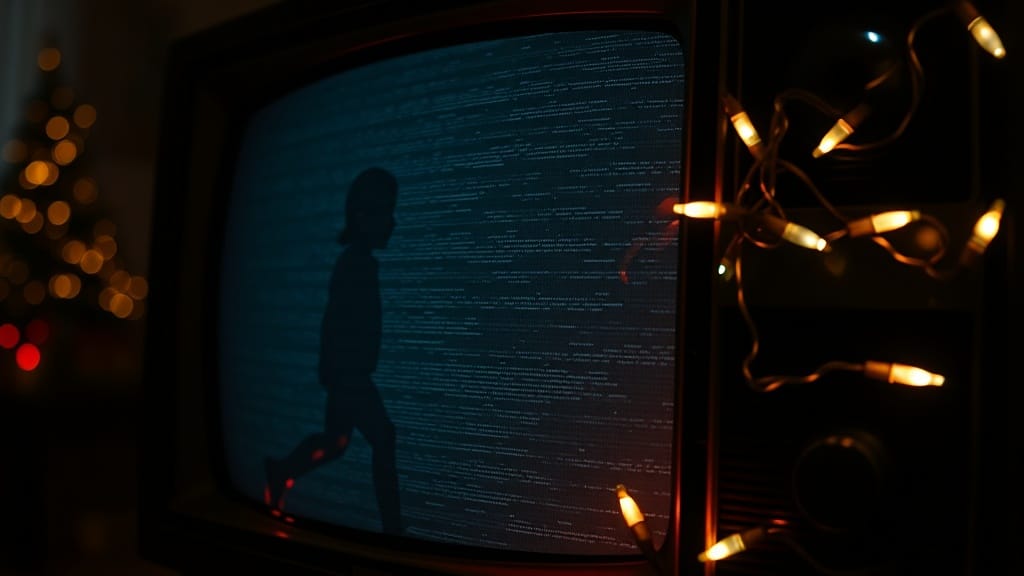
By Season 4 — released in two parts in 2022, a structural decision that itself reflected how far the show had shifted Netflix's release strategy — the nostalgia had become self-referential. The series was now nostalgic for its own earlier seasons, for the versions of its characters that existed before the weight of serialized mythology had accumulated on their shoulders. The audience felt it too. The show had become its own era to mourn.
The Streaming Economy Stranger Things Built
In 2016, Netflix was charging $9.99 per month for its standard plan. The company was spending approximately $5 billion annually on content. By the time Stranger Things Season 5 aired in late 2025, Netflix's content budget had exceeded $17 billion, its subscriber count had crossed 300 million, and its standard plan had more than doubled in price in most markets. The causal arrows here are complex, but the correlation is not nothing.
Stranger Things was the proof-of-concept that justified Netflix's most aggressive content investments. It demonstrated that original IP — not licensed library content, not theatrical acquisitions — was the durable asset. A show that belonged entirely to the platform, that could be exploited across merchandise, live experiences, video games, and eventual theatrical spin-offs, was worth more than any licensed catalog. The industry internalized this lesson. The content wars of the late 2010s and early 2020s were, in significant part, a race to find the next Stranger Things: the original world that could sustain a decade of expansion.
Most of those races failed. The shows that succeeded — The Witcher for a time, Squid Game in its first season, Wednesday in its debut — either burned out quickly or struggled to sustain the cultural gravity Stranger Things maintained across nine years and five seasons. The Duffer Brothers' series remained, against all probability, the flagship. Even as Netflix's strategy evolved, even as the platform pivoted toward live sports and ad-supported tiers, Stranger Things retained the symbolic weight of origin myth.
The show's final season, arriving in December 2025, was the most expensive in Netflix history. Production costs per episode were estimated at figures that would have been implausible for a network drama a decade earlier. The investment reflected not just the scale of the story being closed but the platform's understanding of what was ending: the one show that had made all the other bets feel reasonable.
What the Children Became
Any accounting of Stranger Things' legacy must contend with what it did to the careers it launched. Millie Bobby Brown arrived in Season 1 as an eleven-year-old playing a girl named Eleven — a performance of controlled ferocity that would have been remarkable from an adult actor and was, from a child, something close to inexplicable. By 2025 she was a film star, a producer, and a public figure whose trajectory was shaped almost entirely by the decade she spent in Hawkins. The same is true, in varying degrees, for Finn Wolfhard, Noah Schnapp, Sadie Sink, and Caleb McLaughlin — a generation of young actors whose formative professional years coincided exactly with the show's run.
The older cast members — Winona Ryder, David Harbour — underwent their own redefinitions. Ryder's casting in 2016 had felt like a nostalgia move in itself, a gesture toward the eighties icon who embodied the decade the show was reconstructing. What the show gave her was a second act of unexpected depth, a character whose hysteria was always played as grief, whose grief was always played as love. Harbour's Jim Hopper became one of the decade's more quietly complex television characters: the American archetype of masculine protectiveness pushed to the point where it had to either break or evolve. It did both.
The show's writers, too, emerged as a creative force in ways that network television's anonymizing credit structures had previously obscured. The Duffer Brothers became the rare streaming showrunners with genuine auteur status, their names on the poster, their creative decisions treated as newsworthy. This, too, was a precedent. Streaming had promised to elevate the creator; Stranger Things was one of the first cases where that promise was legible in real time, tracked by an audience that cared about the humans behind the show, not just the show itself.
The Cycle Closes, the Universe Expands
December 2025 brought the series to its end with the conclusiveness the Duffer Brothers had promised for years. Without excavating the specific resolutions — the show's final revelations belong to those who earned them through nine years of investment — it is enough to say that the finale functioned as the genre demanded: sacrifice, survival, and the particular melancholy of a world that continues after the story stops. Hawkins would not be the same. Neither would the audience.
But the end of Stranger Things is not the end of the Stranger Things universe. By 2026, multiple expansion projects were in active development: a theatrical film announced during Season 5's promotional campaign, at least one spin-off series in the early stages, and a live-action experience pipeline that Netflix had been building for years. The IP, having closed its narrative cycle, was entering its franchise phase — the moment when a story that has finished telling itself becomes a world that others can continue to explore.
This is the final lesson Stranger Things has to teach, and it is perhaps the most uncomfortable one. The show that demonstrated nostalgia could be structural infrastructure has itself become infrastructure. It is now the past that future projects will be nostalgic for. The eighties that the Duffer Brothers rebuilt from memory will be joined, eventually, by the mid-2010s that their audience will reconstruct from their own childhoods. The cycle does not close. It compounds.
A Decade, a Definition
Ten years is a long time for a television series. It is long enough to watch its child actors become adults, its cultural moment become history, its industry innovations become assumptions so basic they no longer register as innovations. What Stranger Things achieved across that decade is not simply a good show that ran for a long time. It is a structural event in the history of the medium — the moment when streaming stopped being a distribution technology and became a creative identity, the moment when nostalgia stopped being a marketing tool and became a narrative language, the moment when a group of children in a fictional Indiana town became, improbably, the axis around which an entire industry reoriented itself.
The Upside Down is closed. The lights on Joyce Byers' wall have stopped flickering. But the world Stranger Things made — the streaming economy, the nostalgia grammar, the franchise logic, the creator-as-auteur model — is the world we still live in. That is what a decade looks like when the show that defines it actually earns the definition.
 Official trailer