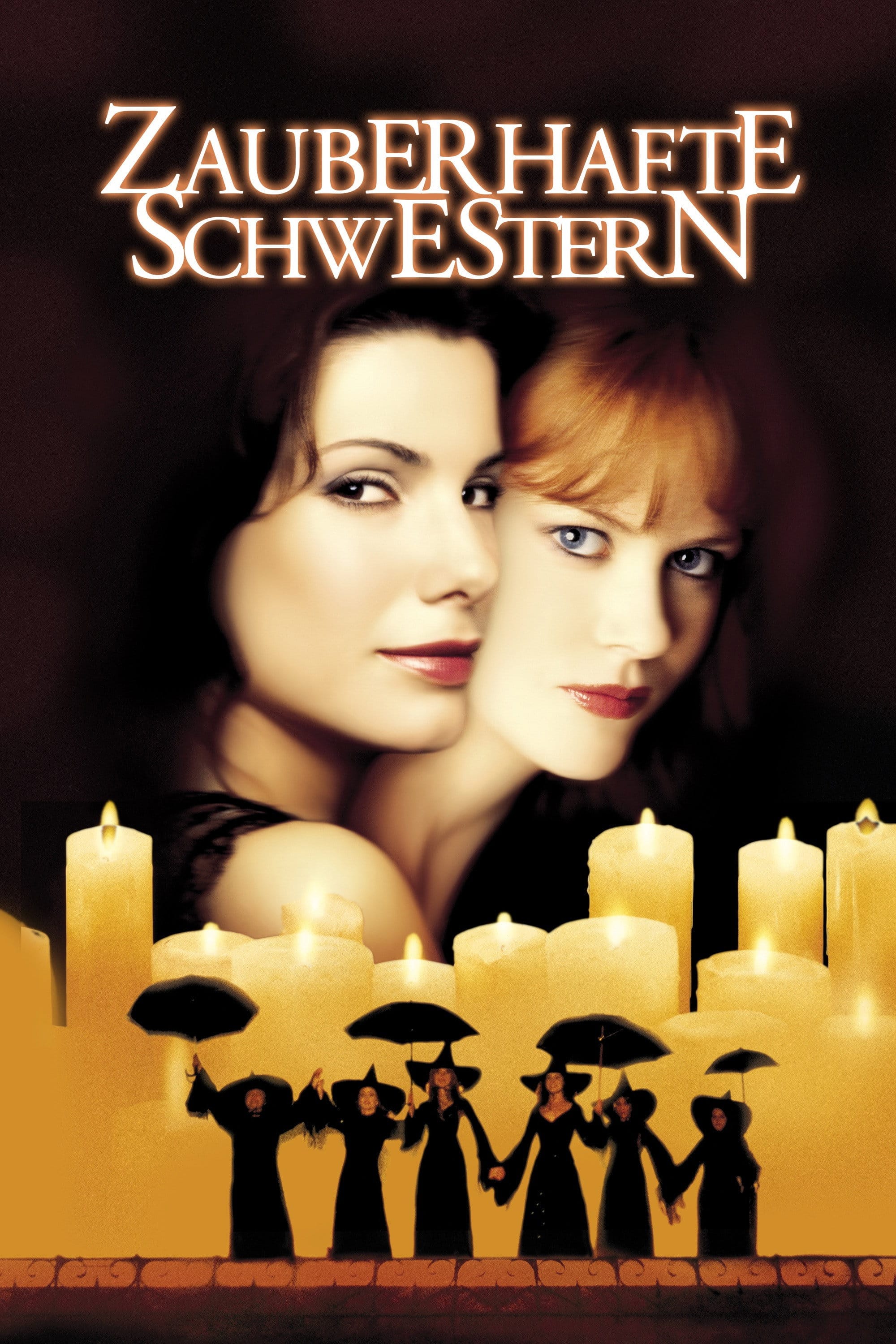
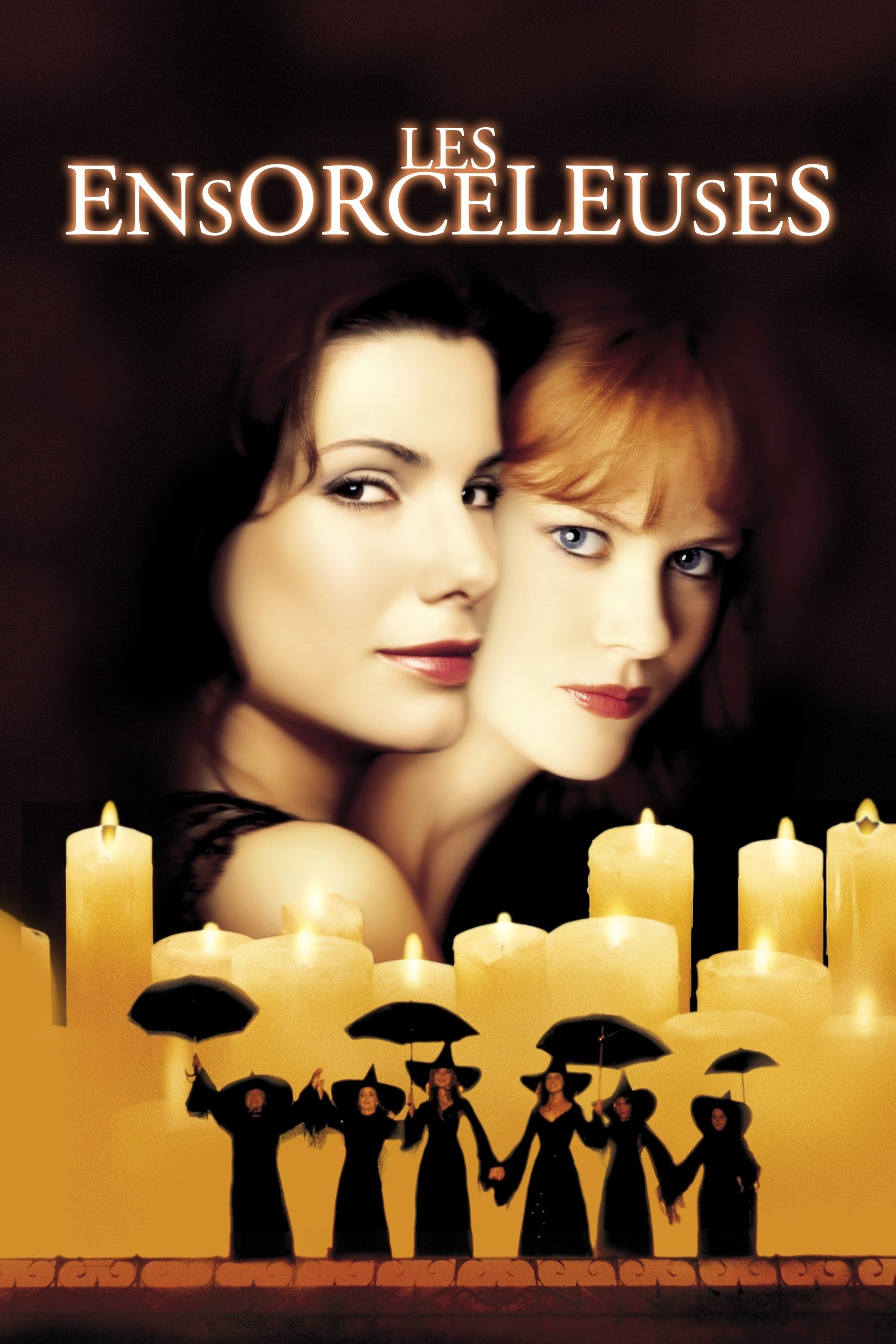
In the autumn of 1998, Practical Magic (1998) opened to reviews that ranged from indifferent to genuinely hostile, earned roughly $46 million against a $75 million production budget, and was quietly filed away by Warner Bros. under the category of expensive mistakes. Twenty-eight years later, the studio is developing Practical Magic 2. That reversal is not, as it might first appear, a sentimental act of corporate redemption. It is a case study in how the economics of cultural memory have been restructured — and what it means when a film's second life turns out to be more commercially legible than its first.
 Official trailer
The Anatomy of a Box-Office Failure That Refused to Disappear
To understand why Practical Magic (1998) survived its own failure, you have to account for what the film actually was versus what the marketing promised. Griffin Dunne's adaptation of Alice Hoffman's novel was sold as a romantic comedy with a witchcraft flourish — think Bewitched with better hair. What audiences received was something messier, darker, and more emotionally specific: a film about inherited trauma, the violence that women absorb in relationships, and the way female community becomes a survival mechanism. It was tonally unstable by design, or by accident, and neither critics nor mainstream audiences knew how to hold it. The result was the particular kind of failure that, paradoxically, leaves a residue.
The VHS and cable afterlife of the late 1990s and early 2000s did what theatrical runs could not: it gave the film an audience that arrived on its own terms, without the pressure of a marketing campaign dictating the correct response. Sandra Bullock and Nicole Kidman — both at specific, interesting moments in their careers — and a visual palette saturated with candlelight, dried herbs, and New England gothic architecture turned out to be precisely the kind of sensory package that rewards repeated, low-stakes domestic viewing. People watched it in October. Then they watched it again the next October. A ritual was forming before anyone had a name for it.
Seasonal Rewatching as a Cultural Institution
The concept of the "autumn film" is older than streaming, but the digital era has made its mechanics visible and measurable in ways that were previously impossible. Every September, viewing data for a predictable cluster of films spikes: Hocus Pocus (1993), The Craft (1996), Practical Magic (1998), Sleepy Hollow (1999). Studios can now watch this happen in real time. What was once a diffuse, unmonitored folk practice — putting on a specific film because the light changed and the air got cold — is now a data point. And data points attract investment.
Seasonal ritual rewatching functions differently from the nostalgia that typically drives franchise revivals. Nostalgia is retrospective and elegiac; it mourns a lost version of the self that once experienced something. Ritual rewatching is present-tense and cyclical; it uses a cultural object as a technology for marking time, for moving the body through the year. The distinction matters because it means that Practical Magic's audience isn't simply remembering 1998 — it's actively constructing an annual experience in which the film is a recurring ingredient. That audience doesn't need to be convinced the original was good. They've already decided it's essential.
TikTok and the Aestheticization of the Specific
If seasonal rewatching provided the structural foundation, TikTok provided the amplification mechanism. The platform's visual grammar — short, highly curated, aesthetically coherent — turned out to be extraordinarily well-suited to the particular visual language of Practical Magic (1998). The aunts' Victorian house on its island hill, the midnight margaritas, the belladonna remedy, the greenhouse overflowing with herbs: these are images that compress into three-second clips without losing their charge. They became reference points in a broader aesthetic movement loosely organized under the label of "cottagecore," "dark academia," and "witchcore" — movements that don't describe lifestyles so much as visual aspirations.
This is a form of cultural work that the original film could not have anticipated and did not engineer. The TikTok aestheticization of Practical Magic is a community-generated phenomenon, which means it carries a species of authenticity that no marketing department can manufacture. When a film becomes a visual vocabulary that millions of people use to describe who they want to be, it has crossed a threshold. It is no longer a commodity awaiting consumption; it is raw material for identity construction. Warner Bros. is not, in greenlit Practical Magic 2, acquiring a nostalgia property. It is acquiring an active aesthetic ecosystem.
The Structural Problem With Cult-Classic Sequels
None of this makes the sequel a safe bet. The cult-classic-to-sequel pipeline has a poor track record precisely because it tends to misdiagnose what made the original cult-worthy in the first place. The mistake, repeated with exhausting regularity, is to treat cult status as a quality that can be reproduced by reassembling the original's ingredients. But cult films are not cult films because of their ingredients. They are cult films because of the specific friction between their intentions and their execution, between what they tried to be and what they accidentally became. That friction is not scriptable.
Practical Magic (1998) became beloved in part because it was a strange, slightly broken object — a film that didn't quite know what it was, and in not knowing, left unusual amounts of interpretive space for audiences to inhabit. A sequel developed with full institutional awareness of the original's cult status will, by definition, approach that space differently. The strangeness will be deliberate. The darkness will be calibrated. The aesthetic will be delivered rather than discovered. Whether any of that can produce a satisfying film is an open question, but it is unlikely to produce the same kind of film — and it is almost certainly not supposed to.
What Warner Bros. Is Actually Betting On
The more useful frame for Practical Magic 2 is not "can lightning strike twice" but "what kind of lightning are we actually talking about." Warner Bros. is not betting that a sequel will replicate the accidental alchemy of the original. It is betting that the audience infrastructure built around the original — the ritual rewatchers, the TikTok aesthetes, the readers of Hoffman's novels, the women who have watched the midnight margarita scene enough times to have it memorized — represents a commercially viable base for a new cultural object. The sequel doesn't need to be a cult film. It needs to serve the cult that already exists.
This is a structurally different proposition than either the nostalgia sequel (which tries to emotionally recreate a past experience) or the franchise extension (which tries to expand a commercial universe). It is closer, in some ways, to the logic of a television show designed for a specific community — one where the audience already knows the world, already has relationships with the characters, and is showing up not to be surprised but to be accompanied. Whether that logic produces interesting cinema is a separate question from whether it produces a functional business. History suggests it can do both, occasionally. It more often does only one.
What the Practical Magic case ultimately reveals is that the value of a "failed" film is never fully settled at the box office. Cultural objects move through time in ways that their creators and distributors cannot predict or control, accumulating meaning from uses that were never intended. The studios that learn to read those accumulated meanings — and to distinguish between the kind of cult love that sustains a community and the kind that will sustain a production budget — are the ones most likely to navigate the next 28 years. The ones that simply see a trending hashtag and order a script are the ones most likely to discover, all over again, what failure looks like.