The box office doesn't lie on Saturdays. It magnifies. Whatever energy a film carried out of its Thursday previews and Friday opening either compounds into something historic or quietly deflates into a respectable-but-not-remarkable debut. As of this Saturday, Spider-Man: Brand New Day (2026) is doing something that very few films in history have been positioned to do: it is chasing a billion-dollar opening weekend.
Not a billion-dollar lifetime run. A billion-dollar opening weekend.
To understand what that means, you need to understand the ceiling. Avengers: Endgame (2019) holds the global opening weekend record at approximately $1.2 billion. Below it sit Avengers: Infinity War (2018) at around $640 million and Spider-Man: No Way Home (2021) at $600 million globally. The billion-dollar opening weekend club has exactly one member. Brand New Day is, as of Saturday, credibly knocking on that door.
What the Saturday Multiplier Tells Us
Friday numbers — including Thursday previews — are the foundation, but Saturday is the load-bearing wall. A healthy blockbuster typically sees a Saturday that runs 1.2x to 1.5x its pure Friday gross (excluding previews). An exceptional film, one with genuine audience enthusiasm rather than front-loaded hype, can push that multiplier toward 1.8x or even higher. The Saturday multiplier is, functionally, a real-time audience approval rating.
Early Saturday projections for Brand New Day suggest the film is tracking well above the conservative multiplier. That means audiences who saw it Friday came back Saturday with friends, families, and partners who hadn't yet bought tickets. Word of mouth, in an era where social media can either accelerate or destroy a blockbuster within hours of release, is working decisively in this film's favor.

This is not a given for Spider-Man films, even beloved ones. No Way Home benefited from a nostalgia event — the multiverse reunion of three generations of Peter Parker. Brand New Day doesn't have that structural advantage. It is, by design, a fresh start: a new chapter, a new creative direction, a new emotional contract with audiences. That it is performing at this level without a nostalgia crutch is the more significant story hiding inside the headline numbers.
The Architecture of a Billion-Dollar Weekend
A billion-dollar global opening weekend requires a specific kind of simultaneous combustion across markets. North America has to deliver something in the $250–$300 million range domestically. China — historically unpredictable for Marvel since the mid-2010s cooling — has to show up at scale. Europe, Latin America, and Southeast Asia have to perform in lockstep rather than staggered, which is increasingly the norm as release windows have tightened globally.
What makes this Saturday particularly telling is that the international numbers are holding. Markets that sometimes see sharp Saturday drops — particularly in Europe, where competition from local cinema culture is real — are instead showing stability. South Korea, consistently one of Marvel's most reliable overseas performance indicators, is tracking ahead of comparable Spider-Man debuts. The United Kingdom is behaving like an event film rather than a franchise installment.
Sony and Marvel's decision to collapse the global release window — Brand New Day opened simultaneously across virtually all major markets — removed the leak problem that used to complicate international tracking. There is no market seeing this film two weeks after North America and having its enthusiasm tempered by spoilers and social media saturation. Everyone is inside the same opening-weekend bubble, and that synchronicity is showing up in the numbers.
The Film Itself Is Not Incidental to This
Box office analysis risks becoming pure arithmetic divorced from the actual object under discussion. It's worth stating plainly: Brand New Day appears to be a genuinely good film, and that is not a trivial variable.
Audience CinemaScore and early PostTrak data are pointing toward grades and recommend rates that place this among the highest-received Marvel films of the past five years — a period that includes some notable stumbles at the intersection of quality and commercial performance. The critical reception, while not unanimous, has been substantially warmer than several recent entries in the franchise. A film can be marketed into a massive opening weekend, but it cannot be marketed into a strong Saturday multiplier. That requires actual audience satisfaction.
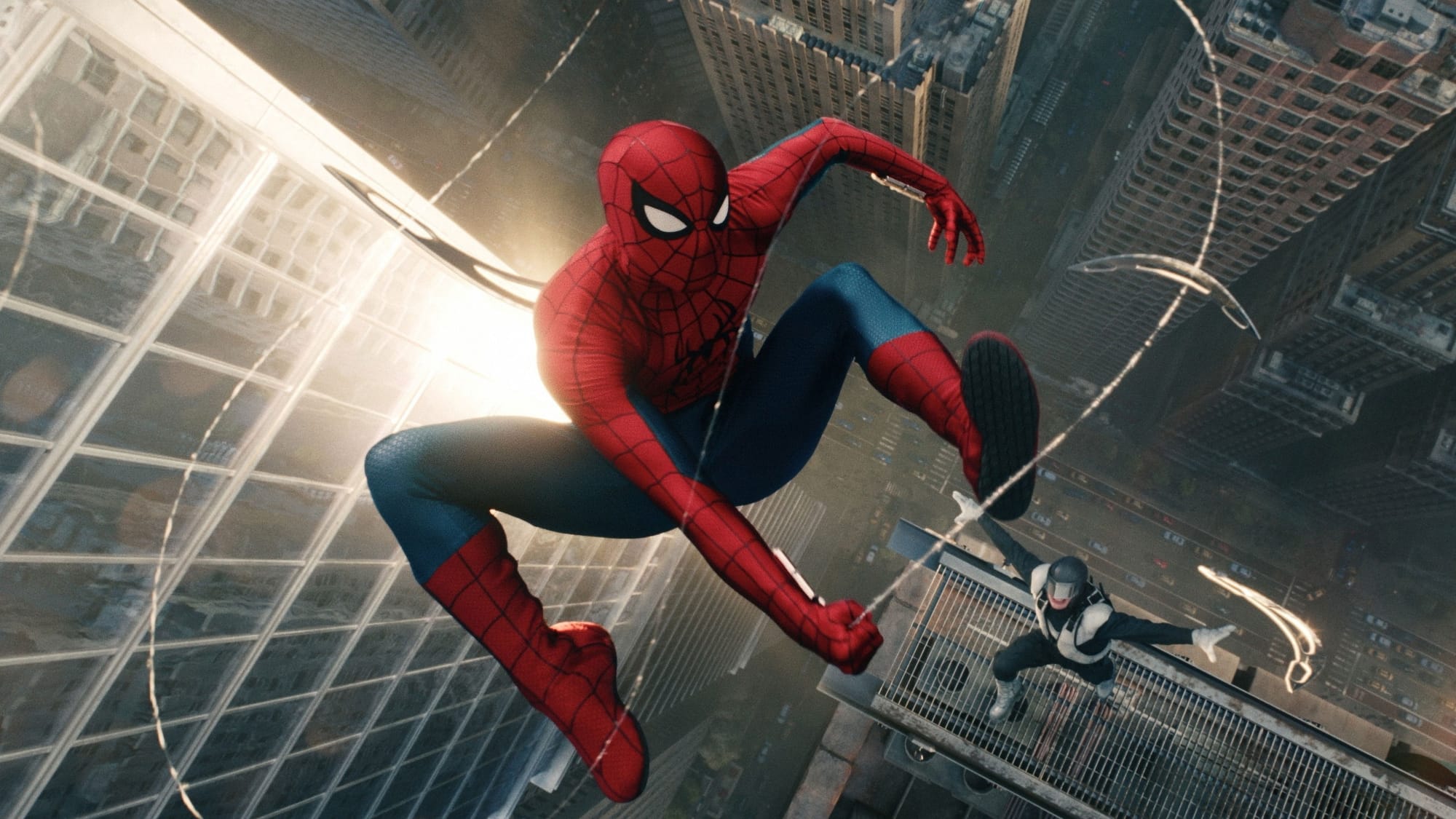
The creative reset the film represents — drawing loosely from J. Michael Straczynski and Joe Quesada's polarizing but narratively bold comic arc — gave the filmmakers permission to strip away accumulated franchise weight and tell a smaller, more personal story inside a very large canvas. Whether that tonal choice sustains through a full trilogy is a separate question. For this weekend, it is clearly resonating.
Can It Close the Billion?
Sunday is where opening weekends either complete their statement or issue a quiet correction. Saturday's strong performance makes a domestic finish north of $250 million nearly certain. Globally, the billion-dollar threshold is within range but not guaranteed. It will depend on final Sunday tallies from Asia-Pacific markets that close their tracking windows earlier, and on whether North American audiences sustain Saturday's pace through Sunday afternoon.
The most conservative credible projection right now puts the global opening weekend somewhere between $850 million and $950 million. The optimistic ceiling, if Saturday's trajectory holds through Sunday without the typical late-day softening, pushes the film into genuine billion-dollar territory — a figure that would place it second only to Endgame in the history of opening weekends.
What is already certain, before Sunday's final numbers are tallied, is this: Spider-Man: Brand New Day has established itself as the defining commercial event of 2026. The question of whether it clears a billion is, at this point, a matter of historical footnote positioning. The film has already done what it needed to do — it has reminded an industry that has spent three years nervously recalibrating its relationship with franchise cinema that when the product is right, the audience is still there, still massive, and still capable of producing numbers that feel genuinely improbable.
Sunday will close the ledger. The story is already written.