In the final weeks of a crowded summer season, the show that has broken through the noise is not a new property. It carries one of the most recognizable titles in the medium's history, one so freighted with philosophical ambition and prior adaptation that any new version faces an immediate credibility problem. And yet, Ghost in the Shell (2026) — the TV anime produced by Science SARU — is not merely surviving that weight. It is trending, week over week, precisely because it has found a way to make that weight mean something again.
That is not a small thing. The industry has spent the better part of a decade learning, often at considerable expense, that prestige IP is not the same as prestige execution. The name alone buys you an audience for an opening weekend — or a premiere episode — and very little after that. Science SARU's series is doing something different, and understanding what requires looking at both halves of the equation: the franchise it inherited and the studio that inherited it.
The Franchise as Philosophical Infrastructure
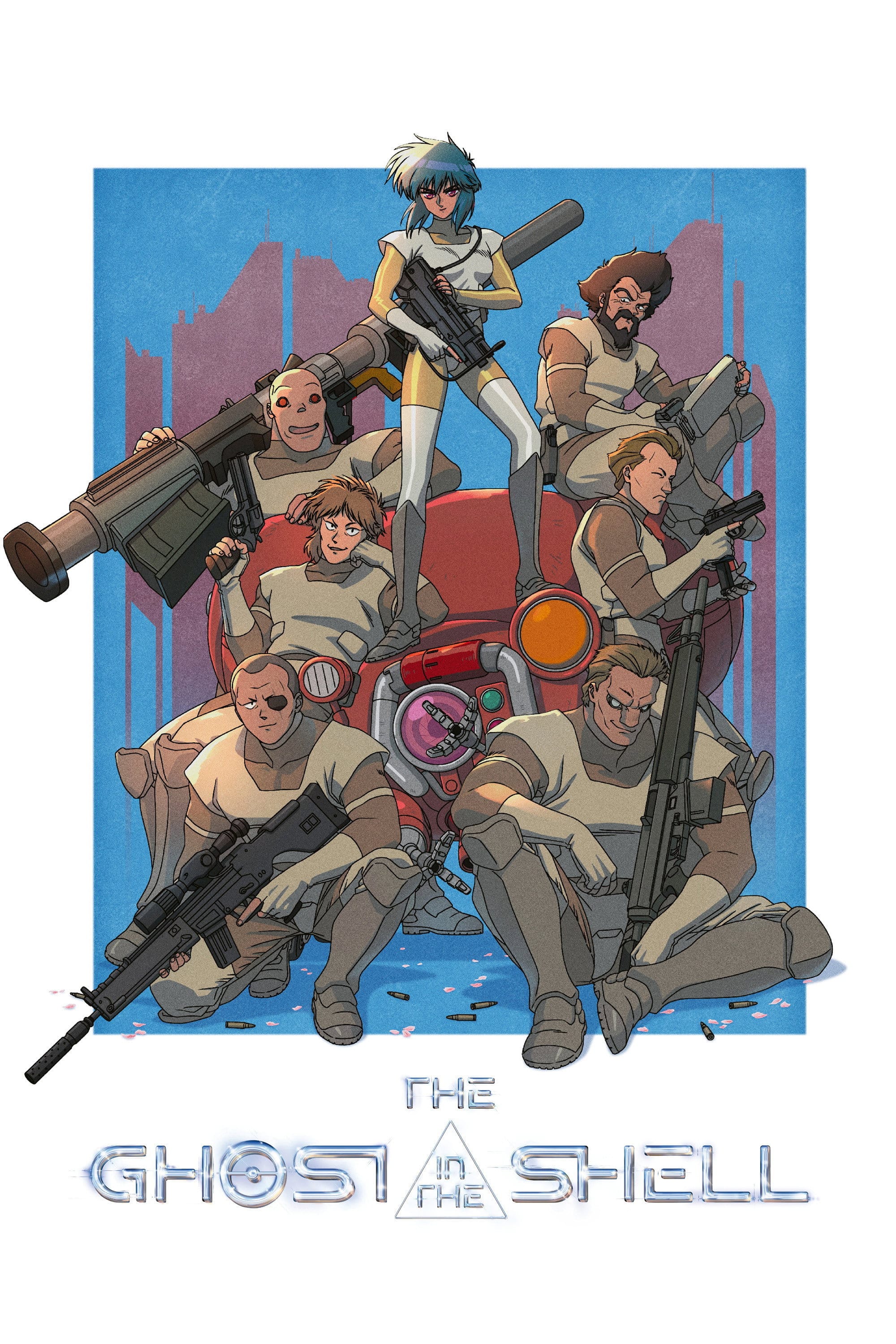
Masamune Shirow's original manga, Mamoru Oshii's landmark 1995 film, the Stand Alone Complex television lineage, Ghost in the Shell: Arise (2013) — the property has never been a single thing. Each iteration has used the premise of Major Motoko Kusanagi and Section 9 as a different kind of philosophical instrument. Oshii's film was an essay on embodiment and the dissolution of individual identity into network consciousness. Stand Alone Complex (2002) pivoted toward political epistemology: how information systems construct social reality, how the copy can become more consequential than the original. Arise tried to retrofit a tighter, more conventional action architecture onto the same bones and largely demonstrated why those bones resist conventional architecture.
The franchise's core tension — the gap between a ghost, the ineffable residue of selfhood, and a shell, the physical and social apparatus that contains it — has always been a question about what survives technological mediation. In 1995, that question felt speculative. In 2026, with prosthetic cognition, networked identity, and the blurring of biological and synthetic cognition moving from science fiction into policy documents, it feels diagnostic. The franchise has not aged into irrelevance. It has aged into urgency. The question for any new adaptation is whether it has the analytical clarity to meet the moment or will settle for mining the iconography — the diving suit, the thermoptic camouflage, the spider tanks — as aesthetic shorthand.
Science SARU's Particular Qualification
Science SARU is, on paper, an unusual choice for this material. The studio founded by Masaaki Yuasa built its identity on formal restlessness — on the idea that animation's relationship to realism is a negotiation, not an obligation. Devilman Crybaby (2018) used expressionist distortion to render moral collapse. Keep Your Hands Off Eizouken! (2020) made the creative process itself the subject of its visual language. Inu-Oh (2021) staged medieval Japan as pure kinetic theater. These are not works that invite you to forget you're watching animation. They insist on the medium's constructed nature as an argument about the constructed nature of perception itself.
That instinct, it turns out, is precisely what Ghost in the Shell has always needed from its animated form and has only intermittently received. The 1995 film understood it — Oshii's decision to let scenes breathe in near-silence, to linger on the Major's face during a boat sequence with no narrative payoff except phenomenological weight, was a formal choice that carried philosophical content. But the franchise has also produced entries that used animation primarily as delivery infrastructure for plot and action, trusting the IP's reputation to supply the depth.
Science SARU's version arrives with a different set of assumptions. The studio treats the visual frame as an argument, not a window. In its final weeks, the series has been generating sustained conversation not just about its story — which has engaged seriously with questions of synthetic memory, the legal status of copied consciousness, and the ethics of state-controlled identity verification — but about specific sequences. A scene in which the Major undergoes a routine shell maintenance procedure rendered in a flat, almost diagrammatic visual register that gradually destabilizes as her ghost begins to experience the process as grief. An interrogation staged with perspective shifts so disorienting that the viewer loses track of who is surveilling whom. These are not decorative choices. They are the argument.
What the Trending Charts Are Actually Measuring
Trending metrics are blunt instruments. They measure attention, which is related to quality only incidentally. But the pattern of Ghost in the Shell (2026)'s chart performance across this summer is worth reading carefully, because it doesn't look like a premiere spike followed by attrition, the signature shape of a series that spends its cultural capital on arrival. The show built. Its discussion volume in weeks seven through ten exceeded its premiere week by a significant margin. That is the shape of word-of-mouth from people who watched it, processed it, and then needed to talk about it — which is exactly what this material, handled correctly, should produce.
The industry has been reaching for this outcome for years with increasingly expensive swings at prestige IP. The pattern is familiar: a beloved property, a production with a credible budget, voice cast, and composer, promotional materials that invoke legacy without quite promising innovation, and then a series that delivers competent execution of familiar elements to an audience that wanted to be surprised. The disappointment is rarely catastrophic. It is quieter than that — the specific deflation of watching something that should have mattered settle for being fine.
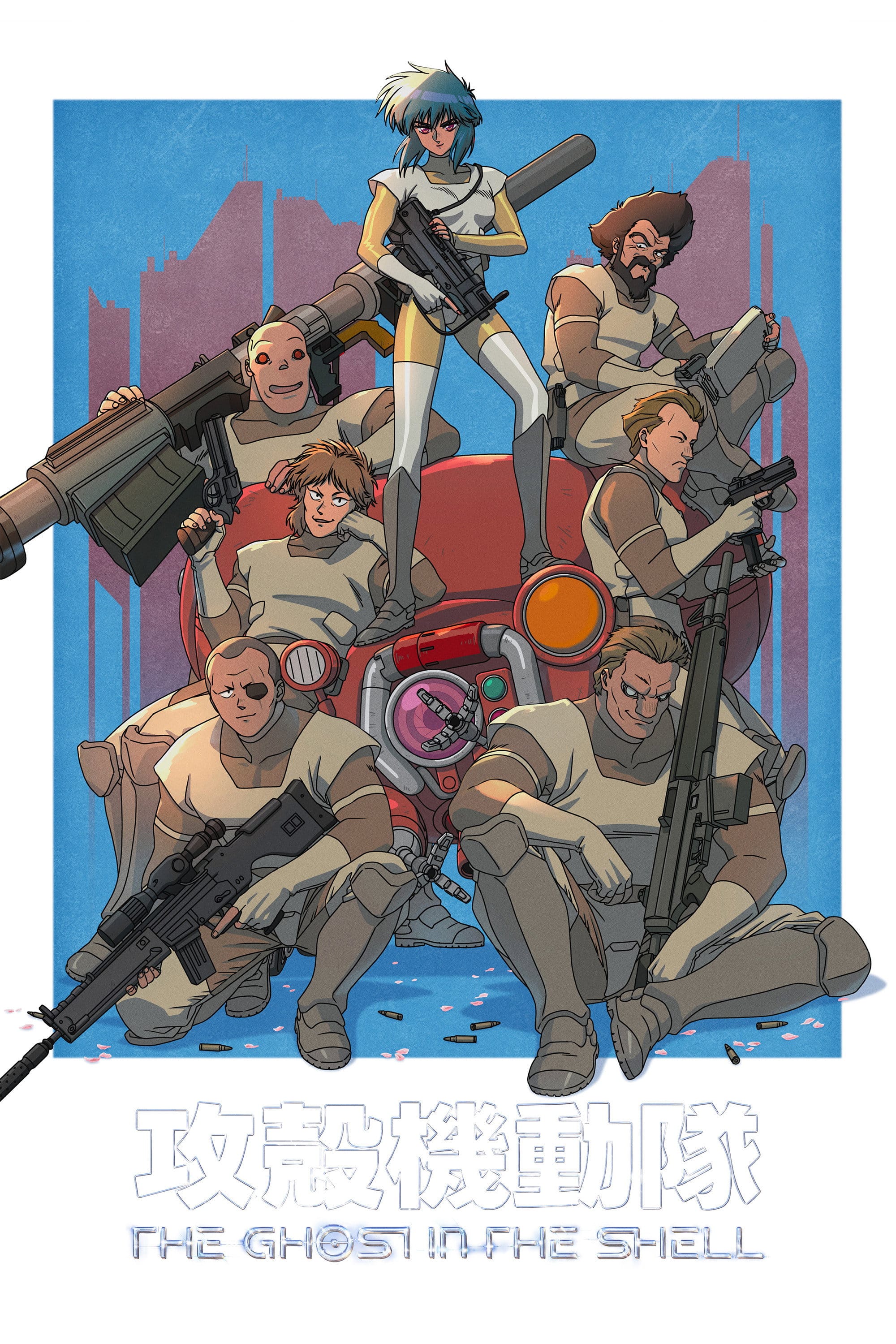
Science SARU's series is being discussed in different terms. It is being discussed in the terms the franchise always deserved: arguments about what the show is actually saying, about whether its position on networked identity is coherent, about whether the Major's arc this season constitutes a meaningful evolution of the character's relationship to her own continuity. These are not conversations that happen around a show people merely enjoyed. They are the conversations that happen around a show that has done the work.
The Larger Implication
There is a structural lesson here that the industry would be unwise to miss. The problem with prestige IP revival has rarely been the IP. It has been the assumption that the right property plus competent production is a sufficient formula — that the philosophical or emotional weight of the source material will carry over automatically, requiring only that the new work not actively contradict it. That assumption consistently underestimates what the best genre IP actually demands: not reverence, but rigorous formal engagement.
Science SARU brought to Ghost in the Shell what it brings to everything — the conviction that how something is shown is inseparable from what it means. That conviction is not common in commercial animation at scale. It is especially uncommon when the commercial pressure of a major franchise is involved, when the temptation to protect brand equity by playing it safe is at its most intense. The fact that the studio resisted that pressure, and that audiences are responding to the resistance, is not a small data point.
It suggests that the appetite for animation that earns its ambitions is larger than the industry's recent output has credited. Audiences are not trending a show because it has ghosts and shells and a familiar synth score cue. They are trending it because it is asking the questions the franchise exists to ask, and doing so with a formal intelligence equal to the task. In a summer full of content, that remains, stubbornly and encouragingly, enough.