The last thing Ghost in the Shell needed was another origin story dressed in nostalgia. What Science SARU delivered on July 7th is something harder to categorize — and considerably more interesting.
Ghost in the Shell (2026, Science SARU / Prime Video) arrives carrying the full weight of a franchise that has been rebooted, reinterpreted, and strip-mined for aesthetic capital across three decades. Mamoru Oshii's 1995 film canonized a particular visual grammar — rain-slicked Niihama, teal shadows, the Major descending into dark water — that subsequent productions treated less as a starting point than as a sacred relic. Ghost in the Shell: SAC_2045 (2020) leaned into CG and geopolitical procedural. The 2017 live-action adaptation with Scarlett Johansson collapsed under the weight of its own reverence. The franchise had become a hall of mirrors, each version reflecting another version rather than its source.
Science SARU broke that loop by going upstream. The studio — known for the controlled formal invention of Inu-Oh (2021) and Heike Monogatari (2021) — anchored its production design directly in Masamune Shirow's original manga serialized in Young Magazine between 1989 and 1990. The result is a visual register that feels simultaneously archaic and precise: dense, mechanical, and unapologetically maximalist in its approach to the body-as-technology metaphor. Prosthetics are not elegant here. Cyberization looks like engineering, not transcendence.
What the Manga Always Understood
Shirow's original work was never primarily philosophical. It was procedural, fetishistic about hardware, and darkly comedic in ways Oshii deliberately excised. The 1995 film produced a masterpiece of meditative cinema by narrowing the source material to a single existential frequency. That was the right choice for that film. It was the wrong template for every adaptation that followed.
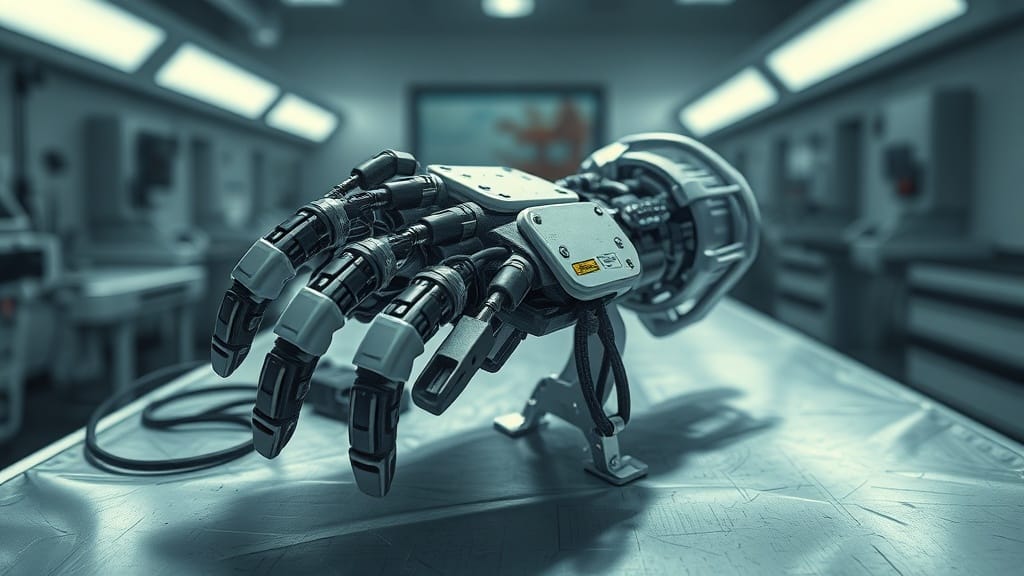
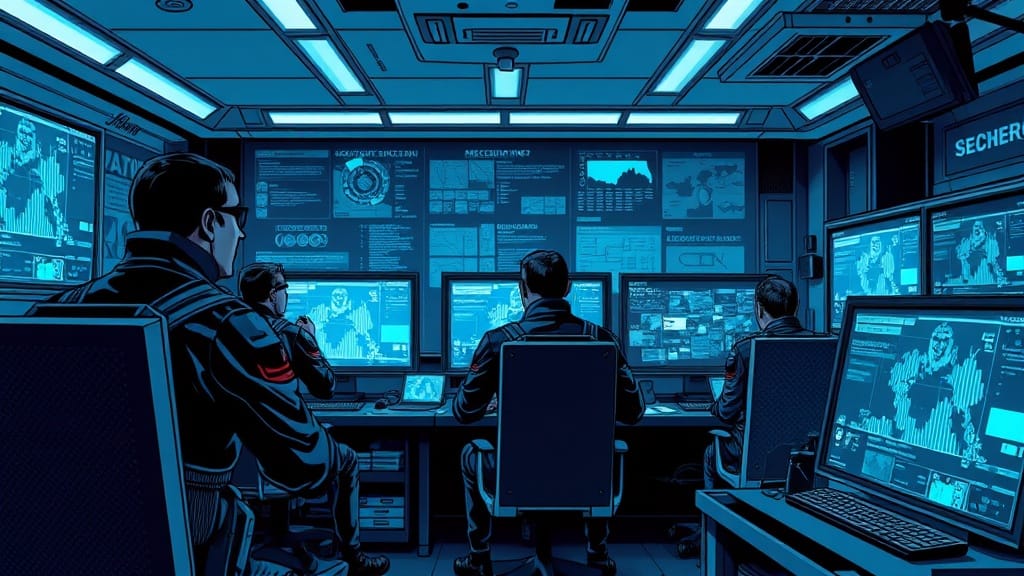
Science SARU's version restores the operational texture Oshii removed: Section 9 functions as a bureaucratic machine with budget constraints, interdepartmental friction, and cases that don't resolve into metaphor. Major Motoko Kusanagi operates with tactical pragmatism rather than existential melancholy. She is effective and unromantic about it. This is not a protagonist searching for her soul — she's building a case file.
The tonal recalibration is the series' most consequential decision. Early episodes establish that this Ghost in the Shell is less interested in what it means to be conscious than in what it costs to be useful. The ghost-in-the-machine question still operates as structural subtext — it's inseparable from the material — but it's never allowed to become a soliloquy.
Science SARU's Formal Gamble
The studio's animation approach is the second major bet. Rather than the hyperfluid, expressive movement that defines their work on Eizouken ni wa Te wo Dasu na! (Keep Your Hands Off Eizouken!, 2020), Science SARU applies deliberate mechanical weight to action sequences. Cybernetic bodies move with the slight delay of actual mass. Thermoptic camouflage glitches rather than shimmers. The aesthetic choice signals intent: this is a world governed by physics and failure modes, not by the grammar of cool.
Whether that restraint holds across a full season is the open structural question. The franchise's history suggests that tonal discipline tends to erode under the pressure of fan expectation and algorithmic performance metrics. Prime Video's involvement introduces commercial architecture that Science SARU has not previously operated within at this scale.
The Relevance Problem
Critical reception since the July 7th premiere has centered, predictably, on fidelity. The consensus that the series "honors the manga" is accurate but insufficient as analysis. Fidelity to source material is a method, not a result. The deeper test is whether Ghost in the Shell in 2026 has anything to say about synthetic cognition, state surveillance, and the politics of the body that hasn't been said more sharply by Cyberpunk: Edgerunners (2022) or processed more efficiently by the cultural conversation around generative AI.
The early evidence suggests yes — but narrowly. The series is most alive when it stops gesturing at its own legacy and commits to the procedural grit Shirow encoded in the source. Those moments don't feel like nostalgia. They feel like a franchise finally looking at itself without a mirror.
That's a harder achievement than it sounds. And it's the only version of this franchise worth watching in 2026.