Three decades of adaptations, and the one closest to Shirow Masamune's source material arrives not from Production I.G, not from Mamoru Oshii's shadow, but from Science Saru — the studio Masaaki Yuasa built and Eunyoung Choi now steers. Ghost in the Shell (2026) debuted on Prime Video on July 7th and hit global Top 5 within 72 hours. The speed of that ascent says something. So does the argument it immediately reignited.
What Science Saru Actually Changed
The 1995 film by Oshii is, by any serious measure, a masterpiece of philosophical cinema. It is also a selective and deliberately cold reading of Shirow's manga — one that stripped the source's sardonic humor, its techno-political density, its sheer messiness, and replaced them with existential stillness and water imagery. Oshii made a different work. He said so himself. The canon debate, then, was always a false one: comparing the manga and the film was comparing two distinct artistic intentions.
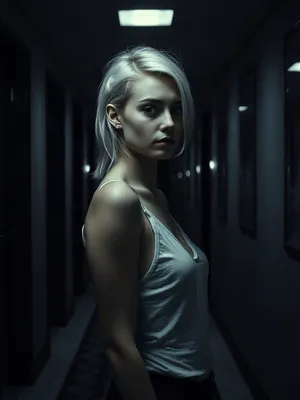
Science Saru refuses that comfortable distance. The 2026 series reintroduces Motoko Kusanagi as Shirow drew her — operationally sharp, politically cynical, occasionally vulgar, and far less interested in her own soul than in the mechanics of state power and network crime. The Section 9 of this adaptation functions as a bureaucratic organism, not a philosophical theater. Cases accumulate, contradict each other, and leave residue. The Puppet Master arc, handled across four episodes in the mid-season, is the clearest signal of intent: it is plotted with the procedural weight of the manga's original chapters, not compressed into allegory.
The Visual Grammar Science Saru Built
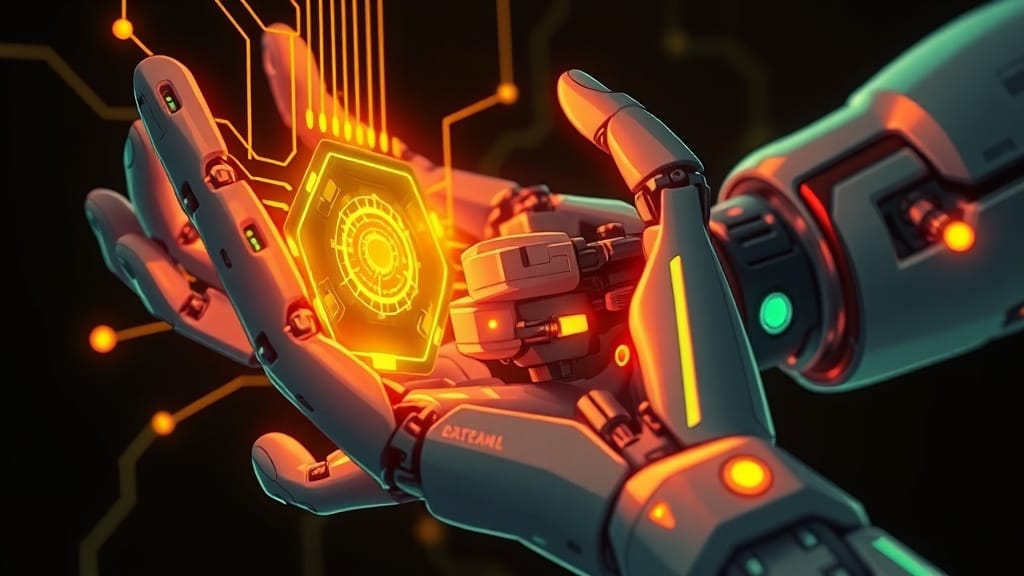
Science Saru's house style — fluid character animation, bold negative space, a willingness to let scenes breathe in ways that feel closer to live-action pacing than conventional anime — turns out to be a precise fit for Shirow's world. The studio doesn't attempt to replicate Oshii's blue-grey palette or Kenji Kawai's ritualistic score. Instead, the series operates in a warmer, dirtier register: neon bleed over rain-slicked concrete, cyborg bodies rendered with an almost clinical attention to joint mechanics, crowd scenes that actually read as crowds rather than background decoration.
The action sequences are where the adaptation earns its own authority. The tank chase in episode two and a close-quarters infiltration in episode six work because they are spatially legible — you understand where bodies are in relation to each other and to threat. That sounds like a low bar. In anime, in 2026, it is not.
The Canon Is Not a Single Object
The question the internet has been asking since July 7th — is this the real Ghost in the Shell? — misunderstands what canons are. Shirow's manga (1989–1991) is a maximalist, often contradictory document written in real time, with footnotes longer than some chapters and a politics that shifts between volumes. Oshii's film is a reduction and a transformation. Ghost in the Shell: Stand Alone Complex (Ghost in the Shell: Stand Alone Complex, 2002) is a lateral expansion, building a separate continuity that eventually dwarfed both predecessors in cultural reach. Each version made different choices about what the property was for.
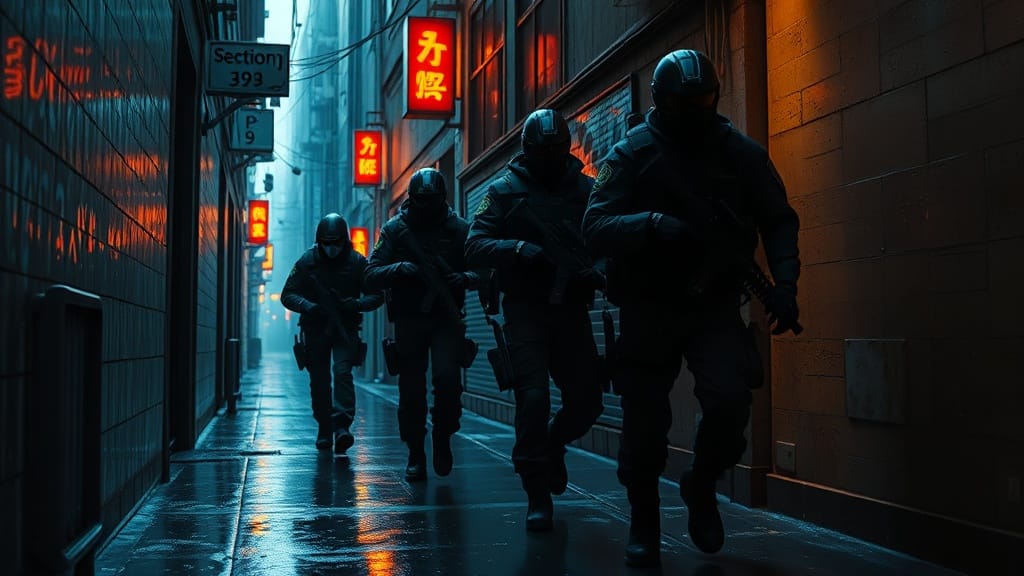
Science Saru's version is the first to treat fidelity to Shirow as a creative strategy rather than a marketing claim. That is its distinction. Whether it becomes the canonical version will depend less on its quality — which is high — than on whether it generates the cultural adhesion that Stand Alone Complex did in the early 2000s, seeping into the broader conversation about AI, identity, and governance at a moment when that conversation has never been louder or more poorly conducted.
Why Now
The timing is not accidental. Prime Video greenlit this series in a cultural climate where the questions Shirow embedded in a 1989 cyberpunk procedural — who owns a mind, what constitutes personhood, how states weaponize networked intelligence — have migrated from speculative fiction to policy papers and parliamentary hearings. Ghost in the Shell has always been most dangerous when reality catches up to its premises. In 2026, reality is uncomfortably close.
Science Saru didn't make a nostalgia product. They made an argument. That it's already Top 5 globally suggests the argument is landing. What it does to the canon is a secondary concern. What it does to the conversation is the point.