Made in Abyss: Mezameru Shinpi (2026) — known in English as Made in Abyss: Awakening Mystery — opened in Japanese theaters today, October 23, 2026, becoming the first installment of a new theatrical series built around one of the past decade's most uncompromising anime properties. The announcement of a second film arriving on the same day as the first film's premiere is the clearest possible signal that Kinema Citrus and KADOKAWA are not treating this as a tentative experiment. They are building infrastructure.
The question worth sitting with is what that bet actually requires. Made in Abyss earned its reputation through a very specific relationship with television — two seasons across 2017 and 2022 that used the slow accumulation of weekly episodes to pull audiences into the logic of the Abyss itself: a descent that compounds, a world that withholds, a horror that arrives quietly. The theatrical format has different physics. It concentrates, accelerates, and asks audiences to surrender two hours rather than twenty. Whether Mezameru Shinpi can reproduce that gravitational pull in a single sitting is the test the film faces today.
The Franchise That Got Here
The Made in Abyss manga, written and illustrated by Akihito Tsukushi, has been serialized on Takeshobo's Web Comic Gamma since October 2012 and has reached 15 tankōbon volumes as of August 2026. By August 2025, the manga had over 22 million copies in circulation. In 2023, it won the 52nd Japan Cartoonists Association Award. Those are not the numbers of a niche property — they are the numbers of a franchise with real cultural mass, the kind that earns the confidence to launch a planned trilogy rather than a single theatrical film.
The anime adaptation has always moved in close lockstep with its source material's creative team. The first anime television series, produced by Kinema Citrus, aired from July to September 2017. A sequel film, subtitled Dawn of the Deep Soul, premiered in Japan in January 2020. A second season, subtitled The Golden City of the Scorching Sun, aired from July to September 2022. Each of these entries kept the same director, writer, composer, and studio — a consistency that is unusual in anime production at any scale, and that has arguably been the franchise's single greatest structural asset.
Made in Abyss: Dawn of the Deep Soul (2020) grossed approximately $4,971,635 worldwide — modest by blockbuster standards, but meaningful for a standalone theatrical anime, and strong enough to validate the format for this particular property. That film, which descended into the fifth layer and introduced Bondrewd, demonstrated that the franchise's darkness could survive theatrical compression. Mezameru Shinpi is being asked to prove that compression can sustain a multi-film arc.
The Same Room, A New Descent
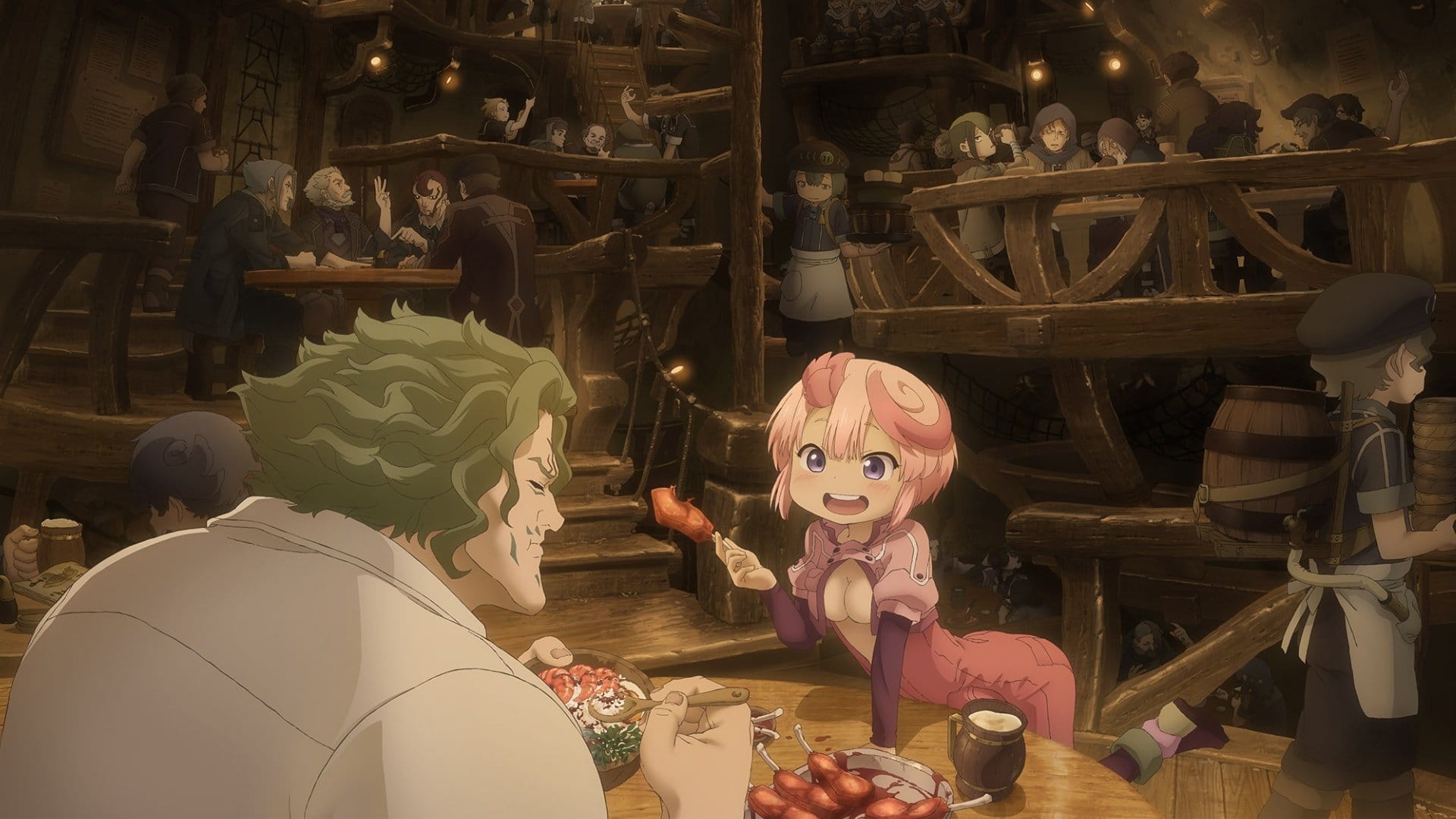
The production team for Mezameru Shinpi is a near-exact continuity of everyone who built the previous entries. Masayuki Kojima is returning to direct the anime at the studio Kinema Citrus. Hideyuki Kurata is again in charge of scripts, and Kazuchika Kise and Yuka Kuroda are returning as character designers. Australian artist Kevin Penkin composed the soundtrack for the anime — a role he has held continuously since the first season in 2017, making Mezameru Shinpi his fifth major entry in the franchise.
The returning voice cast — Mariya Ise as Reg, Miyu Tomita as Riko, Shiori Izawa as Nanachi, and Misaki Kuno as Faputa — reprise characters the audience has spent years with. Newcomers to the cast include Sumire Morohoshi as the cave raider Tepaste and Takanori Hoshino as Cravagli, the latter described as a Black Whistle — a rank within the franchise's hierarchy of licensed Abyss divers that signals significant narrative weight.
The film's theme song is "Chain of the Abyss" by composer Kevin Penkin, featuring Mori Calliope. Penkin won the inaugural Crunchyroll Anime Award for Best Score for the first season of Made in Abyss in 2018, and his music has been one of the franchise's defining sensory anchors — choral, invented-language, orchestrally dense in the moments that matter most. The collaboration with Mori Calliope marks a shift in register. The track may divide longtime soundtrack fans particularly attached to the series' choirs and orchestral flourishes. Its precise role in the film remains unknown — as an end-credit song it could function as a strong signature; if used too prominently, it might interrupt the strange, quiet breathing space that defines the Abyss.
The Trilogy Logic
Made in Abyss: Mezameru Shinpi, the first film in a new Made in Abyss theatrical series, opened in Japan on Friday, October 23, 2026. The same day, the production staff unveiled a new key visual, added five cast members, and confirmed that a second film in the series has already been greenlit. No U.S. release has been announced.
The simultaneous greenlight of a sequel on opening day is a structural choice that deserves attention. It tells the audience, before they have seen the first film, that what they are watching is not complete — that attending the theater today is an act of enrollment rather than a self-contained experience. That is a significant ask. It also reflects a broader pattern in Japanese anime theatrical releases, where the franchise's domestic theatrical market is being cultivated as a recurring event space rather than a one-time adaptation. As the idol-anime sector has already demonstrated with BanG Dream! Ave Mujica, the theatrical model in anime is increasingly being built around franchise continuity rather than standalone storytelling — with the theater functioning as a premium tier within a broader media ecosystem.
What distinguishes Made in Abyss within this model is the nature of its source material. Tsukushi's manga does not lend itself to easy episodic segmentation. The Abyss operates through accumulation — layers of implication, mythology, and consequence that compound over time. Adapting that into a trilogy of films requires deciding where to cut, and those cuts carry narrative risk in a way they do not for properties built around more modular storytelling. The first film is described as following the events of Made in Abyss: The Golden City of the Scorching Sun, though the total number of films in the series has not been publicly confirmed beyond what was revealed today.
What the Format Requires
Mezameru Shinpi arrives with every structural advantage the franchise can offer: consistent direction, a proven composer, returning voice talent, and a source manga with a dedicated global readership. A film concert titled Made in Abyss Film Concert: Deep Echoes of Resonance was held on February 8, 2026, at Tokyo's Nakano ZERO Grand Hall, where Kevin Penkin conducted a live orchestra performing the anime's soundtrack accompanied by anime footage — an event that doubled as a communal recalibration of the fanbase's emotional relationship to the franchise ahead of the theatrical release.
The campaign has been methodical. A stage event held at AnimeJapan on March 29, 2026, confirmed the October 23 opening date alongside a new key visual. A teaser video streamed on May 22, 2026. The full trailer, with cast and theme song, dropped on August 6, 2026. The rollout has been deliberate and patient — a franchise that knows its audience and does not need to shout.
What it does need is for the film itself to answer the format question honestly. Television gave Made in Abyss time to be strange — to let silence accumulate, to let the Abyss breathe. A trilogy structure can accommodate that strangeness if the first installment earns the audience's trust in the new form. Today's opening in Japan is the first data point. The second film's greenlight means the production has already decided the answer is yes. Whether audiences agree will determine what this trilogy ultimately becomes. In the current Japanese theatrical anime market, where character-driven properties are demonstrating sustained box-office power, the conditions are as favorable as they have been in years. Whether Made in Abyss can convert its gravitational cultural weight into theatrical momentum — that is the descent that begins today.