The question was never whether Kaiju No. 8 (2024) would get a conclusion. The question was what shape that conclusion would take. On October 24, 2026, TOHO animation confirmed the answer: not a third TV season, but a standalone theatrical film. Titled Kaiju No. 8: The Final Mission, it is set to open in Japanese cinemas in 2027, with returning director Shigeyuki Miya and Production I.G once again handling animation. The teaser visual carries the tagline "The era of humans is over." Whatever that implies narratively, the format decision alone carries its own weight.
 Official trailer
The announcement lands at an inflection point for anime's biggest shonen properties. The industry has spent the last two years stress-testing whether a theatrical finale can carry the emotional and commercial load that a serialised TV run accumulates. The results are not uniform, and Kaiju No. 8: The Final Mission is walking into that uncertainty with full awareness of what it means to close a story in a single cinematic event rather than across a dozen or more episodic instalments.
The Property and Its Stakes
To understand why the format decision matters, you have to understand the scale of what is being concluded. Naoya Matsumoto's manga, which launched on Shueisha's Shōnen Jump+ platform in July 2020 and completed its 16-volume run in July 2025, became the fastest series in Shōnen Jump+ history to reach one million, then three million, then four million copies in circulation — each record broken faster than the last. By September 2025, the series had surpassed 19 million copies in circulation, completing its run at 16 volumes and proving that a Shōnen Jump+ original could compete commercially with flagship Weekly Shōnen Jump titles.
The anime adaptation that followed was equally front-loaded with expectation. Season 1 aired in spring 2024 on TV Tokyo, produced by Production I.G; Season 2 ran through 2025. Both seasons were handled by the same core team now attached to the film — Miya directing, the studio animating the kaiju with the scale-heavy CGI approach that became the series' visual signature. The franchise even tested theatrical waters early: Kaiju No. 8: Mission Recon, a compilation of Season 1, screened in the United States and Canada in an event-style release across April 13, 14, and 16, 2025, distributed by Crunchyroll and Sony Pictures Entertainment. That release was essentially reconnaissance — a way to gauge how the IP performed in a cinema context before committing the finale to one.
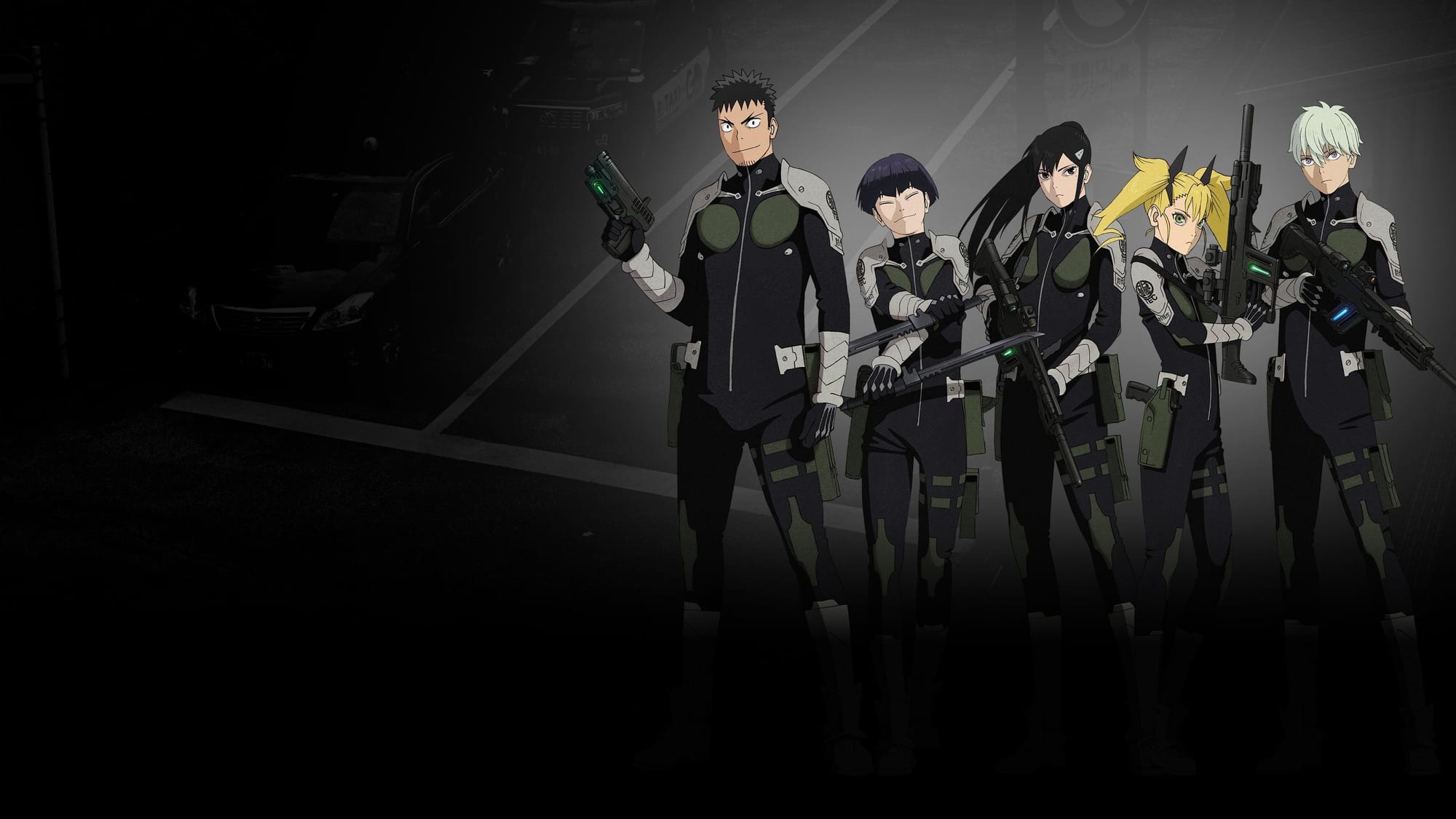
The conclusion arc itself is substantial. According to reports, the film will adapt approximately chapters 84 through 129 of the manga — 46 chapters that are heavily action-driven and centre on the series' final antagonist. That volume of material, compressed into a single feature, is an editorial gamble. It assumes the film's pacing can absorb what a full TV season would otherwise breathe through across months of weekly releases.
The Format Shift and What It Signals
The decision to go theatrical is not unique to Kaiju No. 8, but the context makes it worth examining carefully. Demon Slayer: Kimetsu no Yaiba – The Movie: Infinity Castle (2025) demonstrated what the ceiling looks like when the format works at full force: the film anchored Japan's record-breaking 2025 theatrical market, generating approximately $255 million domestically and becoming the country's third-highest-grossing film of all time. Globally, the film opened to $70 million in North America alone, setting a new record for the biggest opening weekend ever for an anime film. Chainsaw Man – The Movie: Reze Arc also performed strongly enough to chart as a number-one film in multiple territories. The theatrical model, when executed with a property that has broad mainstream penetration, demonstrably works.
But that data comes with a caveat: Demon Slayer and Chainsaw Man are properties with different audience profiles and different production pedigrees. Kaiju No. 8 is a massive Shōnen Jump+ success, but it is not yet a universal cultural shorthand in the way Demon Slayer became after the Mugen Train (2020) film turned the franchise from a hit into a phenomenon. The theatrical finale structure will test whether Kaiju No. 8's fandom is deep enough to drive cinema attendance without the broader casual audience that only attaches to a handful of properties per decade.
There is also a creative argument for the format that goes beyond commercial calculation. The final arc of Matsumoto's manga is built differently from the episodic mid-sections that TV serialisation handles well. It is built on sustained escalation toward a single confrontation — a structure that maps more naturally onto a two-hour film than onto weekly installments separated by cold opens and recap sequences. A theatrical feature, produced at the budget and production density that a final event justifies, can maintain a tonal register that episodic television inherently punctuates. Production I.G's track record with original anime films — including the Ghost in the Shell (1995) and Psycho-Pass theatrical entries — gives the production team institutional knowledge in working at that register.
The Announcement's Trajectory

The film was not an abrupt pivot. The conclusion arc was first announced at Jump Festa 2026 in December 2025, at which point Production I.G and TOHO animation confirmed they were working on a final chapter without specifying its format. Saturday's reveal that the format would be theatrical — and that the title would be Kaiju No. 8: The Final Mission — is the confirmation of a decision that had likely been made months earlier. The teaser visual, drawn by art director Shinji Kimura, is spare by design: a single dominant image, no character lineup, no action geometry. It is doing the work that trailers for sequels rarely need to do — establishing a register, not selling a premise.
The four-episode Narumi's Week at Work special, which aired in September 2026 through Production I.G, also served a structural function: it kept the property in active circulation between Season 2's conclusion and the film's eventual release window, maintaining audience connection without requiring the resource commitment of a full season. That kind of bridge content has become a recognisable tool in how major anime franchises manage the gap between serialised television and theatrical events. The industry is learning, iteratively, how to pace a franchise across formats rather than treating each format as a self-contained release strategy.
This is a broader pattern worth tracking. As Kynari has noted in its coverage of Made in Abyss: Mezameru Shinpi's theatrical trilogy opening and the Apothecary Diaries running its TV and theatrical tracks simultaneously, the anime industry is no longer treating cinema as an ancillary format. It is treating it as a primary format for specific narrative functions — specifically, the kind of escalatory finality that weekly episodic television was never designed to execute cleanly.
What Remains Unresolved
The 2027 window is broad enough to leave critical questions open. Whether the film receives a simultaneous international theatrical release, whether Crunchyroll and Sony Pictures follow the same distribution model used for Mission Recon and the Demon Slayer films, and whether the production will pursue IMAX or premium format screenings to maximise per-seat yield — none of that has been announced. Those decisions will matter as much to the film's commercial performance as the source material does.
What is settled is the format itself, and with it, the implicit argument: that Kaiju No. 8's final chapter belongs in a cinema rather than on a streaming queue, and that the story Matsumoto spent five years writing deserves to end in a single sustained event rather than in weekly installments spread across a broadcast season. Whether that argument is validated commercially and critically is something 2027 will answer. For now, the era of humans is, apparently, over — and it ends in theaters.