Michael (2025) has crossed one billion dollars at the worldwide box office. It has surpassed Oppenheimer (2023) as the highest-grossing biopic in cinema history. It is now arriving on streaming, which means the conversation — already too large to contain — is about to get louder. Before the discourse dissolves into takes, it is worth sitting with the precision of what just happened: an entertainment industry that has spent a decade publicly reckoning with the legacies of abusive men just handed the biggest financial validation in the history of the biographical film to a movie about Michael Jackson.
The Record in Context
Crossing a billion dollars is not an accident. It is the aggregate of millions of individual decisions — tickets purchased, babysitters booked, streaming subscriptions retained. Oppenheimer reached that threshold by fusing a genuinely contested moral subject with Christopher Nolan's formal ambition and a cultural moment that made nuclear anxiety feel urgent again. The film offered its audience the discomfort of complicity as a feature, not a bug. Michael operates on different fuel: nostalgia, spectacle, and the sheer gravitational pull of the most famous entertainer who ever lived. These are not lesser forces. They are, as it turns out, more powerful ones.
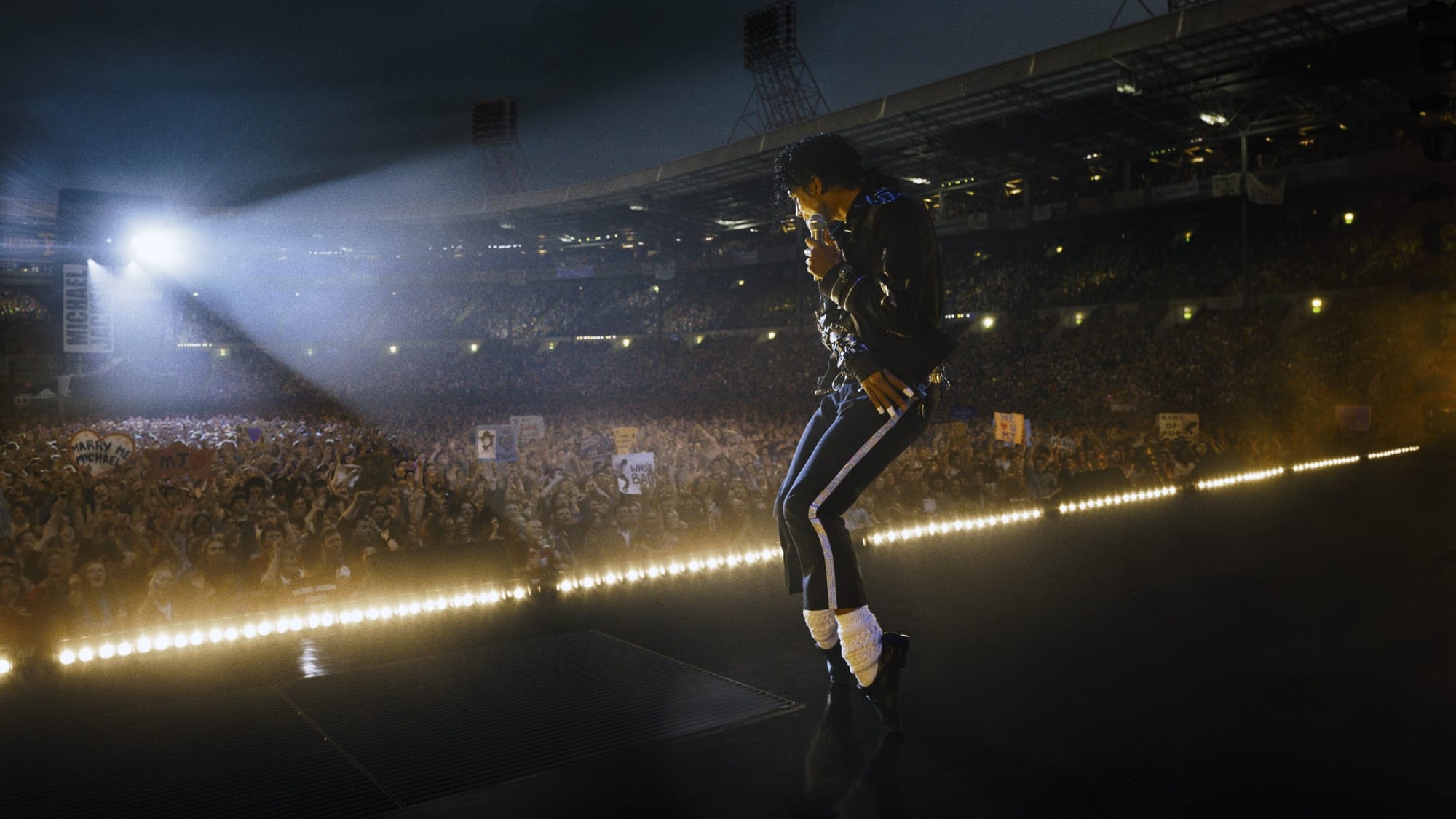
Director Antoine Fuqua and the Jackson estate constructed a film that is, by design, a monument. Jaafar Jackson's performance as his uncle generates the kind of physical uncanniness that biographical cinema prizes above almost everything else — the walk, the voice, the involuntary freeze of recognition in an audience that grew up inside this catalog. The filmmaking is confident, the production enormous. None of that is in dispute. What is in dispute is what the billion dollars means beyond the craft.
The Weight of the Number
The allegations against Michael Jackson — documented most confrontationally in Dan Reed's Leaving Neverland (2019) — did not disappear between that film's premiere at Sundance and this one's opening weekend. The estates of Wade Robson and James Safechuck continue to pursue litigation. The cultural conversation did not resolve; it stalled, as these conversations tend to do when the subject is sufficiently large and sufficiently beloved. What Michael the film does — and what its box office performance confirms — is demonstrate that the stall functions, economically, like absolution.
This is not an argument that audiences are complicit in a specific moral failure. Human psychology around celebrity is more diffuse and more forgiving than that framing allows. People do not go to a Michael Jackson film to endorse a verdict. They go because the music is genuinely transcendent, because the mythology is irresistible, and because the biographical format implicitly promises that it will hold complexity. Whether Michael delivers on that implicit promise is a separate critical question. What the box office answers is a different one: how many people needed the promise to be enough.
What Hollywood Will Do With This
Studios read numbers the way generals read maps — not for nuance, but for territory. A billion-dollar biopic about a contested legacy does not register in a greenlight meeting as a cautionary tale. It registers as a template. The projects already in various stages of development — biopics of figures whose personal histories are similarly tangled — will now have a data point that functions as permission. The argument against making them just got harder to sustain in a boardroom.

The more honest version of that industry logic goes something like this: audiences will compartmentalize if the music is good enough, if the spectacle is large enough, if the distance in time is sufficient. Jackson has been dead since 2009. The catalog is unimpeachable in purely sonic terms. The film arrives at a moment when streaming has made passive consumption the dominant mode of engagement with culture. All of those conditions are replicable. None of them require the subject to be exonerated.
Permission or Anomaly
The honest answer is that it is both, and that the industry will choose to hear only one. The scale of Jackson's cultural imprint is genuinely singular — there is no second figure for whom the same alchemy of global recognition, musical legacy, and mythological weight exists in quite the same proportion. Treating Michael's billion dollars as a universal proof of concept would be a misreading. But studios have always misread data in the direction of profit, and there is no structural reason to expect that to change now.
What lands on streaming this week is not just a film. It is a referendum result, and the result is complicated. The vote was for spectacle, for music, for the specific pleasure of watching a myth reconstructed at scale. It was not a vote on the allegations, because the box office was never designed to register that kind of choice. The industry knows this, and will proceed accordingly. The rest of us are left to decide what we do with the receipt.