Michael (2025) has crossed $1 billion at the global box office, becoming the first biopic in cinema history to reach that milestone. Antoine Fuqua's film about Michael Jackson is now a cultural and commercial fact that the industry cannot ignore. The question worth asking is not how it got there — the marketing infrastructure, the Jackson estate's co-production, the global ubiquity of the music all but guaranteed a massive opening — but what it had to omit to make the journey.
The Billion-Dollar Blind Spot
No serious account of Michael Jackson's life can be written without confronting the sexual abuse allegations that shadowed his final decades, the 2003 criminal trial, the civil settlements, and the sustained, credible testimony documented in Dan Reed's Leaving Neverland (2019). Michael does not engage with any of it in any meaningful way. The film structures its narrative around the mythological arc — the Gary, Indiana childhood, the Motown machine, the Thriller era, the coronation of a cultural god — and finds its emotional terminus well before the machinery of scandal enters the frame. It is a portrait that stops precisely where the painting gets complicated.
That is a curatorial decision, not an accidental one. The Jackson estate, which controls the music rights and served as a producing partner, has an obvious institutional interest in a particular version of this story. Fuqua, a director whose best work — Training Day (2001), Southpaw (2015) — has never shied from moral ambiguity, made a film that is conspicuously free of it. The collaboration produced something technically accomplished and narratively hollowed out.
What Critics Called It, What Audiences Paid For
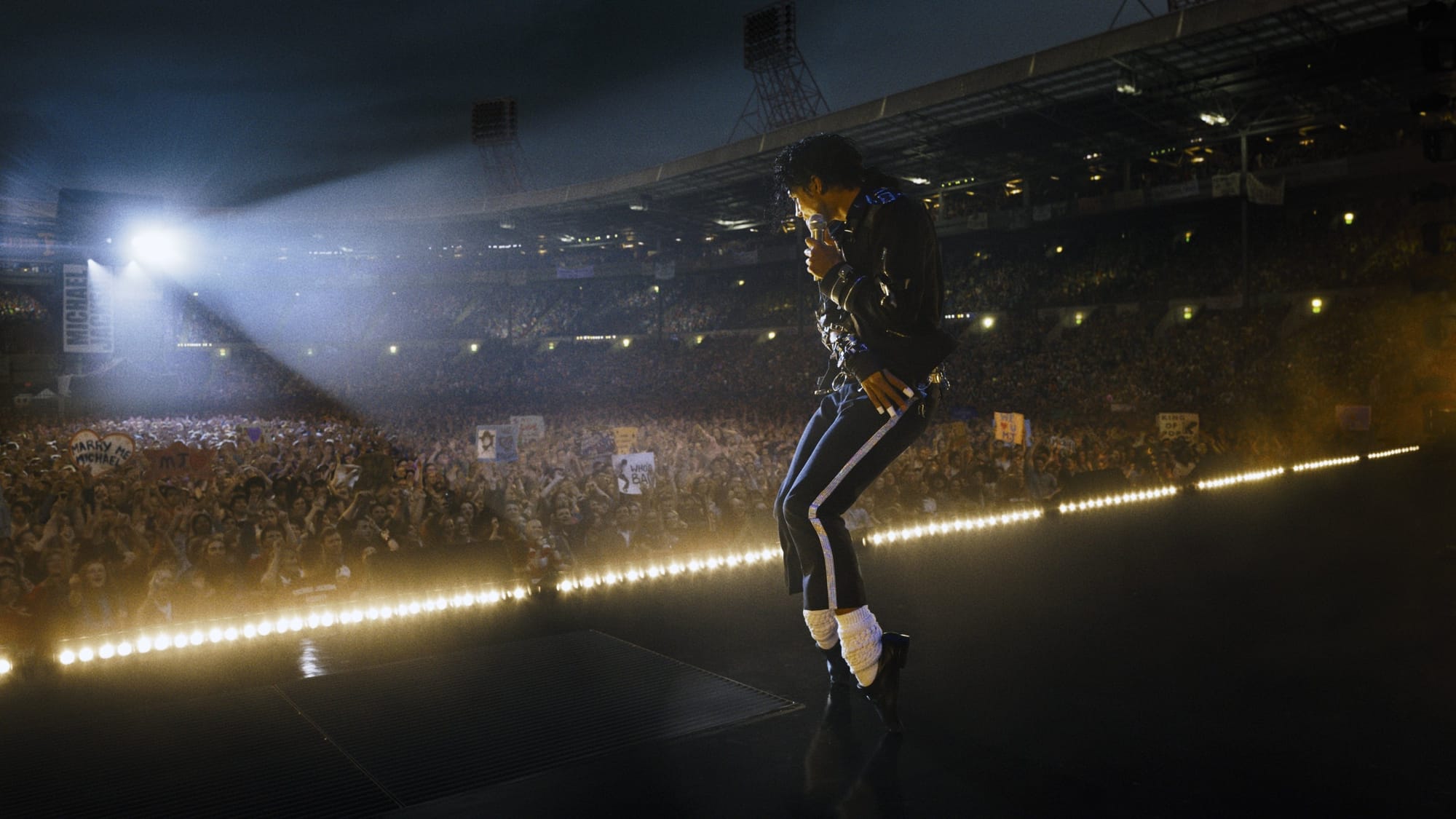
Reviews were pointed. "Hagiography" appeared with enough frequency across major publications to constitute a critical consensus. The film was praised for its craftsmanship — Jaafar Jackson's central performance drew genuine attention, and the concert reconstructions are visually striking — but the critical community broadly identified the absence at its core. What Michael offers is an authorized mythology: immersive, technically credible, and fundamentally incomplete.
Audiences disagreed in the only language the industry fluently reads. A billion dollars is not a passive verdict. It is an active one, delivered by paying customers across dozens of markets who chose this film over alternatives. The gap between critical reception and box office performance is not new — it is, in fact, one of the defining tensions of prestige entertainment — but the scale of that gap here deserves examination rather than dismissal.
The Genre Gets Rewritten
Before Michael, the music biopic ceiling was held by Bohemian Rhapsody (2018), which grossed approximately $910 million worldwide and was itself criticized for softening Freddie Mercury's story. The pattern is legible: the more beloved the subject, the more commercially viable the sanitization, and the more the estate or surviving parties can shape the final product. Michael has now set a new financial benchmark that will define what studios greenlight and how they greenlight it for the next decade.

The implication is uncomfortable. If the most profitable version of a musical legend's story is one that brackets inconvenient truth, then the economic incentive now exists, with receipts attached, to keep doing exactly that. Every future biopic pitched in a development meeting will have this number on the whiteboard. The argument for omission just got a billion-dollar citation.
Arriving on Starz
On August 10, Michael moves to Starz, where the audience shifts from the self-selecting theatrical crowd to a broader streaming ecosystem. That transition matters. The conversations the theatrical release avoided — about completeness, about accountability, about what it means to canonize a figure whose legacy remains genuinely contested — will now reach living rooms where those questions are harder to insulate against. The film does not change. The context around it does.
A biopic that clears a billion dollars while critics call it incomplete is not a contradiction to be resolved. It is a data point about what audiences want from the stories they pay to inhabit — not complexity, not accountability, but confirmation. Michael gave them that, at scale, with extraordinary music attached. The genre will follow the money. It always does.