Eva Marie Saint died on Tuesday, October 6, at her home in Los Angeles. She was 102. For the last stretch of her life she held a title no one competes for: the oldest living Academy Award winner, and the earliest one still alive. That kind of record turns a person into a date on a list. Her career deserves a better frame than longevity, because the two films most people remember her for, On the Waterfront (1954) and North by Northwest (1959), are not just classics with her in them. They are two opposite theories of what a woman on screen could be, and she was the only actress of her era who embodied both.
The actress who came from live television
Born in Newark, New Jersey, on July 4, 1924, she studied at Bowling Green State University, started at NBC as a page and spent the late 1940s and early 1950s in the strange laboratory of live television: One Man's Family, the Philco and Goodyear playhouses, dramas that went out once and were gone. In 1953 she played Thelma in Horton Foote's The Trip to Bountiful on Broadway. She trained at the Actors Studio. By the time she reached a film set she was almost thirty, which in the Hollywood of the 1950s was not a debut age but a warning sign.
That background explains the quality that made her famous. Live television had no second take and no close-up rescue in the edit. It rewarded actors who could think in real time and let the camera see it happen. When Elia Kazan put her in a screen test opposite Marlon Brando, playing the scene where her character tries to keep his out of her apartment, the test was less an audition than a demonstration of a skill most film actresses of the period had never needed.
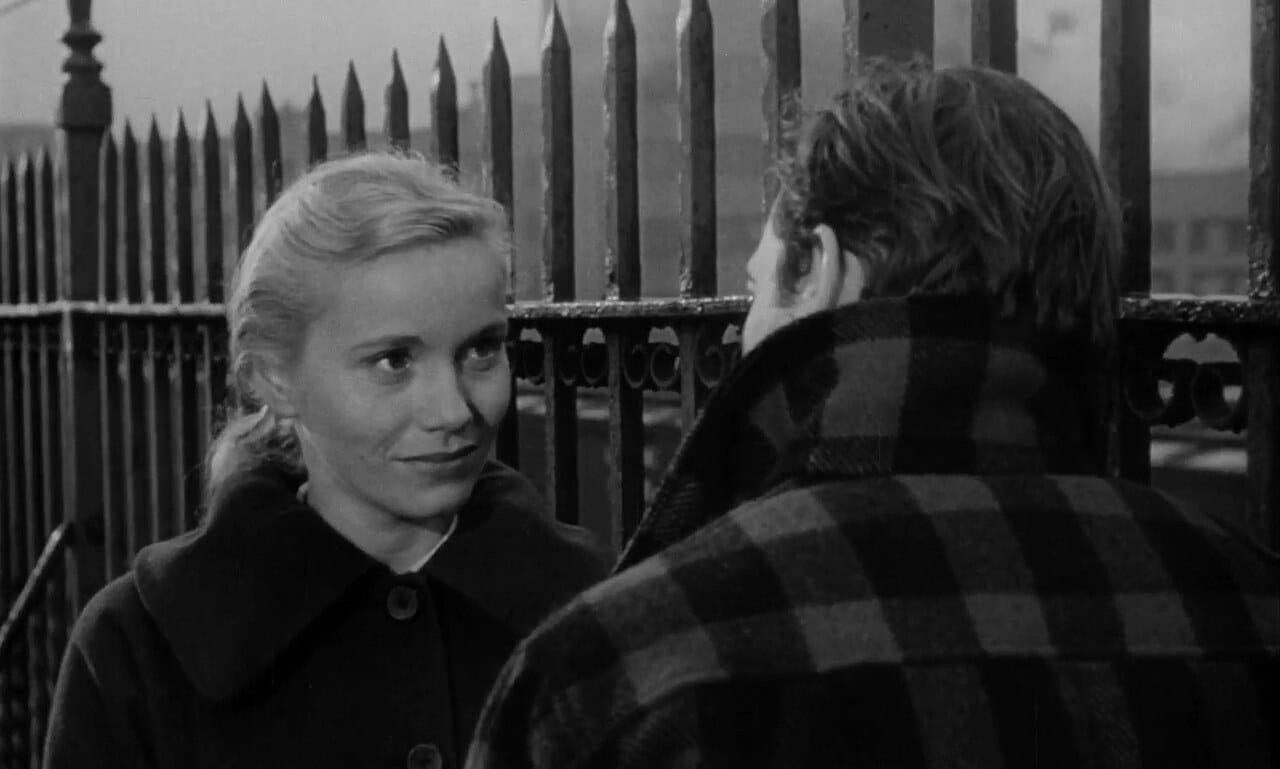
Edie Doyle and the problem of goodness
On the Waterfront is remembered for Brando's "contender" speech and for its uncomfortable origin. Kazan had named names before the House Un-American Activities Committee in 1952, and the film, about a longshoreman who testifies against a corrupt union, has been read ever since as his argument that informing can be an act of conscience. Saint's Edie Doyle is the moral center that argument needs. Her brother has been killed for talking. She is the reason Terry Malloy begins to.
Goodness is the hardest thing to play, and the easiest to make boring. Saint's Edie is not saintly in the dull sense. She is curious, stubborn and visibly unsettled by her own attraction to a man connected to her brother's death. The famous glove scene, in which Brando picks up the glove she drops and slowly pulls it on while they talk, works because she lets him keep it: the scene is about a woman deciding, in real time, to stay. Saint later described the first meeting with Brando to NPR's Fresh Air as the moment the sparks flew, and the film records that spark more honestly than any studio romance of the decade.
She won the Oscar for Best Supporting Actress for it. Her son was born two days after the ceremony. It is one of the more telling facts of her biography that she then limited her film work to raise her children, at exactly the moment Hollywood was ready to make her a star. She had married the director Jeffrey Hayden in 1951; they stayed married for 65 years, until his death in 2016.
Eve Kendall and the problem of glamour
Five years later Alfred Hitchcock cast her as the opposite of Edie. Eve Kendall in North by Northwest is a double agent who seduces Cary Grant on a train, lies to him, sends him to a cornfield to be killed and then turns out to be on the right side after all. It is a role built entirely out of surface, and Hitchcock treated it that way. Saint recalled that he worked on her from the outside in, choosing her hair, makeup, clothes and jewelry himself, as if the character were a costume to be assembled before an actress could step into it.
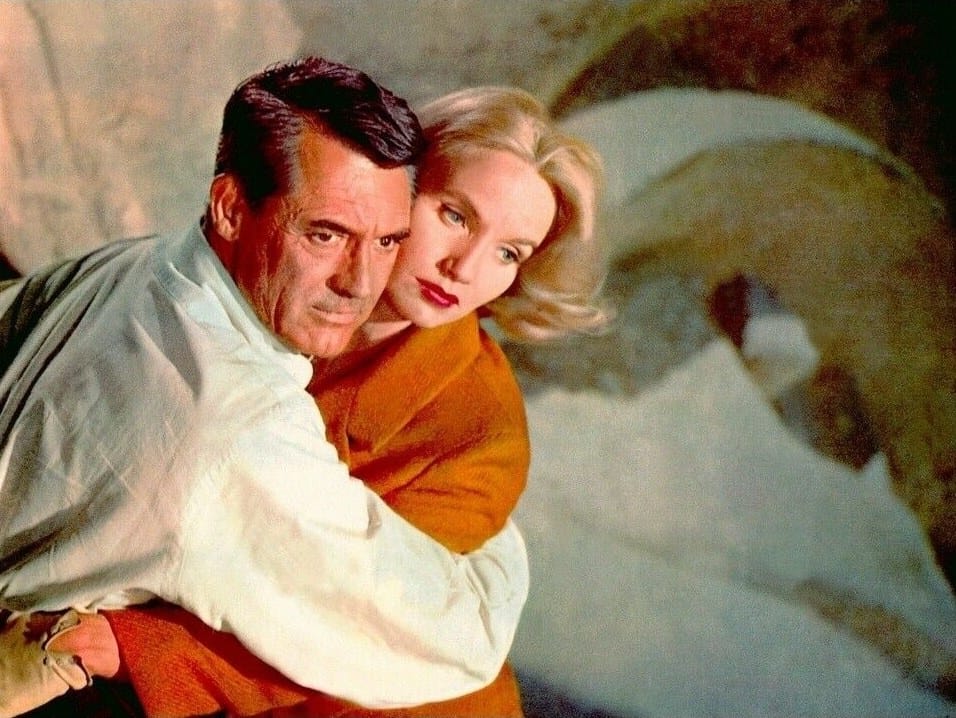
What she did inside that construction is what keeps the film modern. Eve is the only person in North by Northwest who knows everything, and Saint plays her as tired of knowing it. The dining-car flirtation is pure Hitchcock wit; the scenes that follow, where she watches Grant walk into danger she arranged, are something closer to dread. The Method actress from the Actors Studio and the director who reportedly called actors cattle met halfway, and the result is a femme fatale with a conscience. She never worked with Hitchcock again.
The career she chose instead
The filmography that followed is varied rather than dominant: Raintree County and A Hatful of Rain (both 1957), Exodus (1960), The Sandpiper (1965), The Russians Are Coming, the Russians Are Coming and Grand Prix (both 1966). Television kept calling her back, from the 1955 musical version of Our Town with Paul Newman and Frank Sinatra, which brought her first Emmy nomination, to the miniseries People Like Us, which finally won her the Emmy in 1990 after five nominations.
Then, in 2006, a new generation met her as Martha Kent in Superman Returns. It is a small role and a perfect piece of casting: the woman who once gave the American screen its model of quiet moral courage, now playing the mother who taught it to the most famous hero of all. Superman's endurance is its own story, one we traced when Action Comics reached issue #1100, but few actors have ever been asked to stand for the source of his decency. Her last theatrical film was Winter's Tale (2014).
Why she matters now
The 1950s gave American film two dominant models for women: the wholesome girl and the dangerous one. Most actresses were cast as one or the other for their entire careers. Saint played both definitively within five years and did it by refusing the cliché inside each. Her good girl had desire. Her bad girl had a conscience. The line from Edie Doyle to Eve Kendall is the line the next generation of actresses would walk for decades.
There is also something worth noticing in how her most famous film still circulates. On the Waterfront is a movie about the cost of speaking up, and its shadow runs through the crime cinema that followed, all the way to stories about informers and loyalty like The Departed (2006). Every one of those films needs someone who reminds the hero what talking is for. In the original, that person was Eva Marie Saint, and she made goodness look like the most dramatic choice in the room.