Four months after it opened at number one, Disclosure Day (2026) arrived on Peacock this Thursday, October 9. On paper it is a routine window change: a Universal summer release moving to Universal's own streamer. In practice it closes the most closely watched experiment of the 2026 summer, the question of whether Steven Spielberg, at 79, could still open an original blockbuster in a market built almost entirely on brands. The answer the numbers give is yes. The answer the ledger gives is more complicated, and the gap between the two is the real story the film carries into its second life.
 Official trailer
What the opening proved
When Disclosure Day reached theaters on June 12, it took first place with roughly $44 million in North America and $92.9 million worldwide, according to the Associated Press weekend report. That was Spielberg's best opening ever for an original film, unadjusted for inflation, and his first summer release in a decade. It played evenly across the U.S. and Canada instead of leaning on the coastal cities, and around 41 percent of its opening audience was 45 or older.
That last figure matters more than it looks. The 2026 summer had been driven by younger crowds, the same audiences that turned a micro-budget horror film into a phenomenon in the same frame. Disclosure Day brought back a demographic the industry had half written off as streaming-only, and it did so with no franchise attached. In a season we already described as a recovery full of structural contradictions, that was one of the few signals pointing somewhere new.
What the ledger says
The run ended at about $241 million worldwide. Against a production budget reported at $115 million, that is not a disaster. Against a total outlay that some estimates place near $200 million once marketing is counted, it falls short of the roughly two-and-a-half-times multiple a studio usually needs to break even, as Space.com noted when the Peacock date was announced.
The reason is legs. Original films rarely open huge; they live or die on how long they hold. Disclosure Day earned an 80 percent "fresh" rating from critics but only a B CinemaScore from audiences, and a B is the grade that quietly shortens a run. People came on the strength of the name, then told their friends it was fine. In a marketplace where audiences have learned to trust a handful of filmmakers as brands, Spielberg's name was enough to open the film. It was not enough to carry it.
Back to the sky, but not the same sky
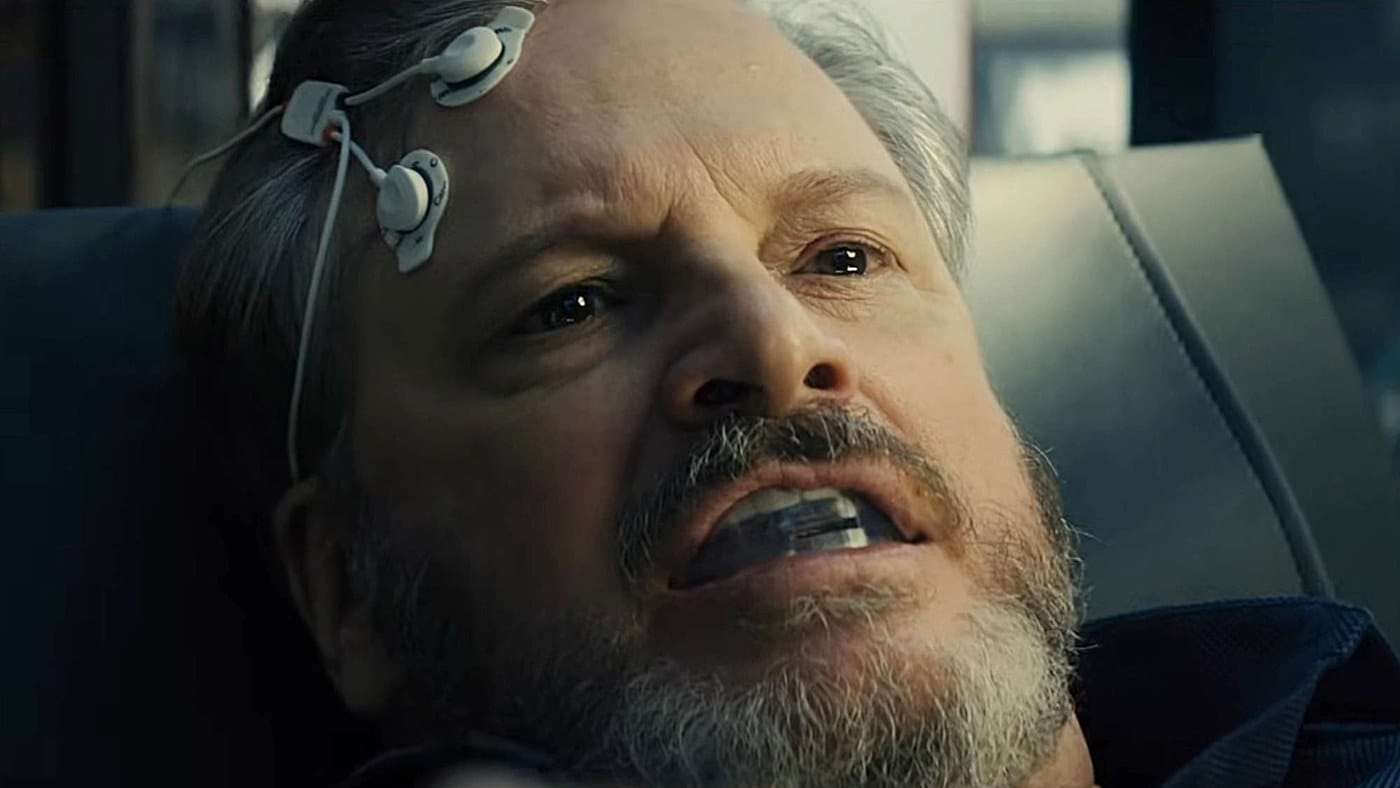
The film itself, written by longtime collaborator David Koepp, follows a Kansas City meteorologist and a tech whistleblower pursued by a group determined to bury evidence that aliens are already living among us. Emily Blunt, Josh O'Connor, Colin Firth, Eve Hewson and Colman Domingo lead the cast.
The premise invites the obvious comparison, and critics made it constantly: this is not Close Encounters of the Third Kind (1977) or E.T. the Extra-Terrestrial (1982). But the comparison is useful precisely because of how the premise has turned around. In 1977 the government knew something and the ordinary man was drawn toward the light against its will. In 1982 the government was the threat that came through the door in spacesuits. In 2026 the contact has already happened, and the drama is entirely about who controls the information. Spielberg's aliens have moved from wonder to paperwork.
That shift tells us more about the decade than about the director. A meteorologist, a person whose job is to interpret invisible systems for the public, and a whistleblower, a person whose job is to leak what institutions hide, are the two figures the film trusts. It is a paranoid thriller in the key of the 1970s, rebuilt for an era in which the question is no longer whether the truth is out there but whether anyone would believe it if it were published.
Why the small screen may suit it
There is a reasonable case that Disclosure Day will find its audience now rather than in June. Thrillers built on conversation and conspiracy, on rooms where people decide what can be said, tend to play better at home than spectacle does. The film's weakest box office asset, word of mouth that was polite rather than urgent, matters far less on a platform where viewers start a movie because it is there, not because a friend insisted.
Peacock also gets something it badly needs: an original prestige title with a household-name director, arriving in October, the month when audiences are most receptive to stories about something watching from the dark. The timing is not artistic. It is the calendar doing what calendars do.
The verdict the industry will take from it
Studios will read Disclosure Day in two ways at once. The optimistic reading: a great director with an original idea can still open a film at number one in a franchise summer, and older audiences will come back to theaters for the right reason. The cautious reading: opening is no longer the hard part. Holding is, and a film that is merely good, rather than undeniable, loses the second and third weekends to whatever is louder.
Both readings are true. The second one is the one that gets budgets cut. Spielberg proved the original blockbuster is not dead; he also showed how little margin it has. Whatever the streaming numbers say in the coming weeks, the film's most lasting effect may be on the next director who walks into a studio with no IP and a big idea, and on the price tag that director is allowed to attach to it.