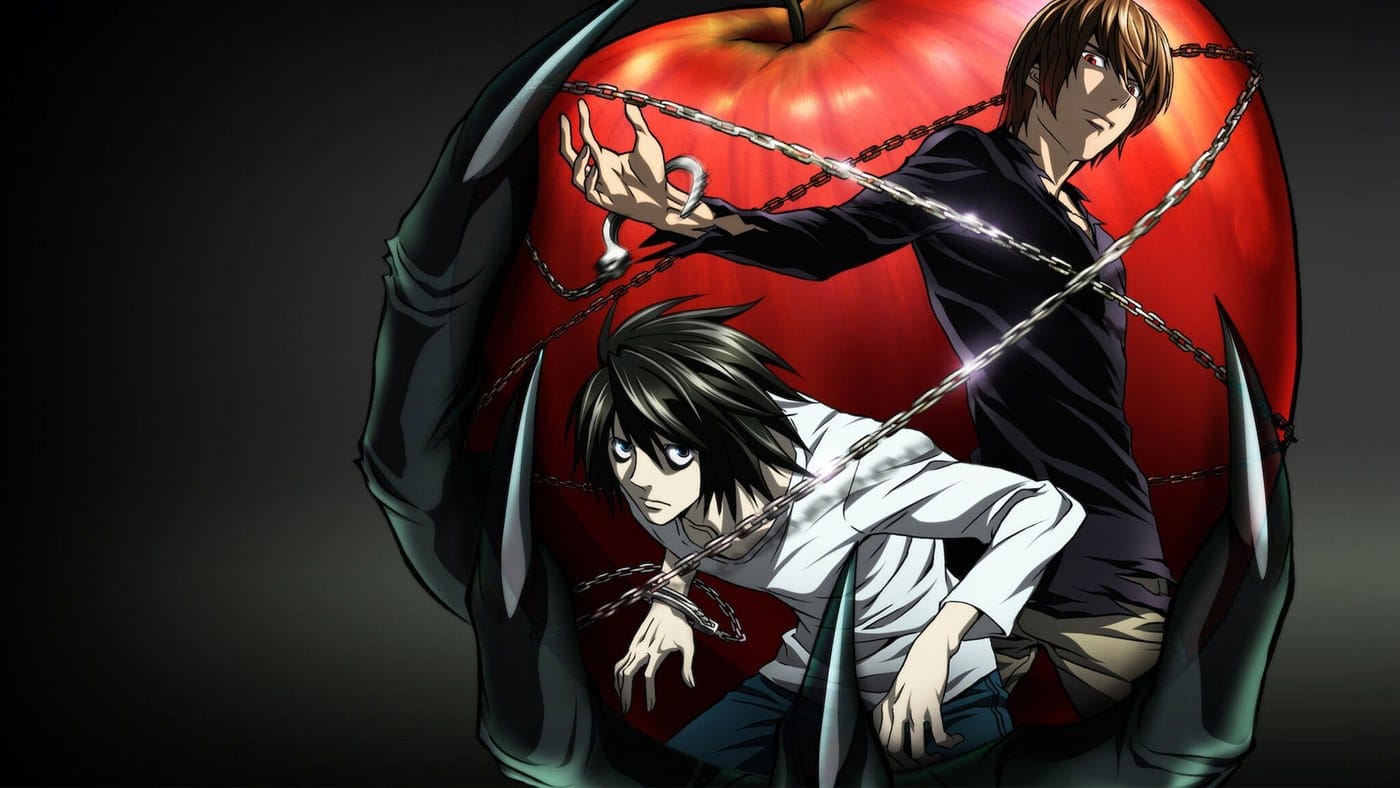
Twenty years ago this week, in the early hours of October 4, 2006, Nippon TV aired the first episode of Death Note. A bored honor student finds a black notebook dropped by a bored god of death, writes a name in it, and decides to remake the world. Thirty-seven episodes later, Madhouse and director Tetsurō Araki had produced the anime that taught a generation of Western viewers that a series could be a thriller first and a shōnen second, and that its most thrilling scenes could consist of two young men eating potato chips and sweets while lying to each other.
 Official trailer
A Battle Fought in Inner Monologue
Tsugumi Ohba and Takeshi Obata's manga ran in Weekly Shōnen Jump from 2003 to 2006, and it was already a phenomenon when the anime arrived. The adaptation's achievement was to make a story with almost no physical action feel like an action series. Light Yagami and L, the reclusive detective hunting him, fight entirely through deduction, misdirection and voice-over. Araki staged those duels like sword fights: whip pans, dramatic low angles, choral music swelling as Light reaches for a pen, the infamous potato-chip scene in which an act of mass murder is choreographed like a heist.
The voice cast sold the game. Mamoru Miyano's Light shifts from model student to messianic megalomaniac without ever raising his voice too early; Kappei Yamaguchi's L is all flat curiosity and crouched posture. Composers Yoshihisa Hirano and Hideki Taniuchi supplied the Latin chants and church-organ dread, and the openings, Nightmare's "The World" and later Maximum the Hormone's "What's up, people?!", announced a show that wanted to be heavier and stranger than its timeslot neighbors.
The Gateway Anime
When Adult Swim began airing the English dub in October 2007, Death Note became something rarer than a hit: a gateway. It was the anime you could recommend to someone who did not watch anime. No power levels, no tournament arcs, no years of filler; just a closed moral argument about justice and power with a beginning, a middle and an end. For many viewers, it was the first time animation from Japan read as prestige drama rather than kids' programming.
That reputation has a direct line to the present. Araki went on to direct the first three seasons of Attack on Titan, bringing the same operatic camera to a much bigger war. The "dark anime" lane that series like Chainsaw Man now occupy was paved, in large part, by a notebook and a shinigami who really liked apples.
The Problem With the Second Half
Any honest anniversary has to admit what everyone who has watched the series knows: Death Note is a better first half than second. Its central rivalry reaches its climax around episode 25, and the remaining arc, with L's successors Near and Mello, never recovers the electricity. Fans have argued about that turn for two decades. Some read it as the story's real point, that Light's victory leaves him with no worthy opponent and nothing but his own vanity; others simply stop watching.
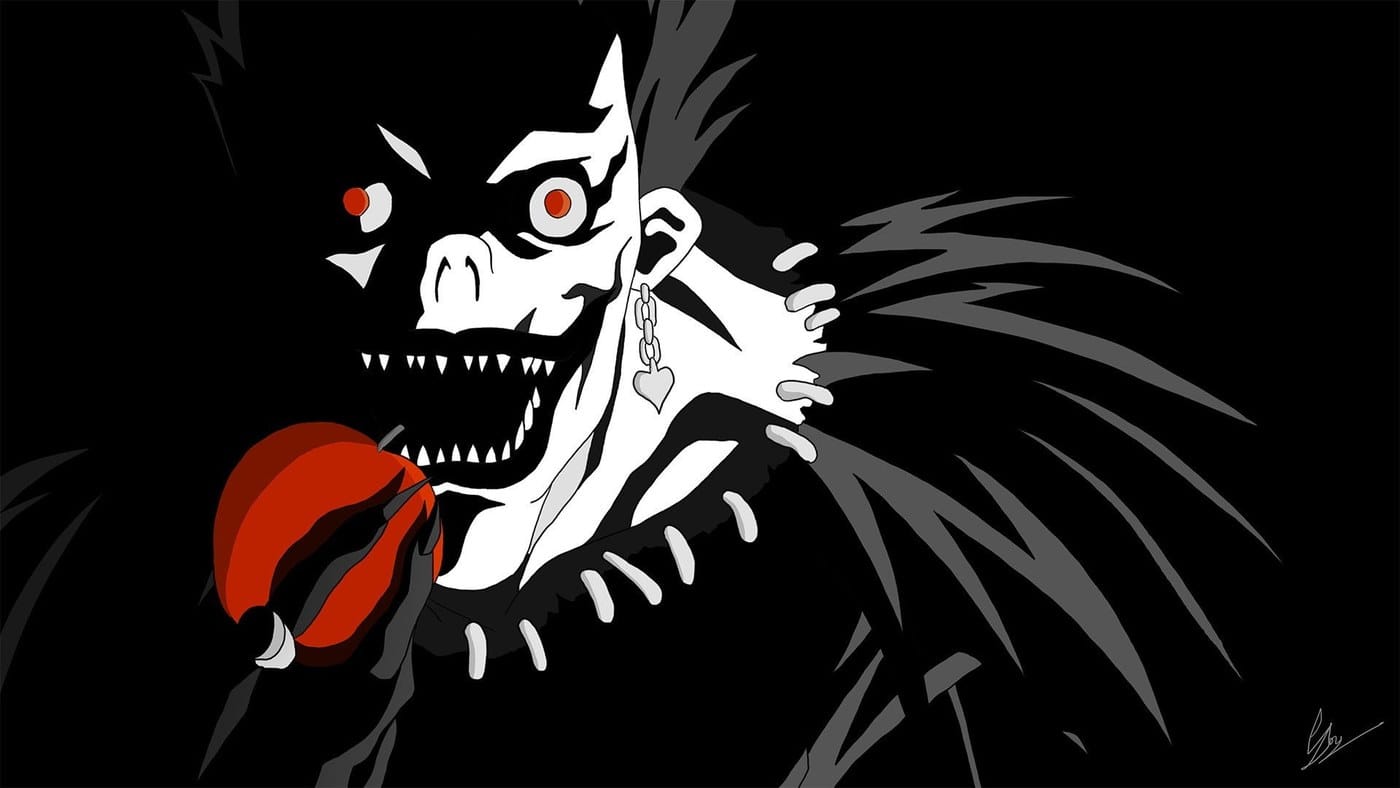
The franchise itself has had a similarly uneven afterlife. Japan produced two live-action films in 2006, a spin-off, a 2015 TV drama and a 2016 sequel film. Netflix's American version in 2017, directed by Adam Wingard (now making Onslaught for A24), was widely rejected by fans for transplanting the story to Seattle and losing its cat-and-mouse logic. A new Netflix series from the Duffer Brothers' company was announced in 2022. The most successful reinvention has turned out to be the least likely: a stage musical, first produced in Japan in 2015, which played London's Barbican this summer.
Why It Endures
Twenty years on, Death Note survives because its question has aged into relevance. Light is a teenager who believes he alone sees clearly, who acquires godlike power with no oversight, and who becomes worshipped online as "Kira" by people who will never meet him. In 2006 that was a supernatural premise. In 2026 it sounds like a description of the internet.
The anime is still the definitive version: complete, tightly paced in its first half, and directed with a confidence that most adaptations never reach. More on its production history is on Wikipedia. If you have never watched it, the anniversary is the right excuse. If you have, start again from episode one, and watch how much Araki tells you in Light's eyes before he says a word.