Twenty years ago tonight, in a late-night slot on Japan's MBS, a masked teenager first raised his hand and gave an order no one could refuse. Code Geass: Lelouch of the Rebellion premiered on October 5, 2006, at 1:25 in the morning Japan time. It was Sunrise's bid to make a mecha series for a generation that had grown up on Gundam but wanted something sharper, stranger and more morally compromised. What it produced was one of the most argued-about endings in anime history and a protagonist who remains, two decades later, the genre's most persuasive villain.
The Week of Two Notebooks
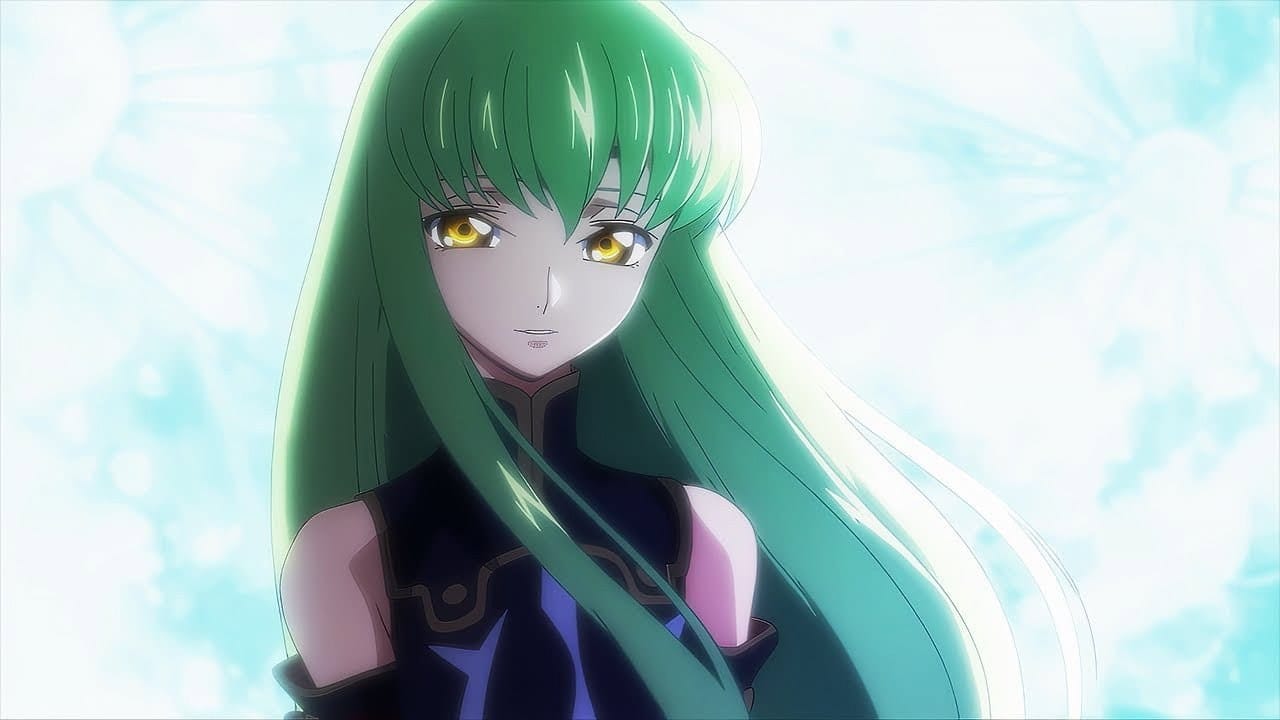
The timing is almost too neat. Code Geass arrived in the same week as Death Note, which had premiered on Nippon TV just two nights earlier. Both shows follow a brilliant, alienated student who receives a supernatural power from a mysterious stranger and decides to remake the world with it. Light Yagami gets a notebook from a god of death. Lelouch Lamperouge gets the Geass from a green-haired immortal called C.C.: the power to command anyone, once, through eye contact.
The difference between the two is the difference between a thriller and an opera. Death Note is a duel in a locked room. Code Geass is a war across continents, with giant robots, imperial politics, school comedy and family tragedy running in the same episode, sometimes in the same scene. Light wants to become a god. Lelouch, the exiled son of the emperor, wants revenge for his murdered mother and a safe world for his blind, paralyzed sister, Nunnally. One is a study of vanity. The other is a study of what love will justify.
Built for Prime Time, Reborn After Midnight
The series was created at Sunrise by director Gorō Taniguchi and writer Ichirō Ōkouchi, who had worked together on Planetes, and producer Yoshitaka Kawaguchi brought in the manga collective CLAMP to design the characters. It was the first time CLAMP had ever been asked to design an anime, and their elongated, elegant figures gave a war story the look of a shōjo romance, which is exactly why it reached such a broad audience. Takahiro Kimura then translated their drawings into designs animators could actually move.
The premise was shaped by a scheduling accident. Code Geass was originally developed for MBS's Sunday evening prime-time slot, then moved to a Thursday late-night slot. The creators responded by making the show darker and more adult, and it was at this point that the Geass itself entered the story, first imagined as a gift from an angel. The setting became an alternate history in which the Holy Britannian Empire has conquered Japan, stripped its people of their name and renamed the country Area 11. Its citizens are called Elevens. The name Geass itself comes from the geas of Irish and Welsh legend, a binding compulsion laid on a hero.
Zero, and the Friend on the Other Side
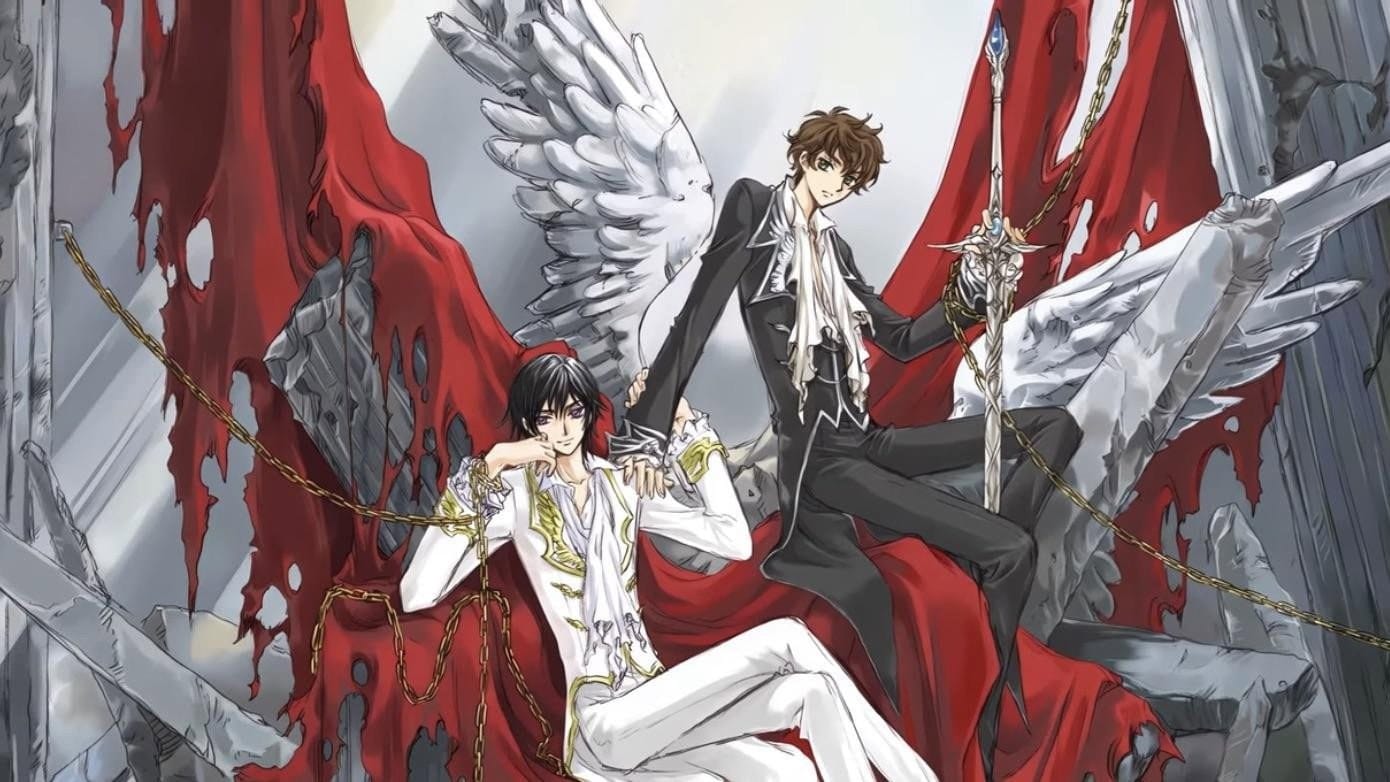
Lelouch's alter ego, Zero, was one of the first elements to exist. Ōkouchi wanted a masked hero because he felt a Sunrise show needed one, and CLAMP designed a helmet unlike anything in the studio's catalog; the staff nicknamed it the tulip. Behind the mask, Lelouch builds a resistance army, the Black Knights, out of terrorists, idealists and opportunists, and directs it like a chess player who is always three moves ahead and always one disaster behind.
The show's emotional engine is not the war, though. It is Suzaku Kururugi, Lelouch's childhood friend, who believes Britannia can be changed from inside and enlists in its army. The conflict Taniguchi and Ōkouchi started with was exactly this: two people with opposite values in the same war, each convinced the other is the one who has to stop. Jun Fukuyama won the first Seiyu Award for best lead actor for voicing Lelouch, and Ami Koshimizu took best supporting actress as Kallen, the half-Japanese pilot who becomes Zero's most loyal soldier.
Production was not smooth. The first season went on hiatus after 23 episodes in March 2007, and its last two episodes did not air until July 28, as a single one-hour broadcast. That cliffhanger, one of the cruelest in television animation, guaranteed the sequel. Code Geass: Lelouch of the Rebellion R2 aired from April to September 2008, promoted to a Sunday afternoon slot on the national JNN network.
The Ending Everyone Still Argues About
Any honest anniversary has to reckon with how Code Geass ends, so a warning for the few who have not seen it. The finale, which fans call the Zero Requiem, asks its protagonist to accept that the only way to end a cycle of hatred is to become the single object of everyone's hatred, and then to be destroyed in public. It is melodramatic and calculated and, for many viewers, devastating. It also reframes everything that came before it as a confession. Lelouch has done terrible things. The show never pretends otherwise, and it does not let him escape the bill.
That is why the series still feels different from most of what followed. Anime protagonists who commit atrocities for a cause are common now; Eren Yeager in Attack on Titan is the obvious descendant. But Code Geass got there first in the mainstream, and it framed the question cleanly: not whether a good person can do evil, but whether a person who knows he is doing evil can still choose an ending that makes it mean something.
A Franchise That Would Not Stay Finished
The success was enormous by the standards of the era. Bandai Visual had shipped more than a million discs of the franchise by November 2008. The first season won best television series at the 2007 Tokyo Anime Awards, and the dub reached American audiences on Adult Swim in April 2008. For a generation of Western viewers who came to anime through that block, it sat alongside Death Note as proof that the medium could do political drama.
The problem, as with so many landmark endings, is that the ending did not stay ended. The side story Akito the Exiled arrived between 2012 and 2016. A compilation film trilogy in 2017 and 2018 subtly rewrote the original continuity to set up Lelouch of the Re;surrection (2019), a sequel that undid the very finality that had made the original great. Sunrise then announced a ten-year plan for the brand, which produced the four-part film Rozé of the Recapture in 2024, broadcast on Japanese television this past July. The Encyclopedia of Science Fiction is blunt about it: the post-resurrection output has been mixed, but it cannot diminish the original.
The anniversary year has only accelerated things. A brand-new series, Code Geass: Aspar the Star Chaser, is in production under director Kazuya Nomura, alongside a crossover manga with Mobile Suit Gundam Wing. All thirteen theatrical films were screened again across Japan in the first half of the year, and a 20th anniversary exhibition is running at Animate Ikebukuro in Tokyo until October 12 before moving to Osaka in November.
It is the same pattern we noted in this season's sequel-heavy anime calendar: beloved endings are now treated as assets to be reopened. Code Geass survives the treatment better than most because its core is so strong. Two seasons, fifty episodes, one boy in a mask who decided that the most loving thing he could do was let the world hate him. Twenty years on, that is still the version worth watching first. The series' full history is on Wikipedia, and the anniversary projects are announced on the official Code Geass portal.