July 17 exists on the calendar as World Emoji Day — a date chosen, with fitting self-referential logic, because it appears on the calendar icon emoji in Apple's iOS. The holiday is low-stakes, cheerful, and widely ignored by anyone over forty. It is also, if you look at it sideways, a quiet monument to one of the most radical shifts in human communication since the printing press.
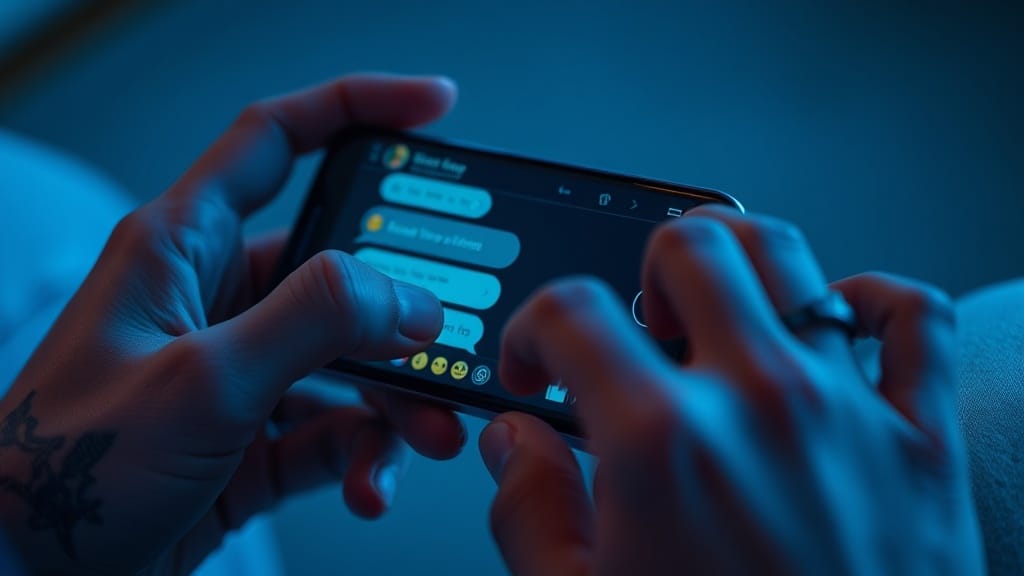
We do not write to each other anymore. Not really. We point.
The migration happened gradually, then all at once. In the early 2000s, the Japanese engineer Shigetaka Kurita designed the first standardized emoji set for NTT DoCoMo — 176 pixelated glyphs meant to compress emotional nuance into a mobile interface that couldn't afford bandwidth for words. They were functional, almost clinical. A smiling face. A sun. A phone. No one imagined they would eventually outnumber the letters of the Roman alphabet or that a single yellow circle with a smirk would carry more communicative weight than a paragraph of carefully chosen prose.
By the time the Unicode Consortium officially adopted emoji in 2010 and Apple embedded them into iOS, the grammar had already begun to shift. The thumbs-up — 👍 — became the dominant unit of social currency: frictionless, non-committal, infinitely scalable. It did not agree. It did not celebrate. It acknowledged. This distinction matters enormously. Language requires the speaker to take a position. The thumbs-up allows you to register presence without revealing anything about yourself. It is the perfect symbol for an era terrified of misinterpretation.
Then came the eggplant.
The 🍆 is the clearest proof that emoji have developed not just a vocabulary but a subtext — a layer of meaning that exists entirely outside the official Unicode description ("eggplant, a dark purple vegetable"). Its sexual connotation emerged organically from user culture, spread through social media, and became so entrenched that Instagram briefly banned it from search results in certain contexts. No committee approved this meaning. No style guide enforced it. It evolved, exactly as slang evolves, through collective use and repetition. The eggplant is not a pictograph. It is a euphemism. And euphemisms are what living languages do when they want to say something without quite saying it.
This is the paradox at the center of emoji culture: a system designed to reduce ambiguity has become one of the most ambiguous communication tools in existence. The 😂 — officially "face with tears of joy," the most-used emoji globally — is deployed to express genuine laughter, performative laughter, uncomfortable laughter, ironic detachment, and sometimes nothing at all. Context does almost all the work. The symbol does almost none.
What fills the gap is intimacy. Emoji function best between people who already know each other well enough to decode the shorthand. A single 🙃 from a close friend carries an entire emotional register — passive aggression, exhausted humor, barely contained chaos — that a stranger would read as a pleasant smile. The medium rewards existing relationships and penalizes new ones. It is the linguistic equivalent of an inside joke: efficient, warm, and completely opaque from the outside.
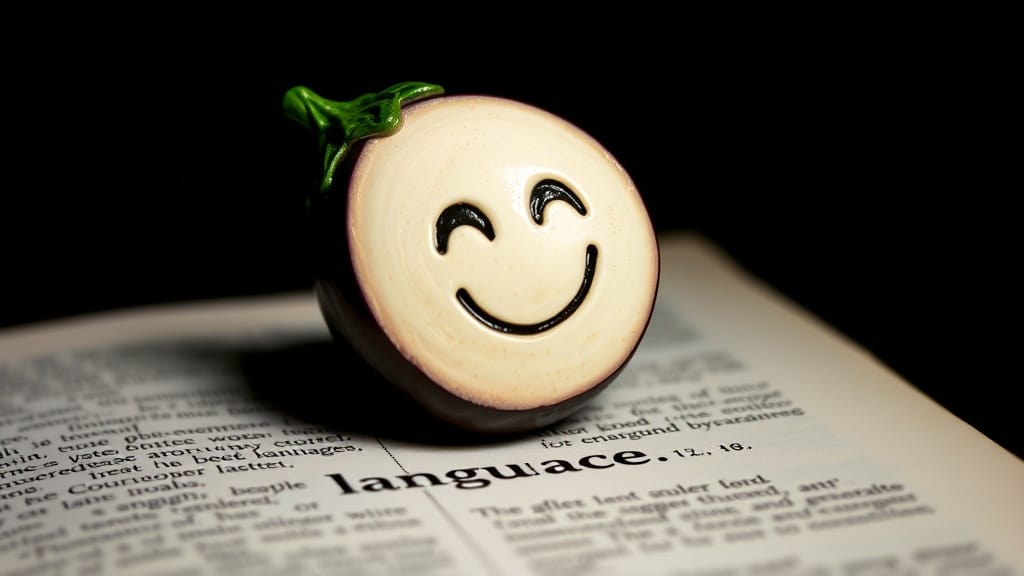
The concern — voiced periodically by linguists, educators, and columnists who still remember cursive — is that this compression comes at a cost. Complex emotions require complex sentences. Ambivalence, grief, moral nuance, the specific texture of a difficult day: these do not reduce to 16x16 pixels without significant loss. When a generation learns to express itself primarily through pre-packaged symbols, the question is not whether communication suffers but where the atrophy first appears.
And yet language has always evolved under pressure from new technologies. The telegram demanded brevity. The telephone killed the formal letter. Social media atomized the essay into the status update. Emoji are not the end of language. They are its latest dialect — compressed, visual, emotionally immediate, and already more nuanced than its critics admit.
July 17 is, in the end, a reasonable date to sit with that tension. Not to celebrate emoji uncritically, and not to mourn the sentences we no longer write. But to notice that the way we point at each other across screens says something precise about what we want from connection: speed, warmth, deniability, and just enough distance to feel safe.
The thumbs-up will have to do.