Today, Saturday October 24, 2026, the infield of Texas Motor Speedway in Fort Worth belongs to a genre that mainstream culture has spent two decades dismissing, eulogizing, and then quietly buying tickets to see again. Sick New World Texas — the inaugural one-day expansion of the Las Vegas-born heavy music franchise — is sold out. Fifty acts. Four stages. Twelve hours of music that begins at 11 a.m. and closes well past midnight. The gates are open and the crowd is already moving. The argument the festival is making, whether its organizers are willing to state it plainly or not, is that nu-metal and alt-metal nostalgia has enough geographic density to sustain a touring footprint beyond the Nevada desert. Fort Worth is the proof of concept. If it holds, more cities follow.
The festival was co-created by David Benveniste and Live Nation, operated through C3 Presents in partnership with Benveniste's Velvet Hammer Music and Management Group. Its sister event, the pop-punk–oriented When We Were Young festival, runs at the same Las Vegas Festival Grounds and operates on the same nostalgia-as-commodity logic. Sick New World debuted in Las Vegas in May 2023, headlined by System of a Down, Korn, Deftones, and Incubus. The 2024 edition expanded its stages, adding a fifth Diablo Stage devoted to hardcore and metalcore. The 2025 edition, which had been announced with Metallica and Linkin Park as headliners, collapsed before it happened: organizers cited unforeseen circumstances, but reporting indicated that the festival had only sold around 20,000 of an anticipated 60,000 tickets, with general admission priced as high as $472. The math didn't work. The 2025 cancellation was not a crisis for heavy music — it was a crisis for a specific overcapitalized version of the business model.
What followed matters. Rather than retreat, Live Nation recalibrated. The 2026 Las Vegas edition returned in April at a more manageable scale. And now, six months later, Texas. The expansion isn't incidental — it's a declaration that the brand believes the audience exists outside Nevada and that the first cancellation was a pricing error, not a demand problem.
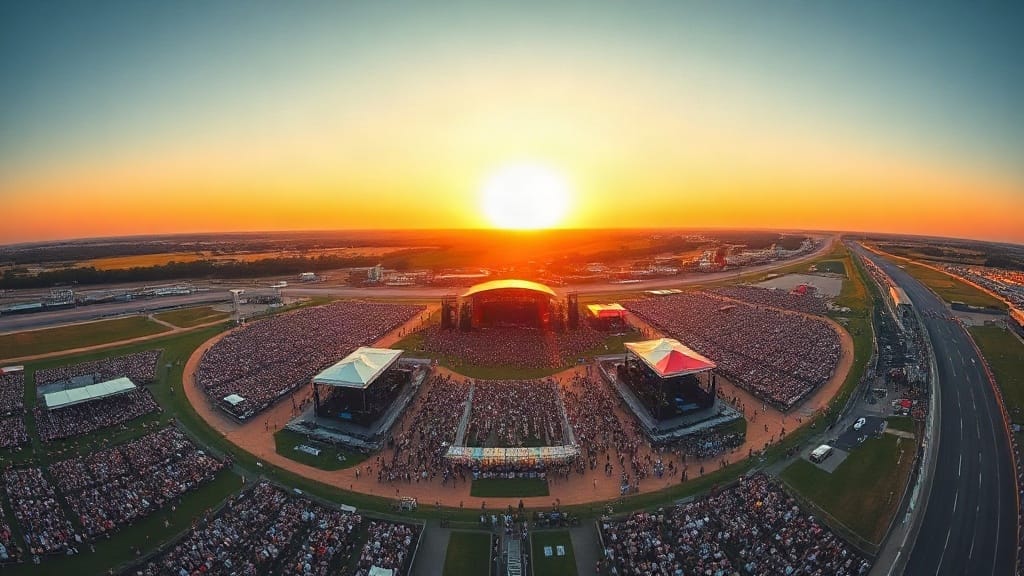
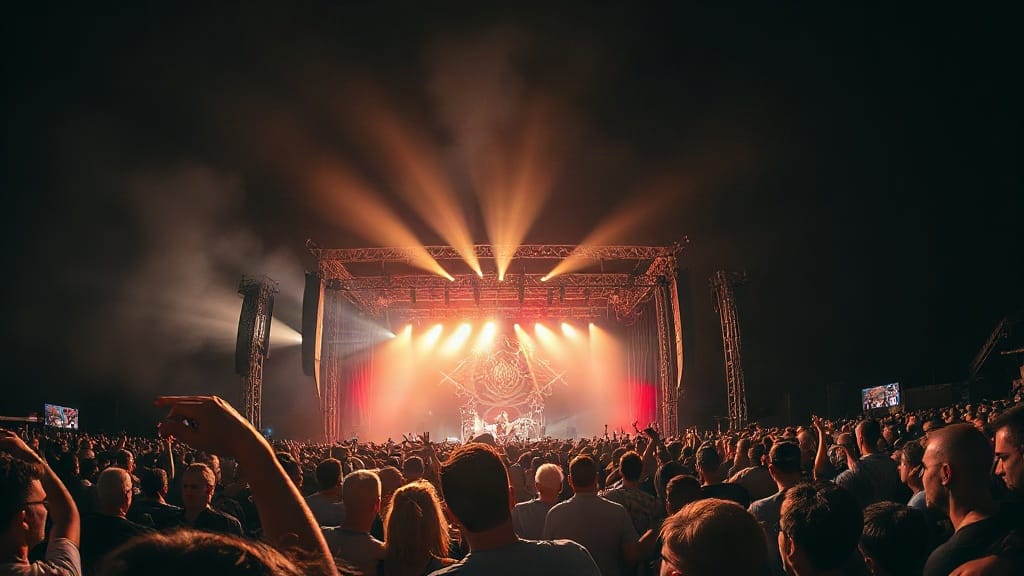
The Texas lineup is, on paper, extraordinary by any measure of the genre. System of a Down and Deftones headline, with Slayer, Evanescence, Marilyn Manson, The Prodigy, Ministry, Mastodon, Knocked Loose, AFI, and Power Trip filling the next tier. Beneath that: Underoath, Clutch, Coal Chamber, Kittie, Filter, Orgy, Alien Ant Farm, Glassjaw, P.O.D., Deafheaven, Melvins, She Wants Revenge, Boy Harsher, and dozens more. The set schedule runs across four stages — Blue, Gold, Spiral, and Diablo — with System of a Down closing the Blue Stage at 10:35 p.m. and Deftones closing the Gold Stage at 9:20 p.m. The architecture of the day is deliberate: the two headliners run in different time slots on different stages, which means the crowd never has to choose between them and the organizers never have to worry about one draw cannibalizing the other.
The Slayer performance demands its own attention. The band is celebrating the 40th anniversary of Reign in Blood (1986) by performing the album in full — a detail that lifts their appearance from festival slot to cultural event. Slayer announced the anniversary run in April 2026, booking headline shows at Mystic Lake Amphitheater in Shakopee, Minnesota on September 4 and at the Kia Forum in Los Angeles on November 13 and 14 — the latter dates selling out fast enough that a second night was added due to what the band described as "overwhelming demand." Fort Worth sits between those dates on the calendar, and what it gets is a festival-context performance of a record that Kerrang! magazine once called "the heaviest album of all time." Reign in Blood is 28 minutes and 23 seconds long. It has no ballads. It does not accommodate the undecided. Playing it in full at a festival in a NASCAR venue in Texas is either the most logical thing imaginable or a kind of maximalist joke — and the fact that both readings feel accurate is part of what makes the booking work.
The festival's broader curatorial logic is worth unpacking. What separates Sick New World Texas from a straightforward nostalgia package is its lower half. Knocked Loose, Sunami, Speed, Pain of Truth, and Dying Wish represent the current hardcore mainstream — bands with active audiences and recent records, not reunion tours. Boy Harsher, Twin Tribes, and She Wants Revenge provide a genuine darkwave strand that runs through the afternoon. The festival is not merely warehousing the past; it's stacking the past against a present that came out of it, and letting the crowd measure the distance. Whether that ambition survives the reality of festival logistics — stage clashes, sightline compromises, twelve hours of sustained volume — is a different question, and one the audience at Texas Motor Speedway is answering in real time today.
The venue itself carries its own argumentative weight. Texas Motor Speedway is a 1.5-mile superspeedway in Fort Worth with a seating capacity that dwarfs most concert venues in America. Using a racing circuit for a heavy music festival is not a neutral choice. It signals scale as aspiration — the same logic that sends stadium rock acts into arenas rather than theaters, trading intimacy for iconography. It also carries risk: a sold-out festival at a speedway looks different from a sold-out club. The crowd has to fill a space engineered for a completely different kind of spectacle. That the festival is sold out — confirmed across the organizer's homepage and secondary market data — suggests that demand in the Dallas–Fort Worth market is real and that the 2025 pricing lesson was absorbed.
The question the Texas edition is actually testing isn't whether people in Fort Worth like System of a Down. Of course they do. The question is whether the Sick New World brand — a curation identity built on a specific reading of the late-1990s and early-2000s heavy canon — can replicate itself geographically without diluting what made it feel distinct from a generic nostalgia tour. Fontaines D.C.'s recent move into arena-scale spaces raised a version of the same question: whether the act of scaling up changes the terms of the experience for everyone inside it, audience and performers alike. At Sick New World Texas, the scale is already fixed. The speedway doesn't shrink to accommodate the music. The music has to be large enough to fill it.
There is also a business logic that the 2025 cancellation made newly legible. The Las Vegas edition, at its best, draws around 65,000 people to a single-day event. The Texas Motor Speedway format, configured for concerts, operates on a different footprint. A sold-out one-day festival in Fort Worth, if it runs cleanly, generates data Live Nation can use to pitch a third city, then a fourth. The nostalgia economy in heavy music isn't running out of audience — it's running out of easy infrastructure. Speedways solve that problem. They already exist, they're already permitted for large crowds, and they carry their own symbolic freight: the sense that something large and loud and possibly dangerous is about to happen. For a genre that built its identity on all three of those qualities, there are worse venues to inherit.
The question of what happens after today is the one that doesn't have an answer yet. The 2026 Las Vegas edition returned without the catastrophe of 2025. Texas sold out. The lineup, across fifty acts, represents something close to a complete taxonomy of a specific cultural moment — the years between 1994 and 2005 when heavy music briefly occupied mainstream commercial space before being reclassified as niche. The mechanics of a return are always conditional on what the audience decides the return means. At Texas Motor Speedway today, a very large number of people have decided it means something worth showing up for. The rest is settlement.