Something shifted quietly in the way we consume educational content online. Not a platform update, not an algorithm change — a shift in what people actually want to know. The breakdowns performing best right now are not about productivity hacks or aesthetic routines. They are about what to do when a stranger follows you off a train.
Australian actress Madeleine West, known to most audiences as Dee Bliss in Vecinos (Neighbours, 1985), has become one of the more prominent public faces of this movement. Her social media posts — direct, unsentimental, and structured like field notes — walk followers through concrete responses to harassment in public spaces: how to use your environment, how to signal distress without escalating danger, how to make a scene in the right way at the right moment. The response has been significant. Not because the information is new, but because the delivery is.
That delivery matters more than it might appear. Self-defense content has existed in instructional formats for decades — in women's magazines, community workshops, YouTube tutorials from martial arts schools. Most of it goes unwatched or half-remembered. What creators like West are doing differently is encoding the information inside recognizable social media grammar: short, punchy, structured around a scenario rather than a technique. The scenario is the hook. The technique is what stays.
Why Public Figures Carry Different Weight Here
There is a reasonable argument that a celebrity posting safety tips is no more qualified than anyone else to do so. It's a fair point — and mostly irrelevant. The value public figures bring to this kind of content is not expertise. It is reach, and more importantly, permission.
When someone with cultural visibility treats street harassment as a topic worth their platform, it recalibrates what the audience considers worth discussing. It removes the quiet stigma that has historically surrounded women talking about precaution in public — the implication that acknowledging risk is paranoia, or worse, an admission of victimhood. A verified account with millions of followers posting a calm, tactical breakdown of how to handle a man who won't let you walk away sends a message that sits beneath the content itself: this is normal information to have. You are not overreacting by wanting it.
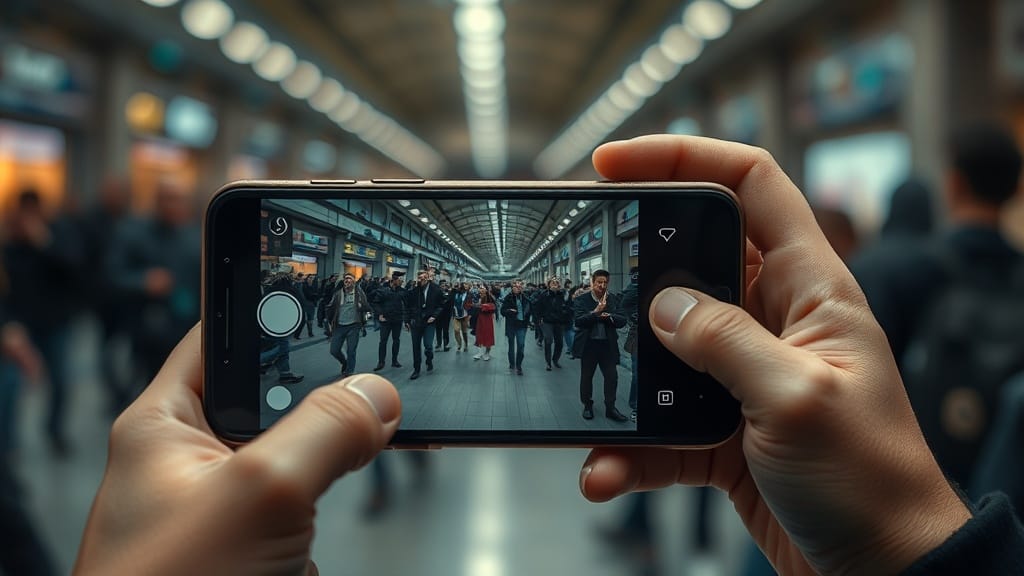
That normalization function is, arguably, the most important thing these videos do.
The Anatomy of the Effective Breakdown
Not all safety content is created equal. The posts gaining sustained traction — shared not just in the moment but saved and reshared weeks later — tend to follow a recognizable structure. They open with a specific situation rather than a general warning. They avoid catastrophizing language. They offer a hierarchy of responses, from lowest to highest escalation, and they are honest about the limits of any single tactic.
The worst versions of this content do the opposite: they traffic in fear statistics without context, present techniques that require training most viewers don't have, or frame every public interaction with a stranger as a prelude to violence. That approach doesn't empower — it paralyzes.
The best versions treat the viewer as a capable adult who simply hasn't been given organized information. They acknowledge that most uncomfortable public situations do not become dangerous ones, while still taking seriously that some do. That tonal balance is harder to strike than it looks, and the creators who manage it consistently are the ones building real audiences around this content — not just viral spikes.
Practical Intelligence, Not Paranoia
Among the tactics that appear repeatedly across the most credible content: verbal boundary-setting using direct, non-apologetic language; the use of public witnesses — making eye contact with bystanders, stating a situation aloud in a crowd; identifying exits and safe havens (lit establishments, staffed counters) before an interaction escalates; and the strategic use of phones, not to film, but to signal that a record is being made and that someone else is being contacted.
Some creators with backgrounds in personal safety or law enforcement go further — into environmental awareness habits, the psychology of deterrence, the specific dynamics of being followed in transit systems. This is where the content begins to function less like social media and more like the kind of situational awareness training that was previously accessible mainly through formal courses.

The democratization of that knowledge is not trivial. Personal safety workshops cost money and time. They require geographic access. They have historically been directed at specific demographics — young women, primarily — in ways that have both helped and inadvertently reinforced the idea that safety is a personal responsibility to be managed individually rather than a structural issue to be addressed collectively. Online breakdowns don't solve that structural problem. But they do distribute the information more widely and with fewer barriers.
What the Trend Reveals About the Moment
The timing of this content wave is not coincidental. It is emerging alongside a broader cultural reckoning with how public space is experienced by people who have historically had less power within it — and alongside a measurable post-pandemic shift in reported public harassment incidents in urban centers across multiple countries. The audience for this content exists because the need for it exists.
What makes the format particularly effective as a cultural object — not just a utility — is that it refuses the passivity that most safety discourse has historically assigned to potential victims. The grammar of the breakdown is active. It presumes agency. It says: here is what you can do, here is why it works, here is how you decide which option fits the moment. That presumption of agency is a political statement dressed as practical advice.
Madeleine West and the creators operating in this space are not reinventing self-defense. They are reinventing who gets to talk about it, where, and in what tone. The result is a category of content that is genuinely useful, surprisingly radical in its implications, and overdue.
The internet has a long history of turning anxiety into engagement. This is one of the rare cases where it seems to be turning anxiety into something more durable: preparation.