The Odyssey (2025) doesn't need your suspension of disbelief. It needs your attention for two hours and fifty-seven minutes, and apparently, global audiences are willing to give it. In twelve days of wide release, Christopher Nolan's adaptation of Homer's ancient epic has crossed $727 million worldwide — without a single yuan from the People's Republic of China, the world's second-largest theatrical market, where it has yet to open. That figure is not a curiosity. It is a structural argument.
The Weight of That Number
To understand what $727 million in twelve days means without China, consider the arithmetic of modern blockbuster economics. Chinese box office typically accounts for anywhere between 15% and 25% of a major tentpole's global gross. Strip that out of most franchise films and their totals collapse into the merely decent. The Odyssey hasn't been stripped of anything yet. It is running at full speed on a shortened track, and it is still approaching the billion-dollar threshold that the industry treats as the definitive marker of mass-market legitimacy.
The film is rated R. Its runtime is a provocation in an era when studios routinely edit films down to 100 minutes to maximize daily screenings. It is based on source material that predates cinema by roughly 2,700 years, carries no pre-existing IP franchise, no sequel architecture, and no cinematic universe scaffolding beneath it. What it has is Nolan's name, IMAX, and the gravitational pull of a filmmaker who has trained audiences — over two decades and across Memento (2000), The Dark Knight (2008), Inception (2010), and Oppenheimer (2023) — to treat his releases as cultural events rather than content drops.
The Nolan Brand as Infrastructure
What Nolan has built is not a franchise. It is something rarer and, in the current studio landscape, considerably more valuable: a director-as-destination. Audiences don't go to see The Odyssey because they love Homer — most of them almost certainly haven't read him. They go because a Nolan film in IMAX has become its own genre, one defined by formal ambition, sensory commitment, and the promise that the screen will ask something of them. That implicit contract between filmmaker and audience is what's being stress-tested right now, and the early returns suggest it holds.
The R rating deserves particular scrutiny. Studios have spent a decade pathologically risk-averse about ratings, engineering properties toward PG-13 to protect international markets and maximize family-audience capture. An R-rated film at this scale — one that crosses a billion dollars, if and when it does — would represent a direct refutation of that logic. It would demonstrate that adult storytelling, when attached to genuine directorial authority and genuine spectacle, can compete on blockbuster terrain without compromise. That's not a small data point. That is a mandate.
What China's Absence Actually Reveals
China's theatrical market, for all its scale, has become an increasingly unreliable variable for Western tentpoles. Political friction, domestic competition from Chinese productions, and the opaque approval process for foreign films have made it a bonus rather than a baseline for many releases. Hollywood has spent years contorting narratives, casting choices, and third-act geography to court Beijing — often with diminishing returns. The Odyssey, by generating this kind of momentum before its Chinese opening, quietly demonstrates something the industry has been reluctant to accept: that a film doesn't need to be engineered for that market to be commercially viable on a global scale.
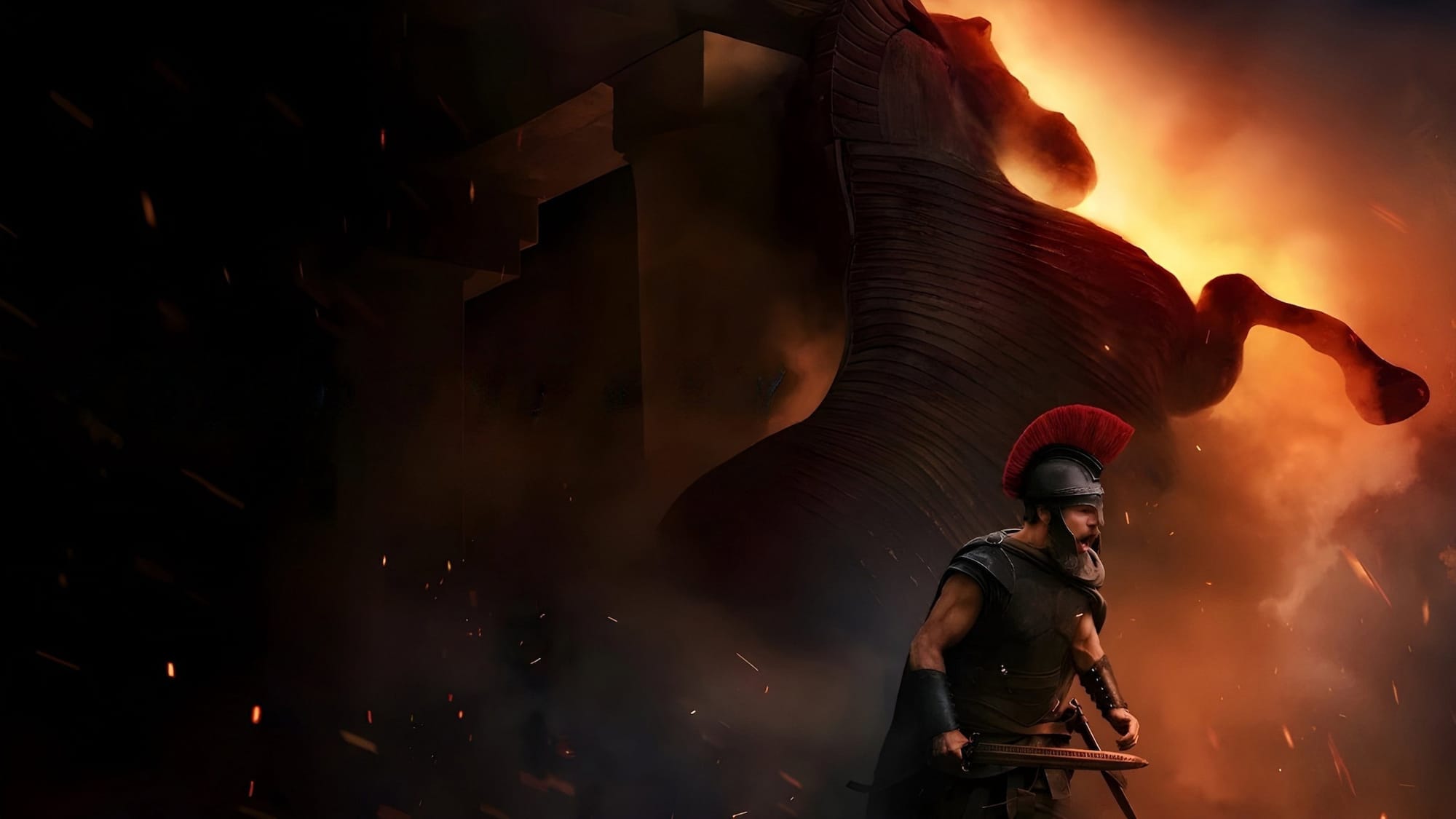
When China does open — and the economics suggest it eventually will — the billion-dollar conversation transforms into something else entirely. A film about a Greek king wandering the ancient Mediterranean, made by a British-American director, running close to three hours, rated R, could end up as one of the highest-grossing films of the decade. The irony being that its most important argument will already have been made before that market adds a single ticket.
The Proof of Concept
The studios will read this as a Nolan anomaly, a one-of-a-kind outcome produced by a filmmaker so singular that no structural conclusions can be drawn. That reading is convenient and almost certainly wrong. What The Odyssey is proving, day by day, is that audiences haven't abandoned adult cinema — they've been underserved by it. They will show up for a nearly three-hour R-rated epic if the craft is there, if the filmmaker has earned their trust, and if the experience cannot be replicated on a television screen at home.
The race to $1 billion isn't really about Nolan's legacy or the mythological source material or the marketing campaign. It's about whether Hollywood will recognize what's actually happening in those auditoriums and build toward it, or whether it will wait for the next Nolan and call it an exception again.
Read next on Kynari