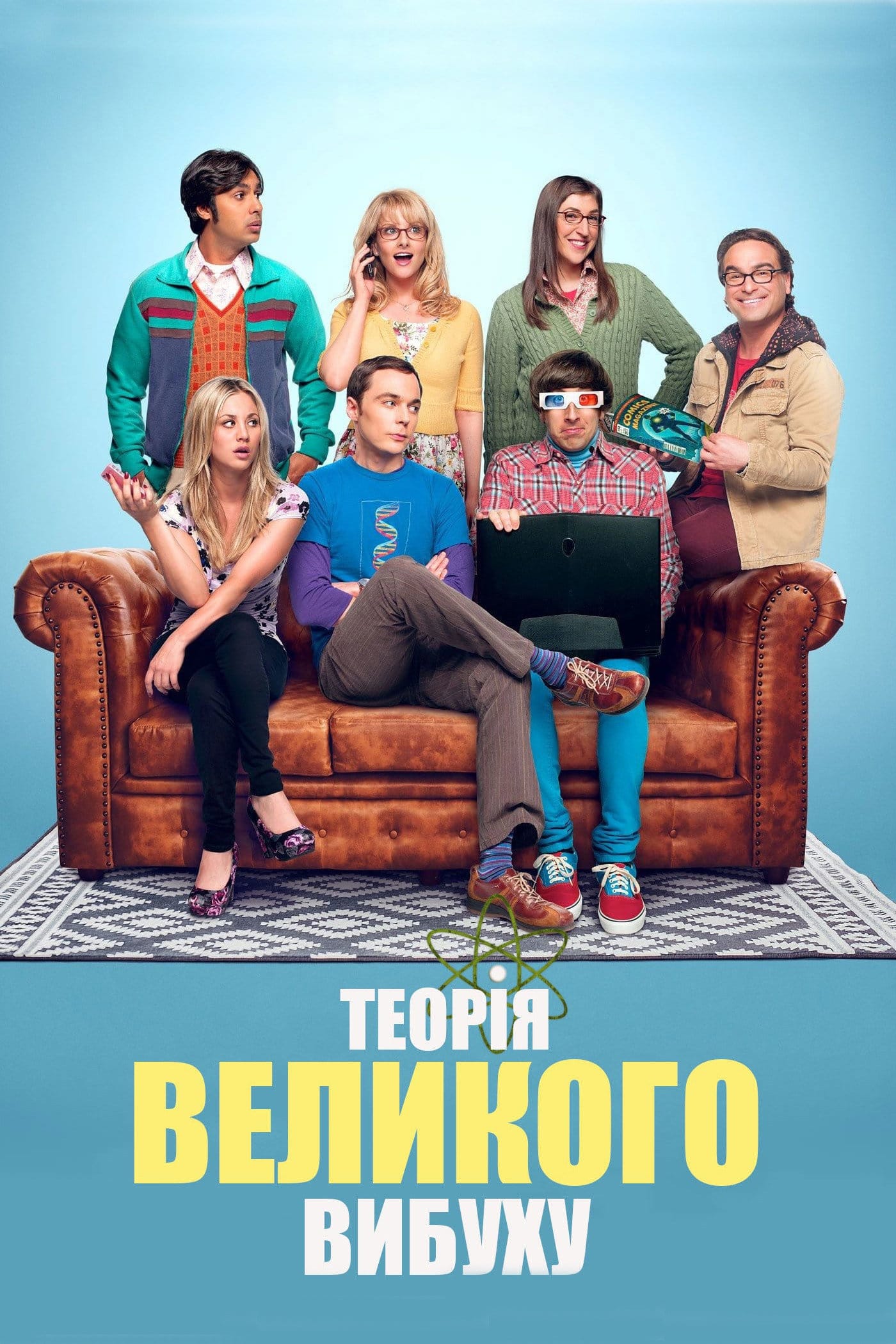
On September 24, 2007, CBS aired the pilot of The Big Bang Theory (2007) to an audience that had no particular reason to expect anything historic. A four-camera sitcom about two Caltech physicists and their socially catastrophic lives in Pasadena, California — created by Chuck Lorre and Bill Prady — seemed, on paper, like a modest genre exercise. Twelve seasons, 279 episodes, and an estimated global audience of hundreds of millions of viewers later, the show stands as one of the defining television artifacts of the early 21st century. Nineteen years on, the question is not whether it was popular. The question is what that popularity meant.
 Official clip
The Architecture of a Cultural Shift
To understand what The Big Bang Theory accomplished, it helps to remember what television looked like in 2007. The prestige drama era was consolidating around HBO and AMC. Reality television had colonized network schedules. The traditional multi-camera sitcom — the format of Seinfeld (1989) and Friends (1994) — was widely considered obsolete, a relic of a pre-streaming, pre-irony media landscape. Into that environment, Lorre and Prady launched a show built around characters who quoted Asimov, debated Schrödinger's cat, and wore Flash t-shirts unironically. The gamble paid off at a scale that defies easy explanation.
Part of the answer lies in timing. By 2007, geek culture had already begun its long march toward the mainstream. The Marvel Cinematic Universe was one year away from its official launch with Iron Man (2008). The Lord of the Rings (2001) had proven that fantasy epics could win Oscars and billions at the box office. Video games had surpassed film in annual revenue. The cultural raw material for a show like The Big Bang Theory was already present; what the show did was provide it with a prime-time address and a laugh track. It named something that had not yet been fully named on network television: the geek as protagonist, not as background character or cautionary figure.
What the Show Actually Did Well
The critical consensus on The Big Bang Theory has always been ambivalent, and in some quarters, actively hostile. The accusations are familiar: that it laughed at its characters rather than with them, that it reduced nerd identity to a collection of surface-level signifiers — comic books, Star Wars figurines, rigid social scripts — without ever engaging with the genuine intellectual culture it claimed to celebrate. These criticisms are not wrong. But they are incomplete.
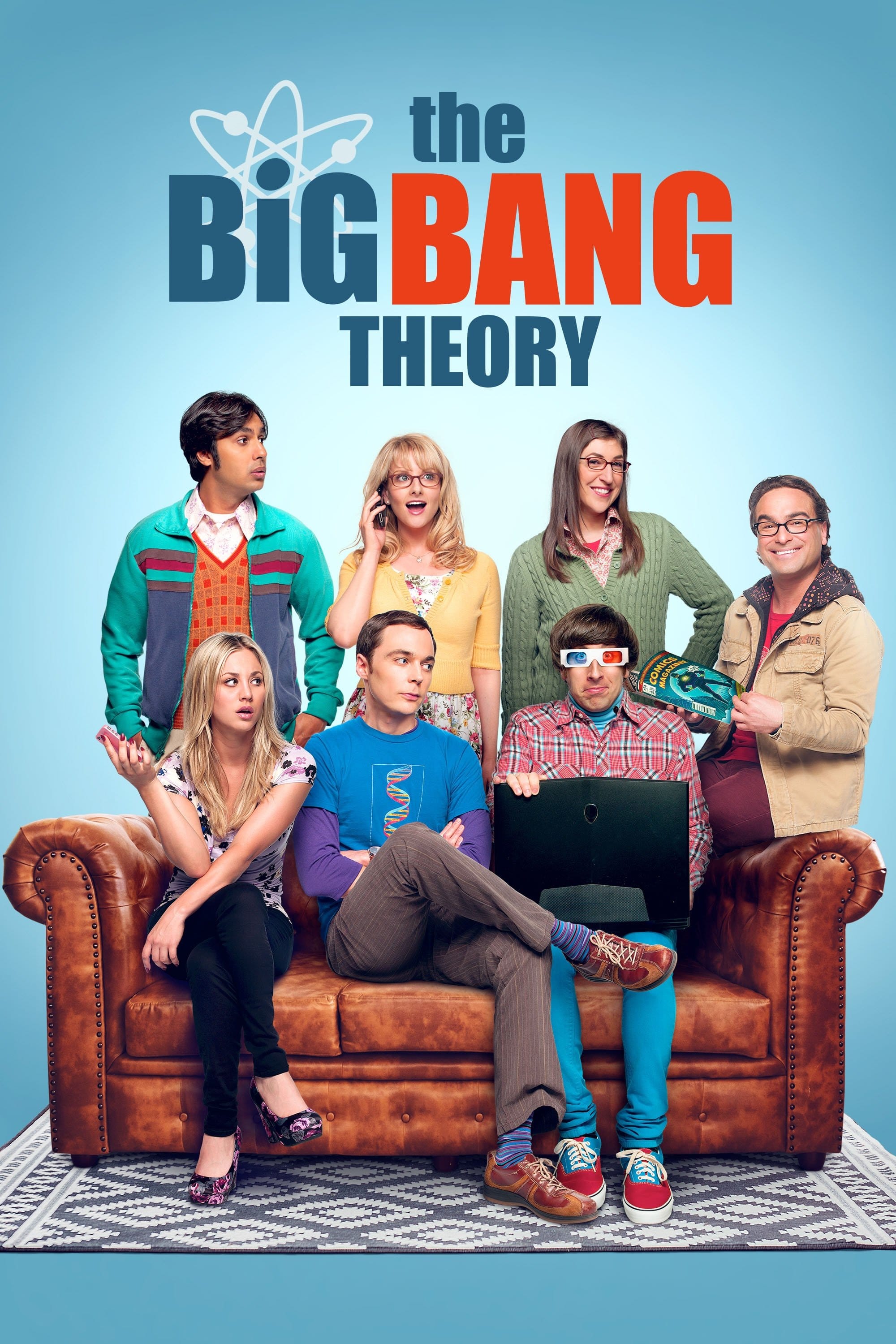
What the show did well, and what its detractors often underestimate, is character consistency across an unusually long run. Sheldon Cooper, as written by the show's staff and embodied by Jim Parsons, became one of the most recognizable fictional characters of his generation — not because he was a flattering portrait of neurodivergence, but because he was a coherent one. The character's rigidity, his need for routine, his incapacity to process social convention as anything other than an alien code to be studied: these were played for laughs, yes, but they were also sustained across twelve seasons with a fidelity that most serialized dramas fail to maintain for their leads. Parsons won four Emmy Awards for the role. The Academy does not give those away for nothing.
The supporting ensemble — Howard Wolowitz's arrested development, Raj Koothrappali's selective mutism around women, Leonard Hofstadter's chronic need for external validation — were similarly drawn with more precision than the show's detractors tend to acknowledge. The comedy was broad. The architecture beneath it was not.
The Uncomfortable Contradictions
The most persistent and legitimate criticism of The Big Bang Theory concerns its relationship with the very culture it claimed to celebrate. Penny, the conventionally attractive neighbor who serves as the show's audience surrogate in its early seasons, functions initially as the straight woman against whom the characters' eccentricities are measured — and implicitly found lacking. Her gradual integration into the group, and eventual marriage to Leonard, follows a narrative logic that positions geek identity as something that requires romantic redemption by the normative world in order to achieve full legitimacy. The show wanted to celebrate outcasts while simultaneously reassuring mainstream audiences that the outcasts would, eventually, conform.
The treatment of its female characters evolved across the series — Bernadette Rostenkowski and Amy Farrah Fowler, both introduced as scientists, added genuine dimensionality to the ensemble — but the show's foundational gender dynamics were never fully dismantled. Penny's intelligence was consistently underwritten relative to her male counterparts, even as the narrative insisted on her growth. The asymmetry was structural, not incidental.
Similarly, the show's engagement with actual science was ornamental. Equations appeared on whiteboards. Correct terminology was deployed with impressive frequency. Scientific consultants were credited. But the show was never genuinely curious about physics, biology, or engineering as intellectual pursuits. Science was a costume, not a subject. This distinction matters because it reveals the limits of the show's ambition: it wanted the aesthetic of geek culture without the substance of it. That is a commercial calculation, not a creative failure — but it should be named clearly.
The Spinoff and the Question of Legacy
Young Sheldon (2017), the prequel series that ran for seven seasons on CBS, extended the franchise's commercial life while quietly dismantling its central premise. By centering Sheldon's childhood in East Texas and grounding his genius in a recognizable family drama, the spinoff humanized the character in ways that The Big Bang Theory had deliberately avoided. The result was a warmer, structurally simpler show that drew enormous audiences — and proved, paradoxically, that the original series' longevity had depended on keeping its protagonist at an ironic distance. Warmth and Sheldon Cooper, it turned out, did not scale identically.
A second spinoff, Georgie & Mandy's First Marriage (2024), continues to mine the franchise's universe, suggesting that CBS is not yet finished with Pasadena. Whether these extensions constitute a living legacy or a managed nostalgia operation is a question the next few years will answer.
What Nineteen Years Looks Like
The broader cultural shift that The Big Bang Theory both reflected and accelerated is now so complete as to be invisible. Superhero films dominate global box offices. Fantasy and science fiction win the most prestigious television awards. The stigma attached to genre enthusiasm — the embarrassment that once accompanied admitting you knew the difference between the Kessel Run and a parsec — has effectively dissolved in mainstream culture. Geek identity, in its commodified form, won. Whether that victory preserved anything worth preserving is a separate, harder question.
The Big Bang Theory did not create this shift, but it legitimized it on the most watched platform of its era: American network prime time. It handed a laugh track and a studio audience to a set of cultural references that had previously lived in the margins, and it ran with them for twelve years. The show's critics were right about its limitations. They were less attentive to its function. Sometimes a sitcom is a document of a historical moment before that moment fully knows itself. Nineteen years later, that is exactly what The Big Bang Theory turns out to be — not a masterpiece, but something rarer: a reliable witness.