For ten years, the record had two names on it. Beyoncé set it in 2016, when eight wins for Lemonade carried her past Madonna's long-standing mark of 20 Moon Persons. Taylor Swift caught up, award by award, until both women stood at 30. On Sunday night at the Peacock Theater in Los Angeles, Swift finally broke the tie and left the 2026 MTV Video Music Awards as the most-awarded artist in the show's history.
The number is the headline. The way she got there is the story.
A Record Won From Behind the Camera
Swift arrived with nine nominations, second only to Madonna's eleven. She won Video of the Year for "The Fate of Ophelia," from The Life of a Showgirl, and Best Direction. She also became the first recipient of the VMAs' new Artist Director Honors, created to recognize artists whose directing work has pushed visual storytelling forward.
Read those three together and a pattern is hard to miss. None of them is a reward for being popular, and none rests on choreography, styling or a guest verse. Two are explicitly about direction, and the third — Video of the Year — goes to a video she directed. The record that will be quoted for the next decade was secured, in the end, on the strength of authorship.
That matters because it reframes a career that is usually discussed in terms of scale: stadiums, streams, box office, the cultural machinery we looked at when her wedding to Travis Kelce dominated the summer. Swift has been directing her own videos for years, and the VMAs have now formally decided that this is the part of her work they want to honor. In an awards show built around the music video as a form, there is no higher compliment.
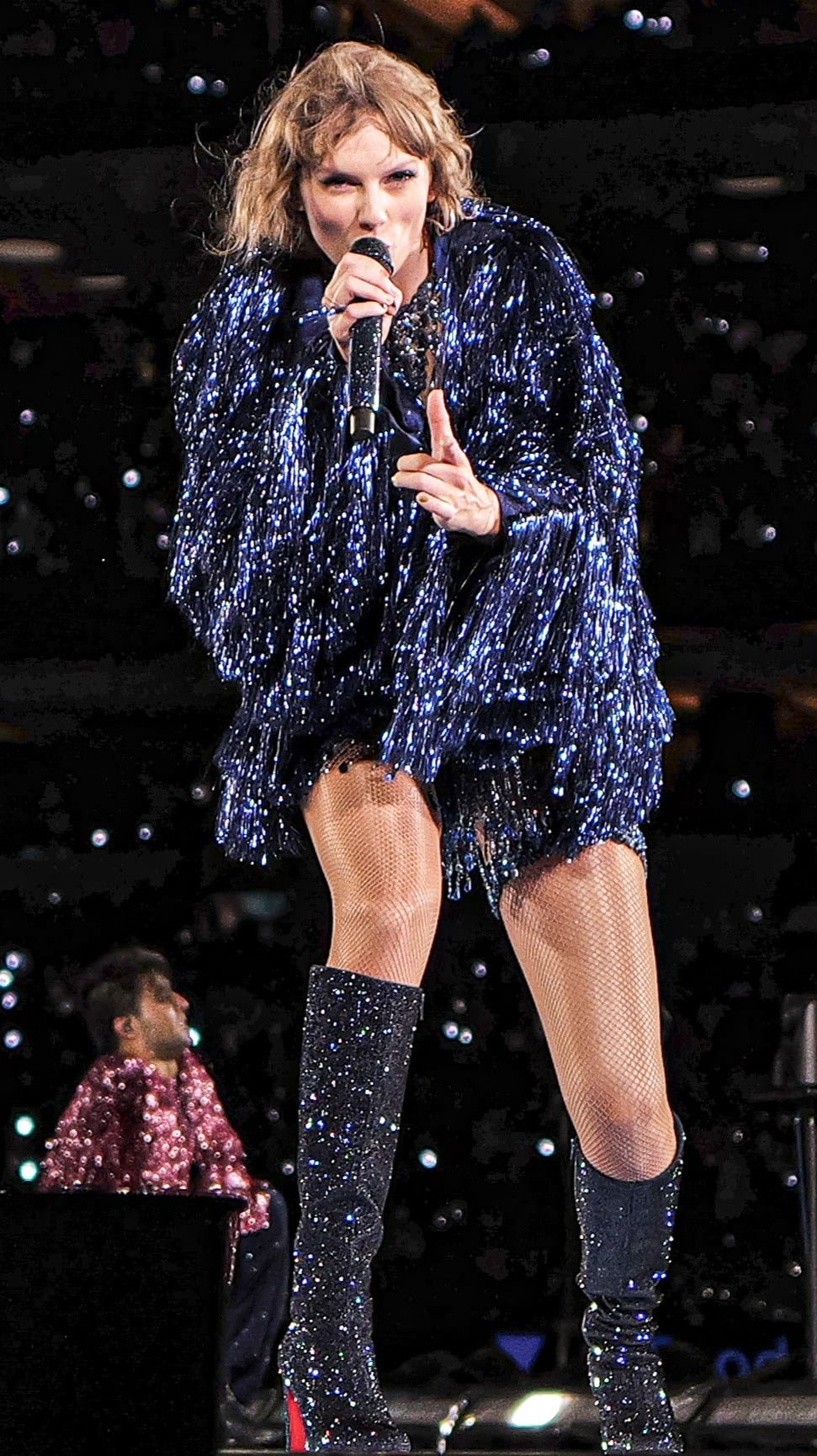
Madonna's Night, Swift's Record
The irony is that Swift did not dominate the competitive categories. Madonna did. The night's most-nominated artist took home seven trophies, by The Hollywood Reporter's count — a remarkable showing four decades after her first VMA appearance, and a confirmation of the tension we flagged when the nominations were announced in September: institutional prestige and algorithmic popularity are no longer pointing in the same direction, and the VMAs are trying to honor both at once.
So the 2026 show ends with two veterans splitting the history books. Madonna, whose record Beyoncé surpassed a decade ago, won the night. Swift, who spent years chasing Beyoncé's total, won the all-time race. Hosted by Snoop Dogg and broadcast live on CBS and MTV, it was a ceremony that felt less like a referendum on the present than a reckoning with the long arc of pop careers.
The Dedication
The most affecting moment came when Swift accepted Video of the Year. She dedicated the award to Dolly Parton, who died in August at 80, saying everyone had been very lucky to share the planet with her for a time. It was a short tribute, but a pointed one. Parton was the first great model of the artist who owns her own work — the songwriter who kept her publishing, built her own brand and never let anyone else tell her story. We wrote about that legacy in our tribute after her death, and it is hard to imagine a more fitting dedication for an award won on the basis of authorship.
Patient Zero
Swift also used the broadcast to premiere the video for "Patient Zero," which she directed and which stars Colin Farrell and Dakota Johnson. It is her first single since the July wedding, and the casting is its own statement: two film actors with real dramatic weight, placed in a music video directed by the artist herself. It reads less like a promotional clip than like an audition for the next chapter — one in which "director" is no longer a side credit.
Records are made to be broken, and the VMAs have a way of producing new ones every year. But this one will be remembered for what it rewarded. The most-awarded artist in the show's history earned the title not by being the biggest star in the room, but by being the one holding the camera.