The summer of 2026 will be remembered, like most summers before it, as a season of sequels, cinematic universes, and intellectual property leveraged to its absolute breaking point. That is the default logic now — the industry's load-bearing architecture. Which makes the quiet, sustained commercial endurance of Project Hail Mary (2026) all the more worth examining not as a feel-good anomaly, but as a structural argument about what movies can still do when the scaffolding of franchise recognition is removed entirely.
Phil Lord and Christopher Miller's adaptation of Andy Weir's novel is, by every conventional metric, a risky proposition. It is hard science fiction — the kind that asks audiences to care about stellar physics, photosynthesis, and the chemistry of a fuel source called Astrophage before the third act even begins. It has no villain in any traditional sense. It has no ensemble, no post-credits scene, no connective tissue to a larger universe. What it has is Ryan Gosling, alone on a spacecraft, and a screenplay disciplined enough to trust that this is sufficient.
It is more than sufficient. The film has legs that most franchise entries — engineered for opening-weekend dominance and designed for rapid streaming migration — structurally cannot produce. That durability is the subject worth interrogating.
The Spielbergian Calculus
Lord and Miller have spoken openly about Close Encounters of the Third Kind (1977) and E.T. the Extra-Terrestrial (1982) as tonal lodestars, and the influence is not cosmetic. What those films understood — and what contemporary blockbuster cinema has largely abandoned — is that spectacle functions as emotional amplification, not emotional replacement. Wonder is not a substitute for investment in a character; it is what happens when you already care about a character and then show them something impossible.
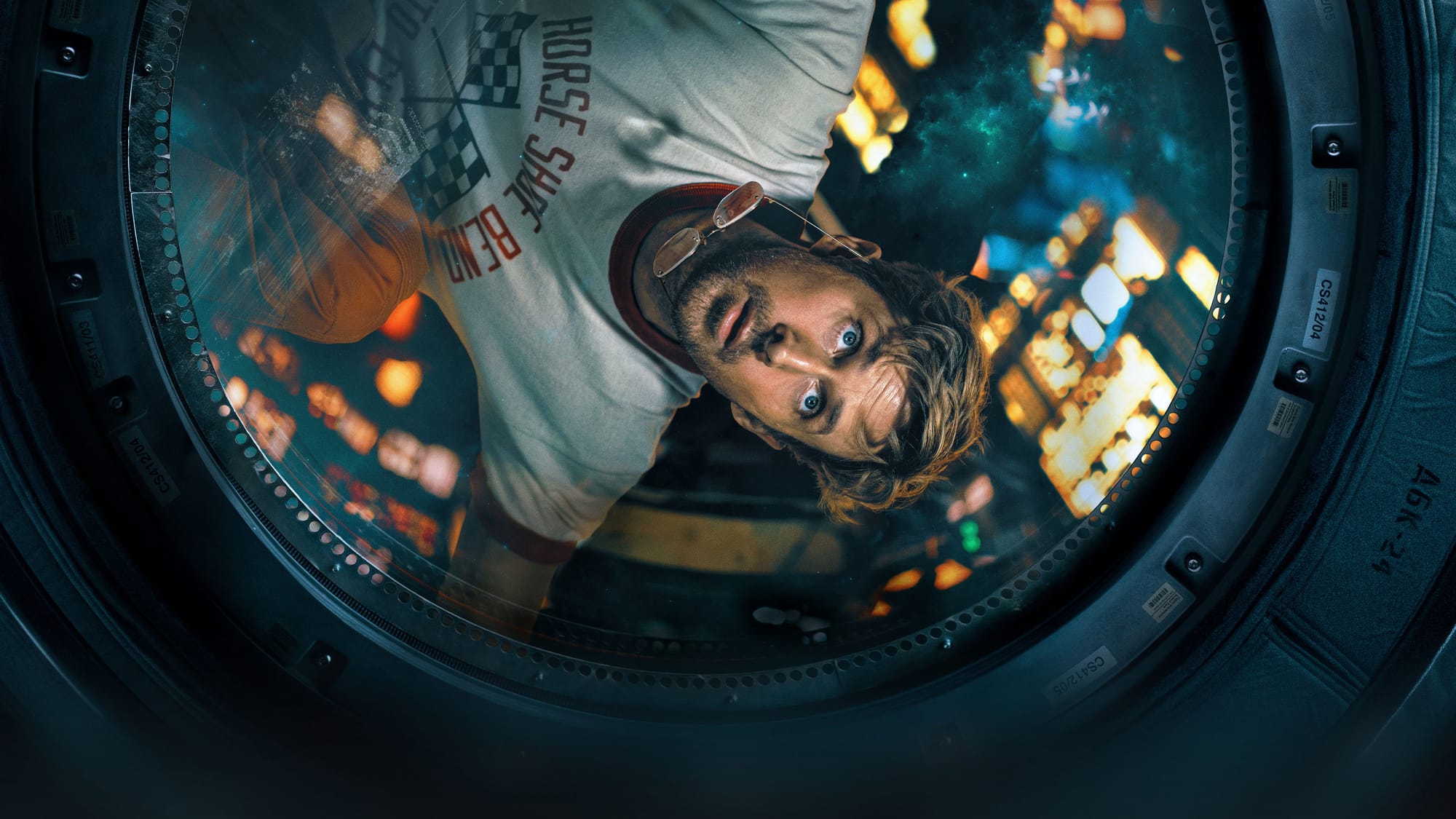
Project Hail Mary rebuilds that circuit. The film's most technically demanding sequences land with the force they do precisely because the preceding thirty minutes have been spent inside Ryland Grace's cognitive process — his incremental deduction of who he is, where he is, and why he is the only person left alive on a ship pointed at another star. By the time the full weight of his mission is understood, the audience has already done the science alongside him. The awe, when it arrives, is earned through comprehension rather than delivered through scale.
What Gosling Is Actually Doing
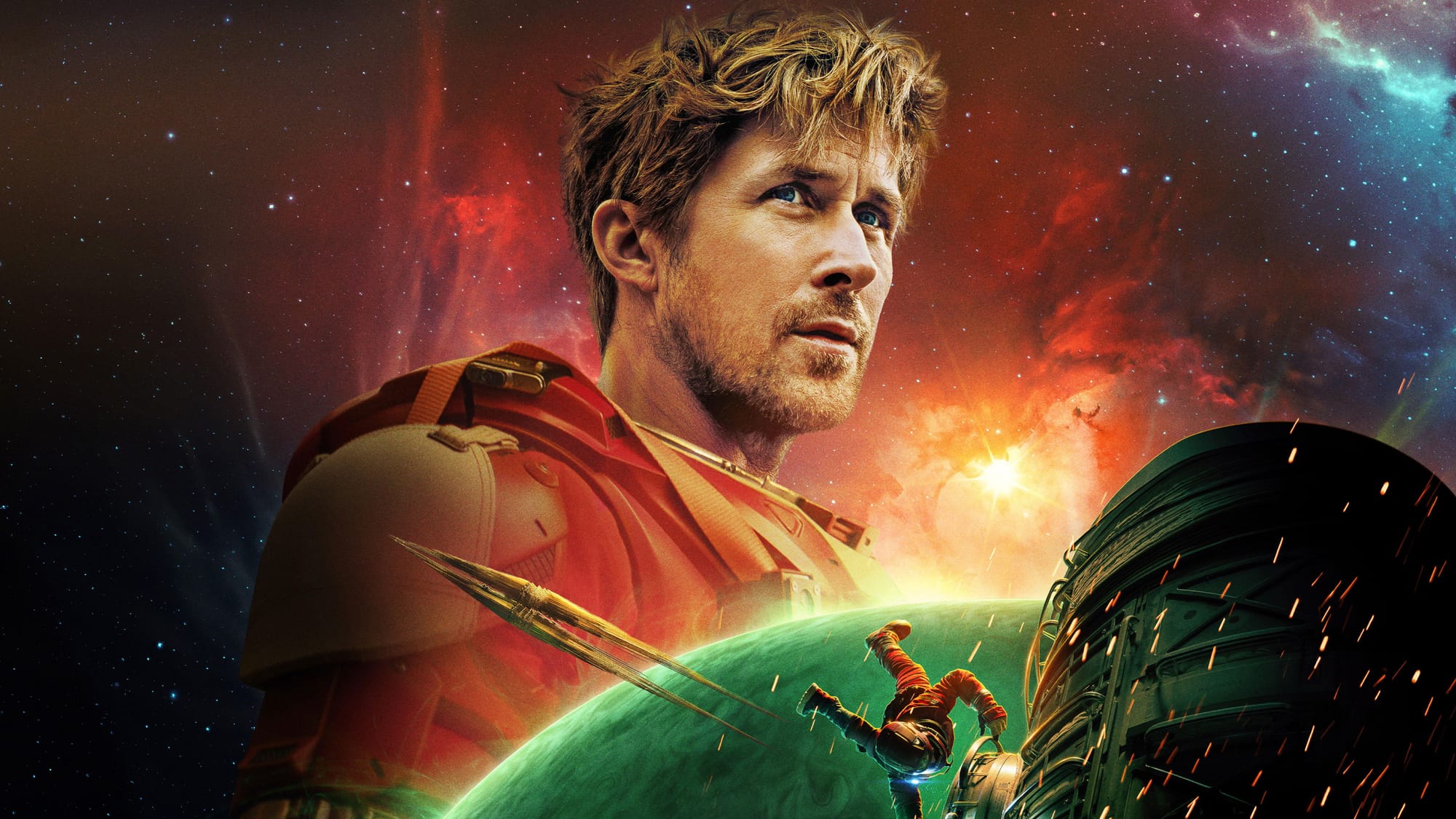
Star power, in the franchise era, has been progressively diluted into brand adjacency. The actor serves the IP; the IP does not serve the actor. Gosling's career has run deliberately counter to this gravity — Blade Runner 2049 (2017), The Fall Guy (2024), and now this — but Project Hail Mary is the purest test case because the film offers no other load-bearing structure. There is no mythology to catch him if the performance fails to carry.
It does not fail. What Gosling brings to Ryland Grace is something specific and undervalued in contemporary blockbuster performance: legible intelligence. The audience believes, moment to moment, that this person is actually thinking — processing, revising, being wrong and correcting. That quality is not inherent to charisma or physical presence. It is craft, and it is the thing that transforms a science lecture into a suspense sequence. The film's most gripping passages are, on paper, a man doing math.
The Non-Franchise Problem Is Actually a Distribution Problem
The industry's resistance to original IP at this budget level is not irrational — it is a response to genuine risk asymmetry. A failed franchise entry loses money but maintains brand equity. A failed original at $100 million loses money and establishes nothing. What Project Hail Mary demonstrates, however, is that the calculus shifts when a film is genuinely audience-driven rather than marketing-driven. Word of mouth — the oldest and most durable distribution mechanism in cinema — still functions when a film gives it something to say. Audiences are telling each other to see this one. That is categorically different from audiences being told to see the next chapter.
What It Proves and What It Doesn't
It would be a mistake to read Project Hail Mary's success as a blueprint reproducible at scale. It required a specific alignment: a genuinely beloved source novel with a built-in audience, a director pairing with the tonal range to honor the material's warmth without softening its rigor, and a star operating at the precise intersection of likability and credibility that the role demands. These conditions are not easily manufactured.
But the film does prove something more fundamental and more useful: that audiences have not lost the capacity to show up for something that is only itself. No universe. No legacy character. No safety net of prior affection for an established property. Just a story, a performance, and the bet that scientific curiosity and human loneliness are sufficient dramatic engines for a summer blockbuster.
In 2026, that bet paying off is not a small thing. It is, quietly, one of the year's most important cinematic facts.