The premise of Phony (2026) is almost aggressively simple to summarize and almost impossible to play well: a teenager wakes up in a hospital after a car accident, looks at his mother, and knows — with the quiet, total certainty of a bad dream — that she is not quite her. Nobody else sees it. The show does not, at least not immediately, tell you whether he is right. That suspension is not a trick. It is the whole architecture.
 Official trailer
Hulu's eight-episode series, which drops its first two episodes today, October 20, before moving to a weekly Tuesday schedule, was created, written, and co-directed by Nick Paley — best known as a co-creator of the Oscar-nominated Marcel the Shell With Shoes On (2021) and a writer on Broad City. Co-showrunner Anthony King, whose credits include The Afterparty and Silicon Valley, joins him on the creative side. Drew Goddard executive produces through Goddard Textiles. The show is produced by 20th Television. On paper, it is a very specific constellation of sensibilities: absurdist warmth, genre formalism, and industry competence. In practice, RogerEbert.com calls it "one of the most interesting new series released this year, and one of the most unsettling."
What Paley Is Actually Doing With the Premise
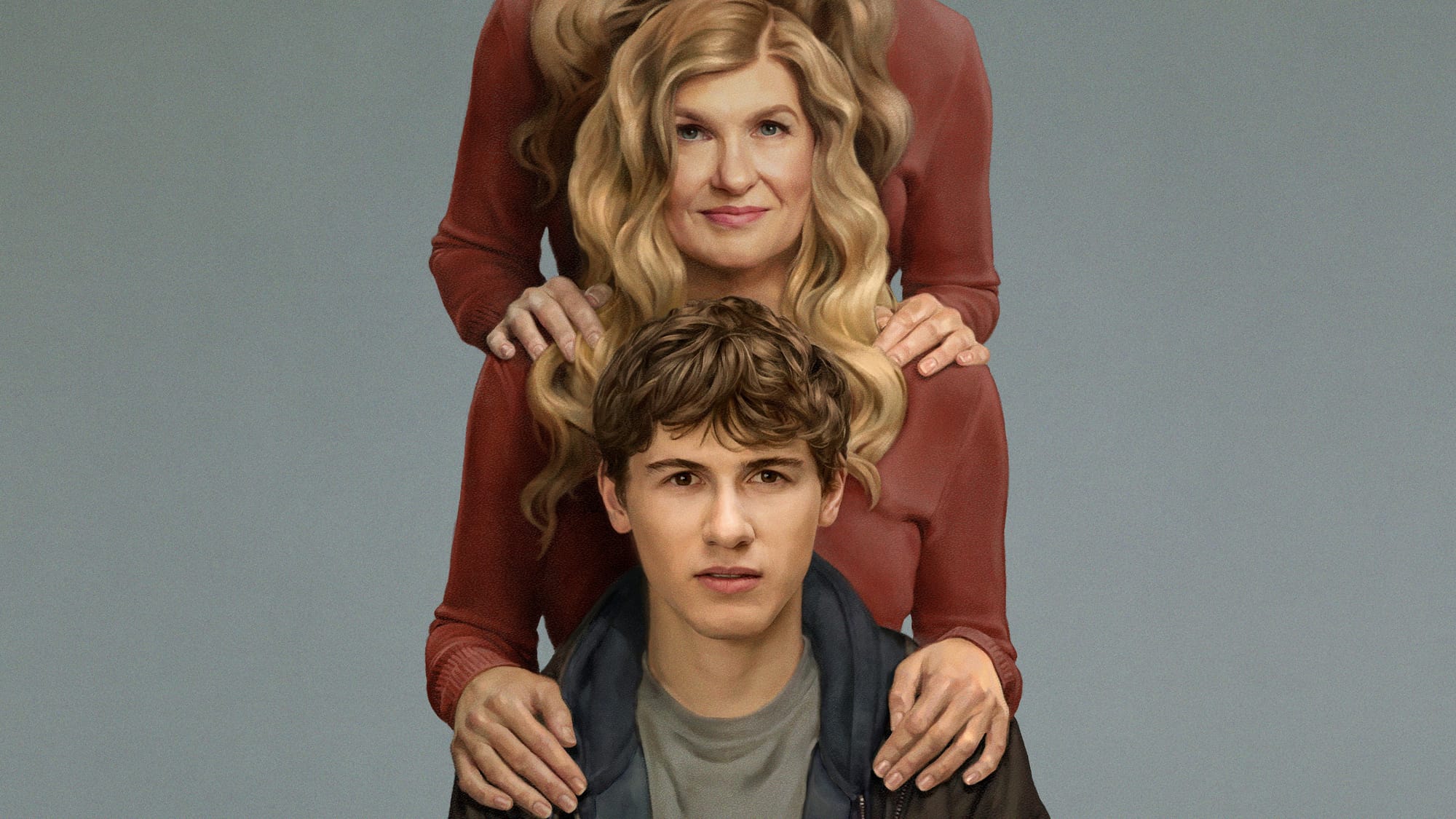
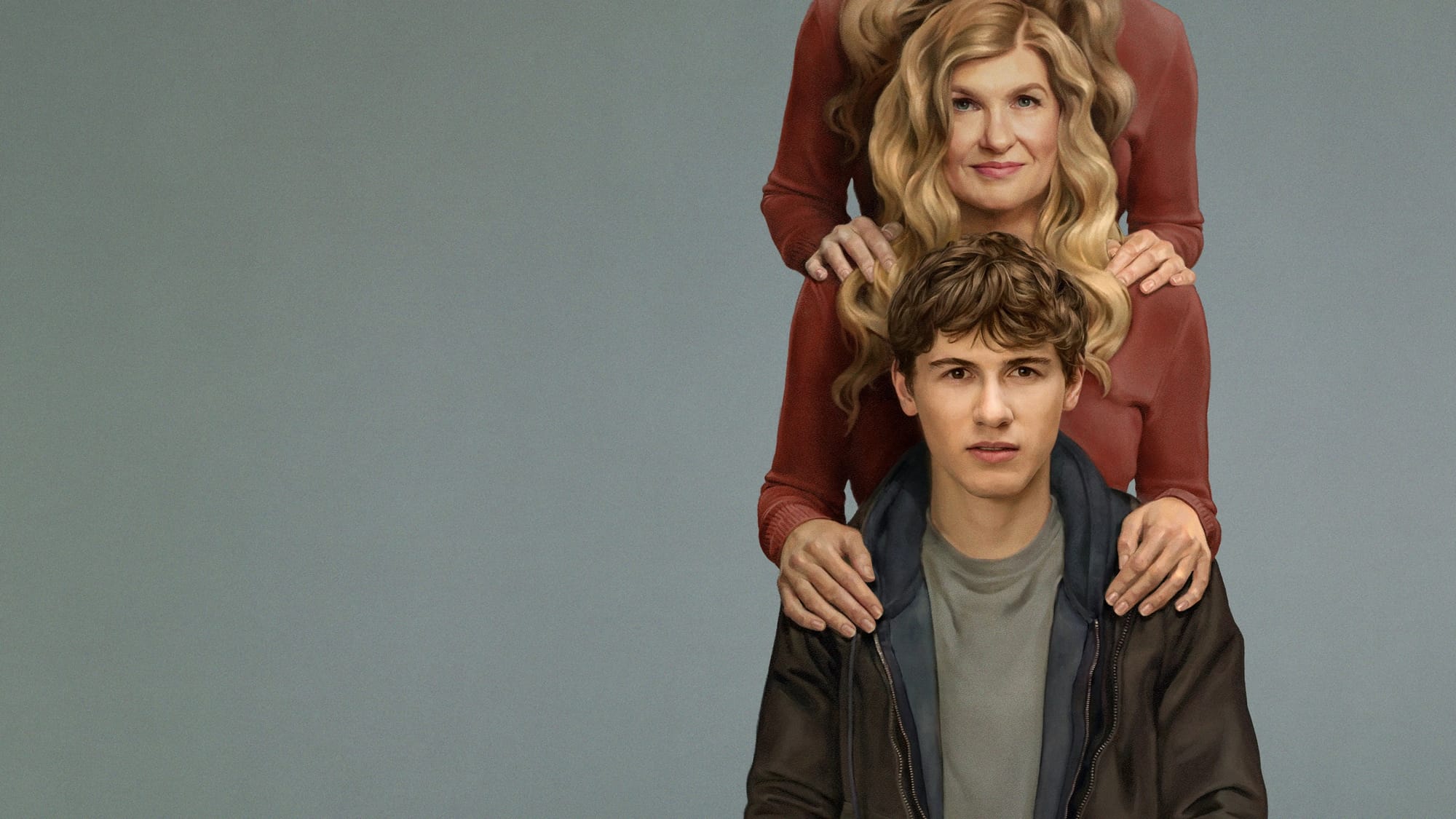
Sonny Cooke (Sam Nivola) has an unusually close relationship with his mother, Ellen (Connie Britton) — she is his only parent, his school principal, and by the show's own accounting, his best friend. That closeness is established fast and then used as a weapon. When he wakes post-accident and she fails to return one of their signature private gestures, he becomes convinced something has been swapped out inside her. As the A.V. Club puts it, nobody else "clocks the change at first, but Sonny knows there's something off about her." He tries to navigate living with this potentially dangerous stranger — who, crucially, is also still the woman who raised him — while building a case that he has not lost his mind.
The disorder this most closely mirrors is Capgras syndrome — a rare neuropsychiatric condition in which the sufferer becomes convinced a loved one has been replaced by an identical impostor. Paley has said in interviews that the clinical concept is not the show's true source. His actual starting point was simpler and more personal: a childhood terror of losing his mother. "I was in first grade, and I would be like crying, not wanting her to drive," he told TV Insider, describing how a basic anxiety about maternal loss became, over time, the emotional engine behind a mystery series. That grounding in something pre-rational — a fear that predates any framework for understanding it — is precisely why Phony lands where a premise this high-concept easily might not. The horror is not philosophical. It is developmental.
The show's formal interest, then, is not in whether the replacement is real. It is in what a coming-of-age story looks like when the central relationship is simultaneously a site of comfort and dread. Every adolescent project involves learning that a parent is not exactly who you believed them to be — less perfect, more human, capable of secrecy. Phony takes that psychological commonplace and externalizes it into something that might be a supernatural event. Or might not be. Four episodes in, Collider's review notes, "you won't even be close to solving it, but therein lies the appeal."
Britton's Double Act
The show's central formal gamble is that Connie Britton plays both versions of Ellen — the warm, casually magnificent mother of the first fifteen minutes, and the version who follows her out of the hospital. The distinction between the two is achieved through a combination of performance adjustment, subtle makeup, and what Britton has described as "almost painted-on VFX additions" — small enough to be deniable, large enough to be felt. The effect, reviewers broadly agree, is genuinely strange. Collider found the makeup work impressive enough that it "took quite a while to determine that it was really still her underneath." The A.V. Club noted that Britton finds "a perfectly subtle and therefore extra-unsettling way of distinguishing between the original Ellen and the new Ellen."
What makes Britton's performance more than a technical exercise is what she refuses to do with it. She does not play the replacement as malevolent. She plays it as slightly off — calibrated, warm in the correct places, present in all the ways that would satisfy anyone who was not paying the kind of obsessive, love-saturated attention that Sonny is. Britton is "resisting playing anything conclusively," as one critic put it, "and the show is all the better for the built-in warmth that TV viewers feel for any Connie Britton role." That accumulated goodwill — from Friday Night Lights, from Nashville, from her own first season of The White Lotus — is being used against the audience deliberately. When she smiles at Sonny with something slightly not quite right behind it, it costs more than it would from a stranger. Britton also executive produces the series, which suggests she understood exactly what she was signing up for and why.
Nivola and the Question of Paranoia
Sam Nivola, who gained wide recognition as Lochlan Ratliff in The White Lotus Season 3 (2025), brings to Sonny the same quality that made that performance work: a legible interiority that does not tip into self-pity. He makes "a charming and likable lead, even as he descends into paranoia" — which is a harder needle to thread than it sounds, because a paranoid protagonist who reads as unpleasant simply makes a show unlivable across eight weeks. Sonny stays sympathetic not because the show excuses his behaviour but because Nivola never lets him stop being recognizably a teenager: impulsive, vulnerable, faintly ridiculous in his conviction, and correct in ways he cannot prove. It is the son of Emily Mortimer and Alessandro Nivola, and the instinct is there — the ability to occupy a scene without overexplaining what the character is feeling.
The supporting cast extends the show's tonal range usefully. Meera Syal, as Sharla, brings a dry wit that anchors the comedy register, and the younger ensemble — Grace Brennan, Maliq Johnson, Mahaela Park, Colter Lee — has been praised across reviews for feeling like actual teenagers rather than television's usual approximation of them. Phony's teen dialogue, notes the A.V. Club, is "some of the most distinct and realistic TV teen dialogue in recent memory." That specificity matters, because the coming-of-age scaffolding has to carry enough weight that when the mystery pulls at it, there is something real to pull against.
Genre Hybrid, Genre Friction
The question every review eventually reaches is whether Phony fully integrates its two modes, or merely keeps them from colliding. The Collider assessment is candid: the show "works better as a pure, compelling mystery rather than either a coming-of-age comedy or a familial dramedy." Variety's coverage positions it as "half paranoid thriller and half coming-of-age comedy" that "isn't exactly gripping and it's rarely hilarious" but "occupies a very likable middle ground." These are not dismissals — they are descriptions of a tonal project that has chosen adjacency over synthesis, and that bet may prove either inspired or limiting as the season extends into November.
What Phony shares with Paley's Marcel the Shell work is a commitment to treating dread as something that lives inside warmth rather than alongside it. The shell was beloved and precarious and funny; its comedy and its sadness were not different registers but the same thing from different angles. Phony is attempting the same operation at higher stakes and across a longer form, which is why the question of Britton's double performance holding together is not just a casting curiosity but a structural one. The show needs the audience to feel, simultaneously, the love that Sonny has for the original Ellen and the wrongness of what is sitting in her place. That cognitive dissonance is not a problem to be solved. It is the show's subject.
This is also, in the end, why the Capgras framework matters even if Paley reached the show from a different direction. Capgras syndrome is not primarily a disorder of perception — it is understood as a disconnection between recognition and emotional response. The face is correct; the feeling that should accompany it is absent. The terror is not in seeing a stranger. It is in seeing someone who is right in all the ways that can be verified, and wrong in the one way that cannot. Television has always been good at surfaces. Phony is asking what happens in the gap between the surface and the feeling it is supposed to produce — and whether a comedy about a teenage boy can sustain that question for eight weeks without blinking. Based on the first four episodes, the answer is a qualified and genuinely interested yes.
Phony is streaming now on Hulu, with new episodes every Tuesday through December. For a different kind of genre-bending that asks what a familiar form owes its audience, see our coverage of Stephen King's Carrie as a streaming series and what that commission says about horror's current relationship with prestige television. And on the question of what a mystery series looks like when it actually resolves, our piece on the Lanterns Season 1 finale considers what a solved mystery actually proves.