The announcement that Carrie (2026) will debut as a serialized streaming series on October 7 of that year is not, on its face, a surprise. Nothing about Stephen King's catalog surprises anymore — it has become one of the most thoroughly strip-mined territories in adaptation history. What the announcement does, though, is force a question that the industry rarely wants to sit with: can a novel whose entire structural and emotional architecture depends on compression, interiority, and a single devastating crescendo actually survive being converted into ongoing episodes? And if it can't — if the format is simply wrong for the material — then what does the decision to proceed anyway reveal about how IP holders now think about literary horror?
 Official trailer
The honest answer to both questions is uncomfortable, and that discomfort is worth unpacking carefully.
What the Novel Actually Is
Published in 1974, Carrie was Stephen King's first novel — the book that rescued him from a wastebasket after his wife Tabitha retrieved the discarded pages. Its brevity is not incidental. At roughly 200 pages, the novel operates like a controlled detonation: every chapter, every epistolary fragment from the fictional news reports and academic studies that frame the narrative, every claustrophobic scene between Carrie White and her mother Margaret, is engineered to build pressure toward a single, cathartic, and genuinely tragic release. The prom. The blood. The fire. The destruction of Chamberlain, Maine — and of Carrie herself.
The novel's central horror is not telekinesis. It is empathy weaponized. King constructs Carrie White as one of the most fully realized victims in the genre — not a monster who happens to have a tragic backstory, but a girl whose suffering is rendered so specifically and so honestly that the reader is placed in the impossible position of wanting her to survive and understanding, at a cellular level, why she cannot. That tension is what makes the prom sequence devastating rather than merely spectacular. You cannot arrive at that devastation cold. It requires every prior page to function.
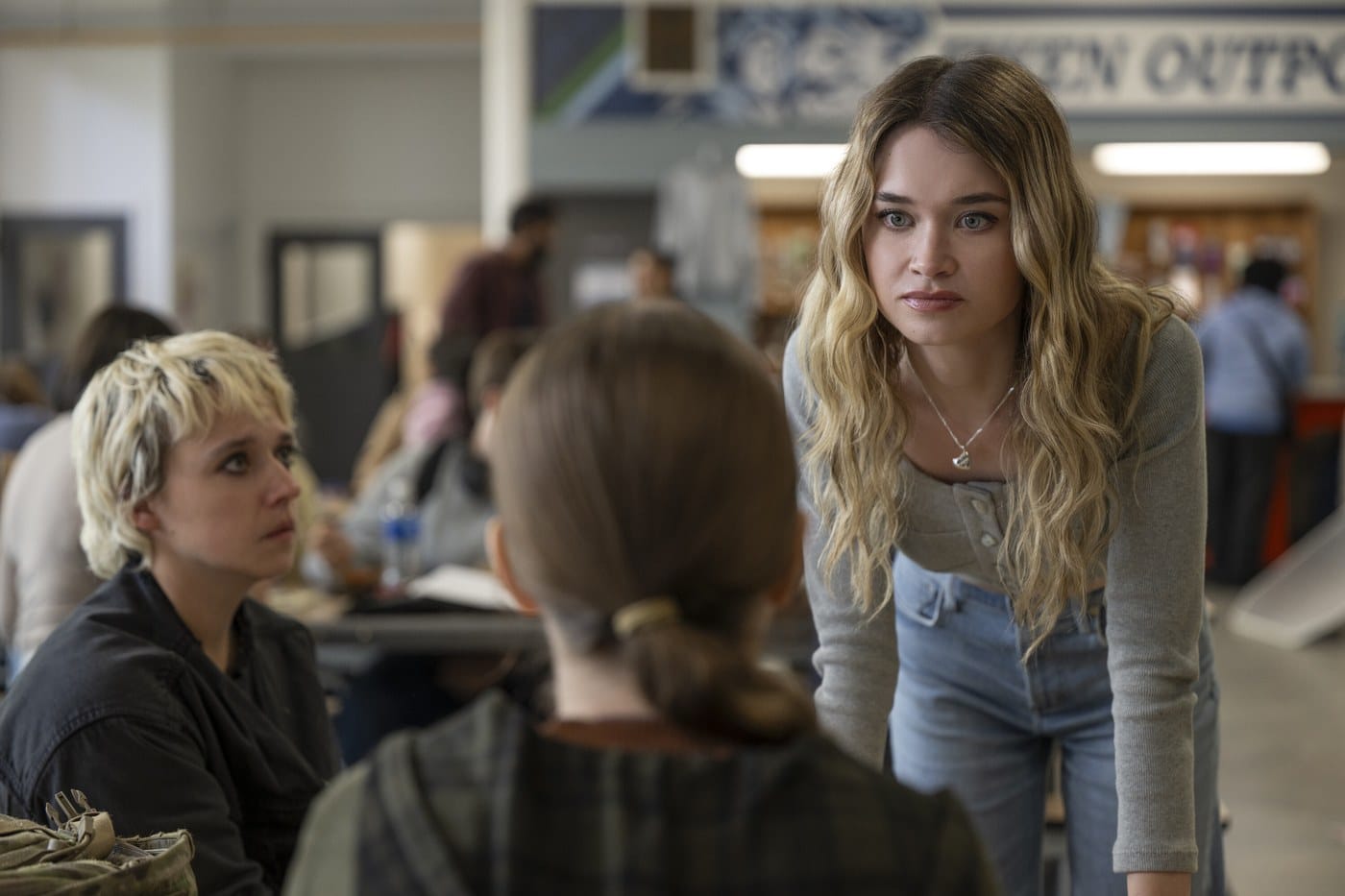
De Palma's Carrie (1976) understood this intuitively. Its two-hour compression — Sissy Spacek's performance, the slow-burn domesticity, the almost unbearable patience of the prom setup — translates the novel's architecture into cinematic terms without diluting its essential mechanism. The 2013 remake with Chloë Grace Moretz was competent and largely redundant precisely because it had nothing new to do with the structure: the feature film format was the right container, and De Palma had already used it correctly. A second feature with better effects was not a creative argument; it was a market one.
The Infrastructure Problem
A serialized streaming series is a fundamentally different container, and its shape is not neutral. The episodic format requires — by economic and narrative logic — dilation. Characters must be deepened across multiple episodes, subplots must be introduced and sustained, antagonists must be rendered three-dimensionally enough to justify screen time across a season arc. The machinery of television demands that the world of Chamberlain, Maine breathe and expand. And that expansion is precisely what destroys the mechanism that makes Carrie work.
Once you give Margaret White three episodes of backstory, she ceases to be the specific, terrifying embodiment of religious cruelty that the novel requires her to be. Once the school bullies — Chris Hargensen and Billy Nolan — are given sympathetic shading and subplot, the moral clarity that powers the prom's horror begins to erode. Once Carrie herself is allowed to develop friendships, to experience small victories, to grow across a season in the way that serialized protagonists must grow, the compression is gone. And without the compression, the explosion is just an explosion. Spectacular, perhaps. Emotionally inert.
This is not a flaw in execution — it is a structural incompatibility. The serialized format is excellent at many things: it builds worlds, sustains ambiguity, rewards long-form character investment. The Haunting of Hill House (2018) demonstrated that Mike Flanagan could take a similarly interior, psychologically dense piece of horror literature and find in the episodic format a new set of emotional tools that the source text hadn't accessed. But Shirley Jackson's novel is, crucially, about accumulation — about the slow dissolution of a self under sustained supernatural pressure. That is a story that benefits from dilation. King's Carrie is about implosion followed by a single, irreversible detonation. Those are opposite structural problems.
IP as Infrastructure
The decision to serialize Carrie is easier to understand when you stop reading it as a creative choice and start reading it as a logistics document. A recognizable title with proven audience attachment, an established horror brand, an October premiere window that maximizes cultural visibility — this is not a pitch about what the story needs. It is a pitch about what the platform needs. The story is the pretext; the IP is the asset being deployed.
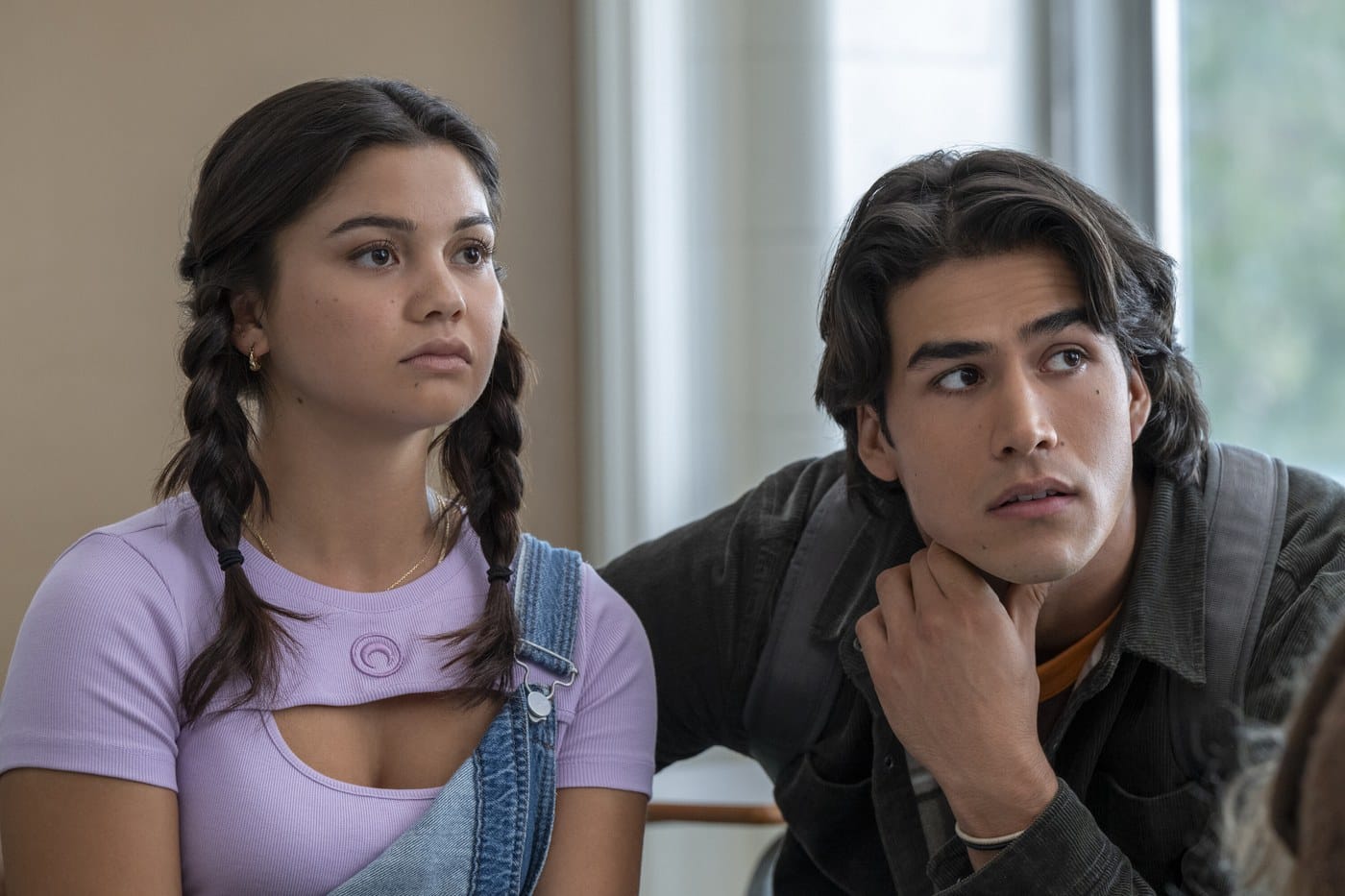
This is not a new phenomenon, but it has accelerated dramatically. The streaming era's hunger for content volume, combined with the risk-aversion that comes from operating at that volume, has produced a specific adaptation philosophy: take the most recognizable properties in a given genre, extend them to fill the largest viable format, and launch them in the seasonal windows where genre audiences are most active. Horror in October. Fantasy in winter. The calendar is the strategy. The story is what gets scheduled into it.
What gets lost in that calculus is the question of format integrity — the recognition that a story's structure is not separable from its meaning. King's novel is not a world or a mythology or a franchise seed. It is a single, precise, heartbreaking argument about what happens to girls who are failed by every system designed to protect them. That argument requires a shape that the serialized streaming format structurally resists.
What to Watch For
None of this forecloses the possibility that the Carrie series surprises. Television has earned the right to be taken seriously as an adaptation medium, and there are approaches that could mitigate the structural problem — a limited, tightly contained season of five or six episodes that refuses the expansion logic, a writer's room with the discipline to leave backstory implied rather than dramatized, a lead performance so precise that it recalibrates the viewer's relationship to the character across episodes rather than across a single two-hour arc. These things are possible. They are also rare, and they are most likely to happen when the creative team is working against format pressure rather than with it.
What the October 7, 2026 premiere date announces, before a single frame has been seen, is that the format decision has been made — and it was made upstream of the storytelling. That sequence of events is the real diagnostic. When the container is chosen before the story is considered, you are watching IP management, not adaptation. The question Carrie as a streaming series will ultimately answer is not whether Carrie White can survive Chamberlain. It is whether the material can survive the format. History, and structural logic, suggest the odds are not in its favor.