The release calendar today reads Madden in limited theaters — but that is no longer accurate. What was originally planned as a November 11 limited qualifying run for David O. Russell's NFL biopic has been quietly folded back into the streaming premiere. According to a report published yesterday, Amazon announced in August that it was forgoing a nationwide theatrical run for the John Madden biopic in favor of an exclusive Prime Video premiere on November 18, leaving room for a limited awards-qualifying theatrical run on November 11 — but when ticket sales launched, that November 11 availability was nowhere to be found, and an updated press release confirmed the limited run would now begin on November 18, the same day as the streaming debut. The sleight of hand is telling. When a studio collapses the gap between its prestige qualifier and its streaming drop to zero, the word it usually reaches for is "strategy." The word everyone else uses is "retreat."
 Official trailer
That retreat carries particular weight given who is behind the camera. Madden is David O. Russell's first film since Amsterdam (2022) — a movie that became a case study in how completely A-list gravitational pull can fail. Russell's Amsterdam opened to a scant $6.4 million in North America despite a wide release in more than 3,000 theaters, and ultimately stood to lose anywhere from $80 million to $100 million. It rested at a 34 percent critics' score on Rotten Tomatoes — by far the worst ranking of Russell's feature film career. Actors had shown up because they wanted to work with Russell, some even working for scale — this despite noteworthy conflicts the intense director had over the years with actors including George Clooney, Lily Tomlin, and Amy Adams. The loyalty of talent never translated to the loyalty of audiences. Amsterdam wasn't just a flop; it was a reckoning.
Russell has responded by swinging harder. Madden chronicles John Madden's incredible journey alongside best friend and "true original" Al Davis — from a Super Bowl-winning partnership with the Raiders, to becoming football's most recognizable voice, to building the worldwide Madden NFL video game. Amazon MGM spent an estimated $75 million on the biopic. The scope is unapologetically grand: three acts of American mythology compressed into 110 minutes, the kind of maximalist proposition Russell has always preferred over restraint. What has changed is the platform absorbing the risk. This time, there is no wide theatrical release to judge the film against. There is only a stream.
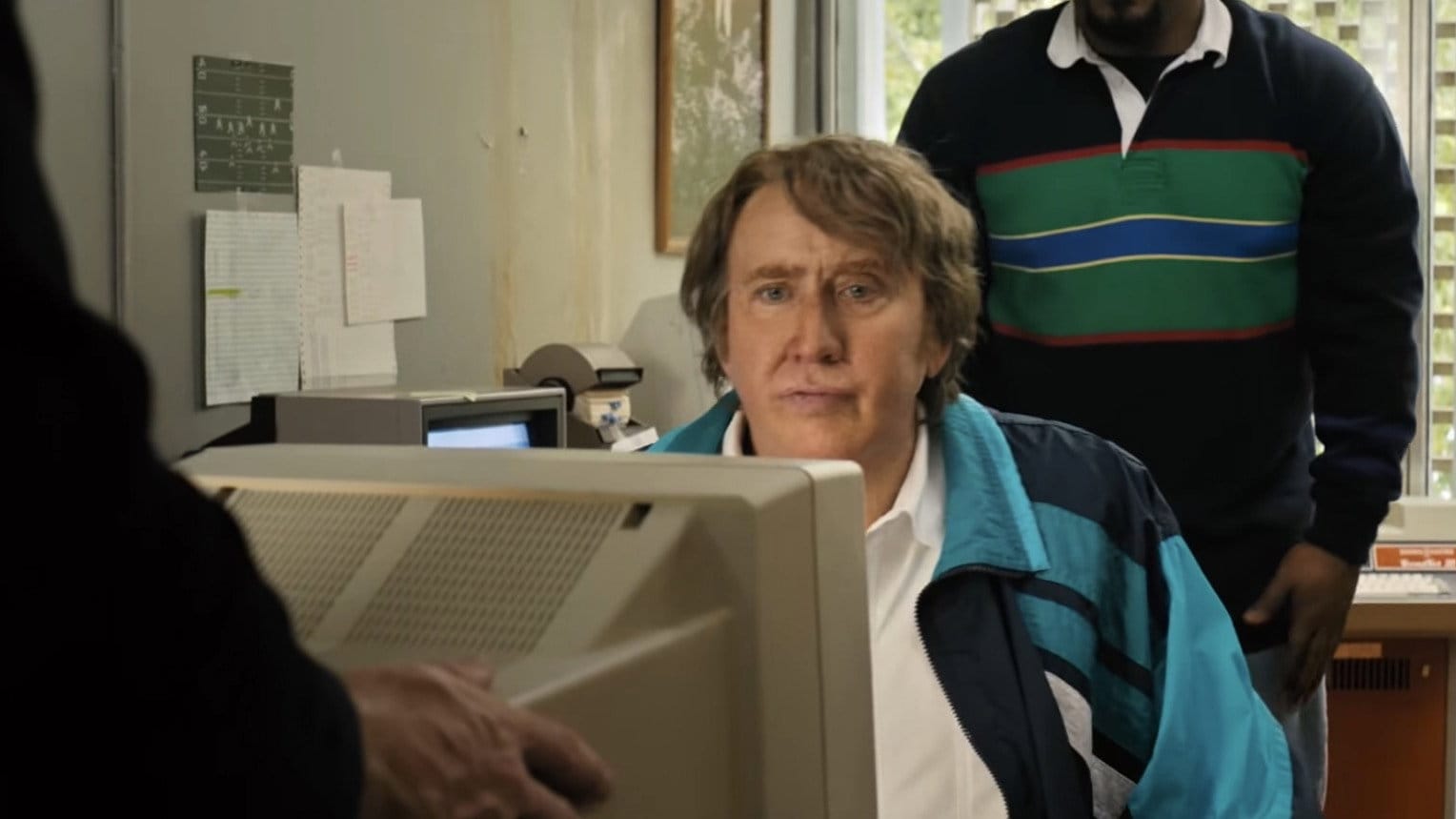
Nicolas Cage stars as Madden with Christian Bale as Al Davis and Kathryn Hahn as Virginia Madden, with Sienna Miller, John Mulaney, and Shane Gillis filling out the ensemble. On paper, it reads like Oscar catnip. In practice, the September trailer landed somewhere between polarizing and deflating. In the trailer released by Amazon MGM on September 24, Cage — 62 years old — trades his short hair and slim figure for a shaggy light-brown wig, fluffy eyebrows, a full-body fat suit, and prosthetics. The physical transformation is total; the question is whether it reads as committed craft or elaborate cosplay. The buzz around the biopic has been muted since an initial teaser failed to capture much excitement, and the vibes were fully off after the full trailer was released in September, featuring Cage doing an odd accent under cakey prosthetics and a tone that seemed more farcical than fascinating.
The divide in reaction is genuine and structurally interesting. More than anything, it appears fundamentally clear that Russell is making a farcical comedy — the color palette, the goofy humor, the Klumps-esque makeup and fat-suit look on Cage. That is a defensible choice. The problem is that farcical comedies about beloved American icons require a specific kind of permission — the audience has to be in on the joke from frame one, or the whole thing reads as disrespect. John Madden, who died in December 2021, was not merely famous; he was liked, warmly and widely, in a way that few public figures manage. The Madden NFL franchise that bears his name has sold over 160 million copies. Any film that asks audiences to watch a caricature of him runs the risk of losing that goodwill before the first act ends.
One critic noted that "Cage's fat suit and makeup couldn't be more unsubtle or distracting, and the same goes for his accent, which doesn't match Madden's" — and declared themselves sold anyway. That paradox captures the film's peculiar position: it may be precisely bad enough to be fascinating. Bale fares better by most early readings — observers say he nails Davis. Where Cage's Madden risks becoming a performance about performance, Bale's Davis — the renegade Oakland Raiders owner, all silver hair and renegade conviction — sounds like a character Russell built the whole film around. John Mulaney as Trip Hawkins, the EA Sports founder who pitched Madden on the video game that would make him immortal, represents the film's shrewdest casting: a comedian who understands sincerity as a comic weapon.
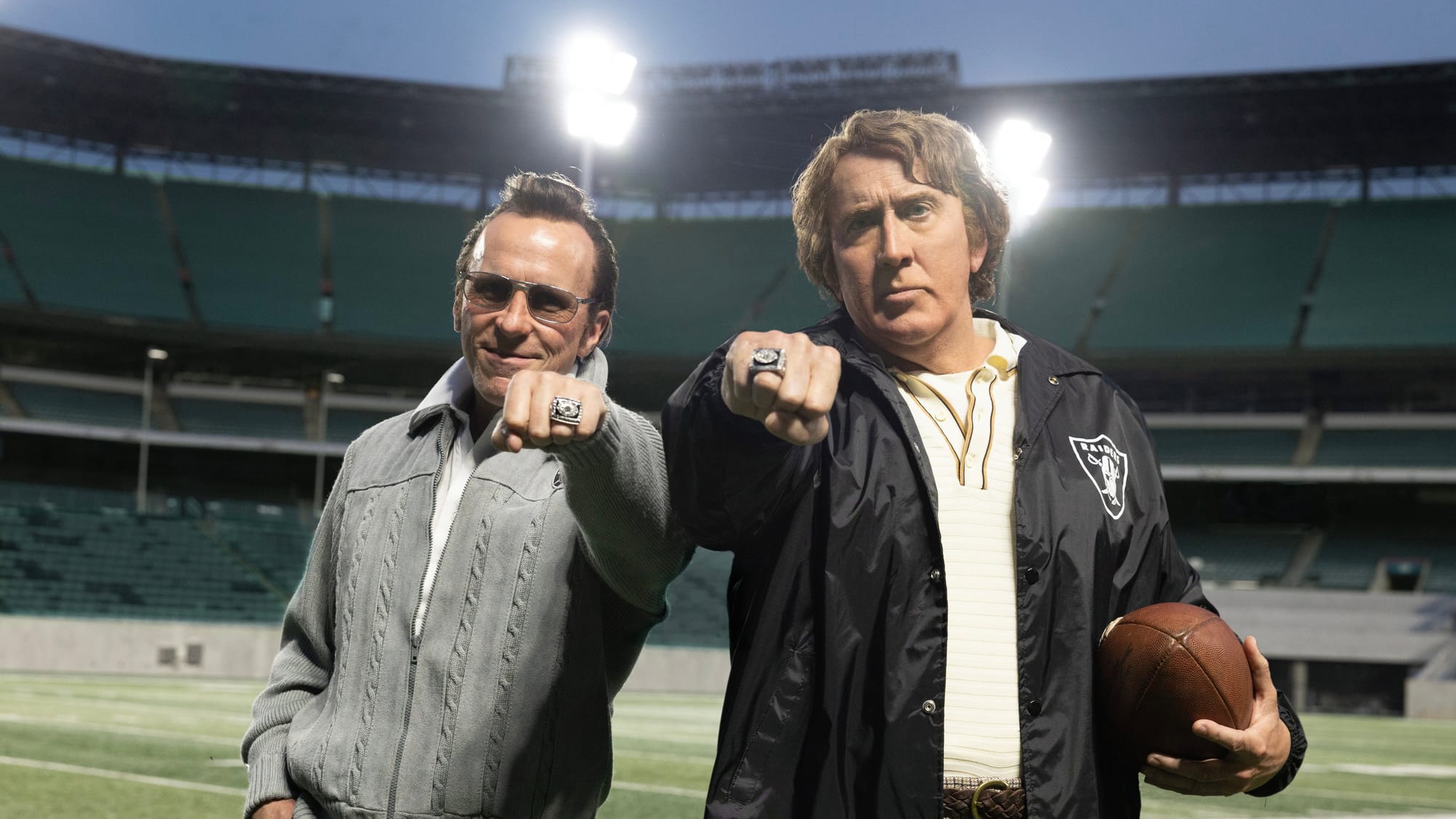
The question of whether any of this amounts to a genuine rehabilitation of Russell's standing is harder to answer than the film's box office math, which is essentially irrelevant when the box office has been removed from the equation. Amazon's decision to move the limited awards-qualifying theatrical run back to match the streaming premiere speaks volumes. Studios do not give up the theatrical runway for films they believe in as awards contenders. They give it up when they believe the film will play better as a Friday-night streaming event than as a critical object in the room. That is a significantly lower bar — and perhaps an appropriate one for what Madden appears to be: not a masterwork, but a watchable, overstuffed, possibly entertaining mess with two Oscar winners doing things that cannot be described without photographs.
Russell remains a five-time Academy Award nominee whose run from The Fighter (2010) through American Hustle (2013) was among the most commercially and critically productive stretches any director managed in that decade. American Hustle netted $251.1 million worldwide off a production budget of $40 million, while grabbing ten Academy Award nominations. That version of Russell — kinetic, maximalist but controlled, drawing the best-reviewed work from his cast — seems like a different filmmaker from the one who made Amsterdam or who is reportedly responsible for the footage in this trailer. Whether Madden is closer to one career peak or the other will only be known from November 18, when the film reaches the screens that will actually determine its legacy: not the limited theaters where qualifying runs live and die quietly, but the living rooms of the 200-plus million Prime Video subscribers worldwide.
The NFL biopic as genre has always had a problem with scale — the sport is about systems, not individuals, and the great coaches become great precisely because they disappear into the system they build. John Madden was the exception: a man so outsized in personality that the game itself bent toward him, and then a video game franchise bent toward him even further, making his name synonymous with football in the minds of generations who never watched him pace a sideline. That is an extraordinary subject. Whether David O. Russell is currently an extraordinary enough director to honor it — without flattening it into farce or sanding it into hagiography — is the only question Madden (2026) ultimately needs to answer. For now, it has answered a different, smaller question: Amazon does not think so either, at least not enough to bet a wide release on it.
For more on how the streaming economy is reshaping the kind of films that get made and the terms on which they reach audiences, see our coverage of AFM's 47th edition and its reckoning with the new global screen economy. And for another case study in a maximalist opening day that tests whether theatrical presence still carries meaning, read our review of I Play Rocky, which opened wide to a similarly divided response.