I Play Rocky (2026) opens in wide release today, arriving nearly fifty years after the film it chronicles. Amazon MGM Studios has timed the release with precision: the original Rocky (1976) debuted almost exactly half a century ago, and the studio is betting that anniversary nostalgia does heavy box-office lifting. The question posed by two months of reviews since TIFF is whether Peter Farrelly's film earns its emotion or simply draws it on credit from a movie far more people love than will ever fully understand why.
 Official trailer
The setup is genuinely irresistible. A broke, partially unknown actor writes a boxing screenplay in a matter of days, then refuses every serious offer to sell it unless he gets to play the lead himself. Studios want the script badly enough to throw six-figure deals at him. He refuses. According to Deadline's Toronto review, Farrelly has said he would not have made the film without Stallone's blessing — which he received — and the result is a portrait shaped, inevitably, by its subject's approval. That is not automatically a flaw. It is, however, a constraint worth naming before anything else.
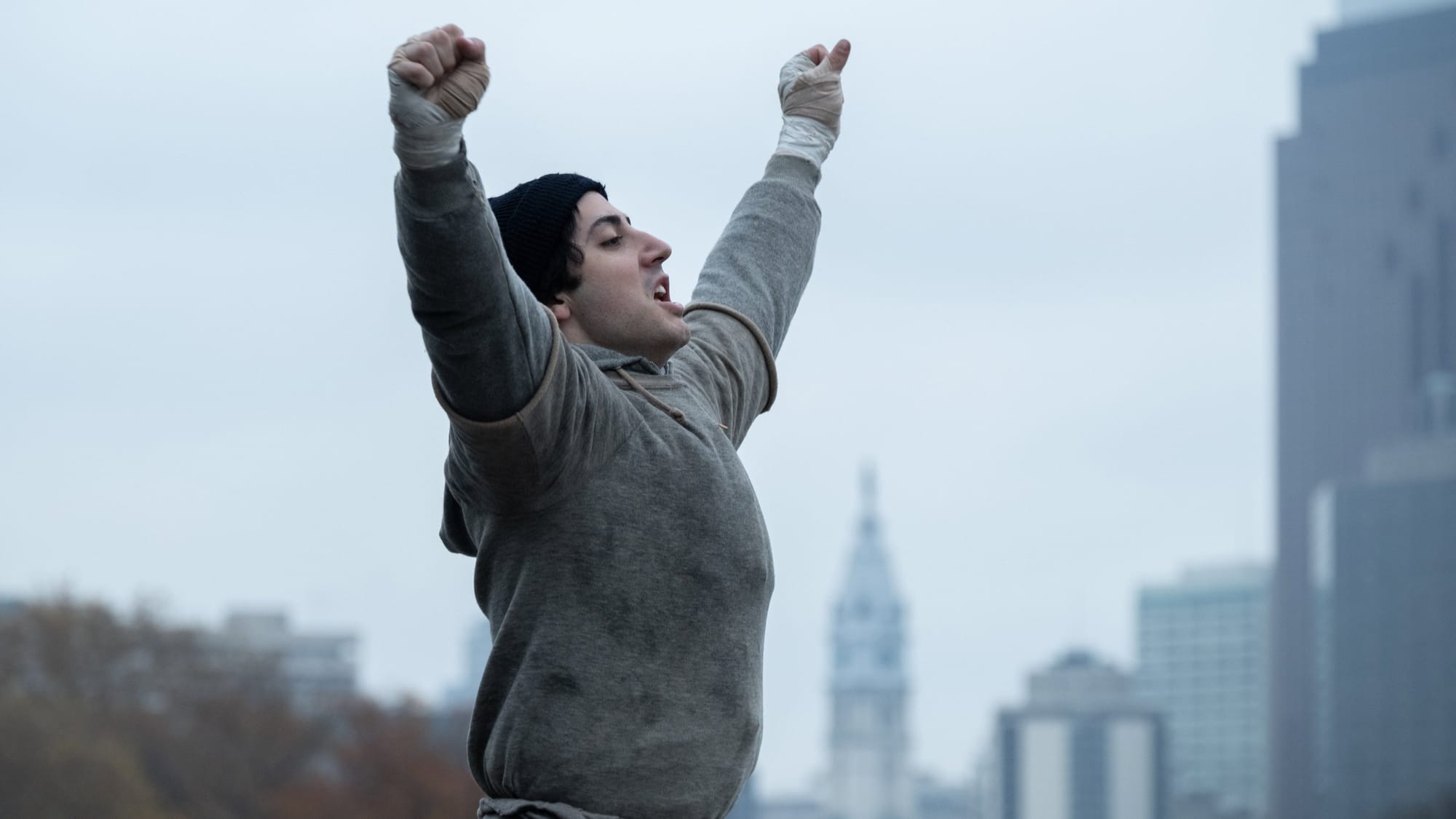
What is not in dispute is Anthony Ippolito. The Offer viewers will recall the actor already played one Italian-American screen legend — Al Pacino in Paramount+'s making-of-Godfather limited series — but his work here operates at a different register. At TIFF, the consensus formed immediately: Ippolito doesn't do an impression. He builds a character from the inside out, capturing the jaw, the drawl, the coiled self-belief that reads simultaneously as delusion and prophecy. One Rotten Tomatoes-aggregated review called it "a career-defining turn," while another noted that he "fully transforms into Sylvester Stallone, from the look and voice to the body language." Even the film's harshest detractors concede the performance. The divide is around what the film does — or fails to do — with it.
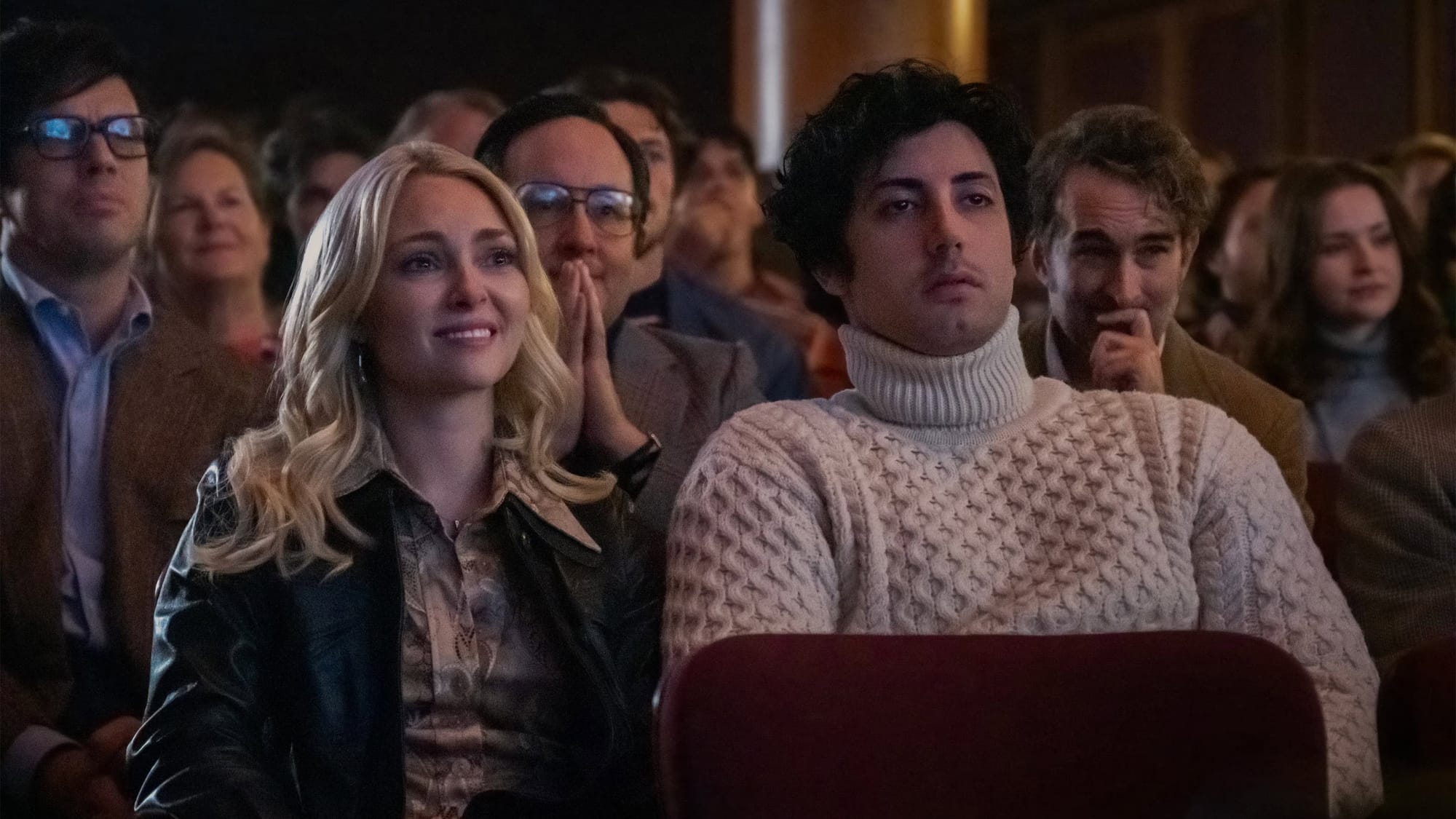
The supporting cast fills out the period landscape with varying degrees of success. Jay Duplass plays director John G. Avildsen with physical comedy that earns the film's biggest laughs. Stephan James arrives as Carl Weathers and, by several accounts, almost walks away with scenes despite limited screen time — his presence as the charismatic, flamboyant Weathers drawing comparisons to the electricity Weathers himself brought to the original film. Matt Dillon growls as Frank Stallone Sr., the verbally abusive father whose dismissal of his son supplies the film with its psychodrama engine. AnnaSophia Robb plays Sasha Czack, Stallone's then-wife, and Tracy Letts appears as the studio head who keeps saying no — a role the film apparently plays for authoritarian comedy as much as historical drama.
The structural logic of Peter Gamble's screenplay is clean: the first half charts Stallone's hunger — the missed parts, the mounting debts, the dog he nearly had to give up — while the second half moves into production on Rocky itself. The Roger Ebert site called the first hour "an impressively made dramedy" that mirrors Balboa's story in that of his creator, while noting the film "loses some crucial creative momentum" once cameras roll on the film-within-the-film. That is the core structural complaint from the mixed camp: I Play Rocky is most alive when Stallone's future is genuinely uncertain, and least interesting when it is staging recreations of scenes audiences have already memorized.
Screen Daily's Robert Daniels delivered the sharpest negative verdict from Toronto, writing that the film is "a walking piece of pastiche" that "takes its best cues from Rocky, recreating memorable scenes with little of the movie's original humanism." The word pastiche recurs across the negative and mixed reviews with striking frequency — not plagiarism, but something adjacent to it: a formal strategy of borrowing emotional architecture rather than building it. Time Out called it "more knockabout than knockout," arguing that where the original Rocky was shot on the fly for a scruffy $1 million with real risks attached — Garrett Brown's pioneering Steadicam being a gamble, Avildsen's one-take direction being mercenary — Farrelly's film "takes no risks whatsoever." Film Focus Online found iconic scenes like the steps run, the ice rink, and the meat-locker punching "recreated dutifully but often dully," becoming nostalgic gesture rather than dramatic necessity.
The sympathetic camp reads the same evidence differently. For them, the film's deliberate mirroring of Rocky's underdog structure is not a defect but its thesis. If the original film argued that believing in yourself is enough, then a making-of drama that replicates that emotional grammar is making a point about how mythology sustains itself — how the story Stallone told on screen was inseparable from the story he was living off it. At TIFF, the film was runner-up for the People's Choice Award, and audience responses have been uniformly warmer than critical ones. The Metacritic score stands at 65 from 25 critics; the Rotten Tomatoes Tomatometer sits at 88 percent from 76 reviews — a gap that reflects genuine disagreement rather than a consensus the number alone would flatten.
Farrelly's presence here is both his asset and his problem. The director of Green Book (2018) — which won the Best Picture Oscar to considerable critical controversy — knows how to engineer emotional delivery in the final twenty minutes of a crowd-facing drama. He also has a history of prioritizing that delivery over complexity of characterisation. The same complaint levelled at Green Book — sentimentality as substitute for interrogation — appears in the most rigorous I Play Rocky reviews. The film canonises Stallone, as one critic put it, to the point of near-sainthood. It compresses timelines, tidies endings, scores sentiment heavily. Whether that constitutes a failure of nerve or simply a different set of artistic priorities is exactly where the critical line is drawn today. This is not, it should be said, the split between prestige critics and populist critics — it's a split within both camps, a disagreement about what cinema owes its subjects and what it owes its audiences.
What's undeniable is the degree to which Ippolito has emerged as a genuine breakout. He reportedly sent an unsolicited audition tape to the film's producers to land the role — an act of self-belief Stallone himself would recognise. The Rome Film Festival awarded him the Progressive Career Prize in October. Early Oscar Best Actor conversations have already begun. The biographical irony is not subtle: the actor who plays the man who refused to be shut out of his own story got the role by refusing to wait for an invitation. That is either kismet or very good casting intelligence. Possibly both.
The more interesting question hanging over I Play Rocky as it opens wide is whether the nostalgia economy it relies on — for Rocky, for Stallone's mythologised ascent, for a certain idea of what perseverance looks like — constitutes a durable box-office proposition or a one-weekend event. Films like this tend to find their real audiences not in the opening frame but in the months afterward, when home viewing turns them into comfort objects. If I Play Rocky is a lesser work than the film it depicts, that is not exactly damning. Most things are. The question is whether it has enough of its own identity to survive the comparison — or whether, as Time Out concluded, it functions mainly as an advertisement for the superior movie that already exists. The answer, right now, appears to depend on how much you loved Rocky before you walked in.
For further context on how mid-budget films built around existing IP are navigating the current theatrical landscape, see Kynari's analysis of Clayface's opening weekend and DC's proof-of-concept strategy, and on the question of how nostalgia-driven IP performs when critics and audiences diverge sharply, the recent breakdown of La Bola Negra's awards logic remains instructive.