The tabloid newspaper is one of modern history's most potent and least cinematic subjects — too loud, too sensational, too grubby to sit comfortably inside prestige drama's usual register. Danny Boyle doesn't care. The full trailer for Ink, dropped by Netflix on November 10, announces something rawer and more kinetic than the conventional awards-season biopic: a heist film dressed as journalism history, a character study disguised as tabloid spectacle. It opens in select theaters on December 11, 2026, and begins streaming on January 8, 2027.
 Official trailer
Fleet Street as a Heist
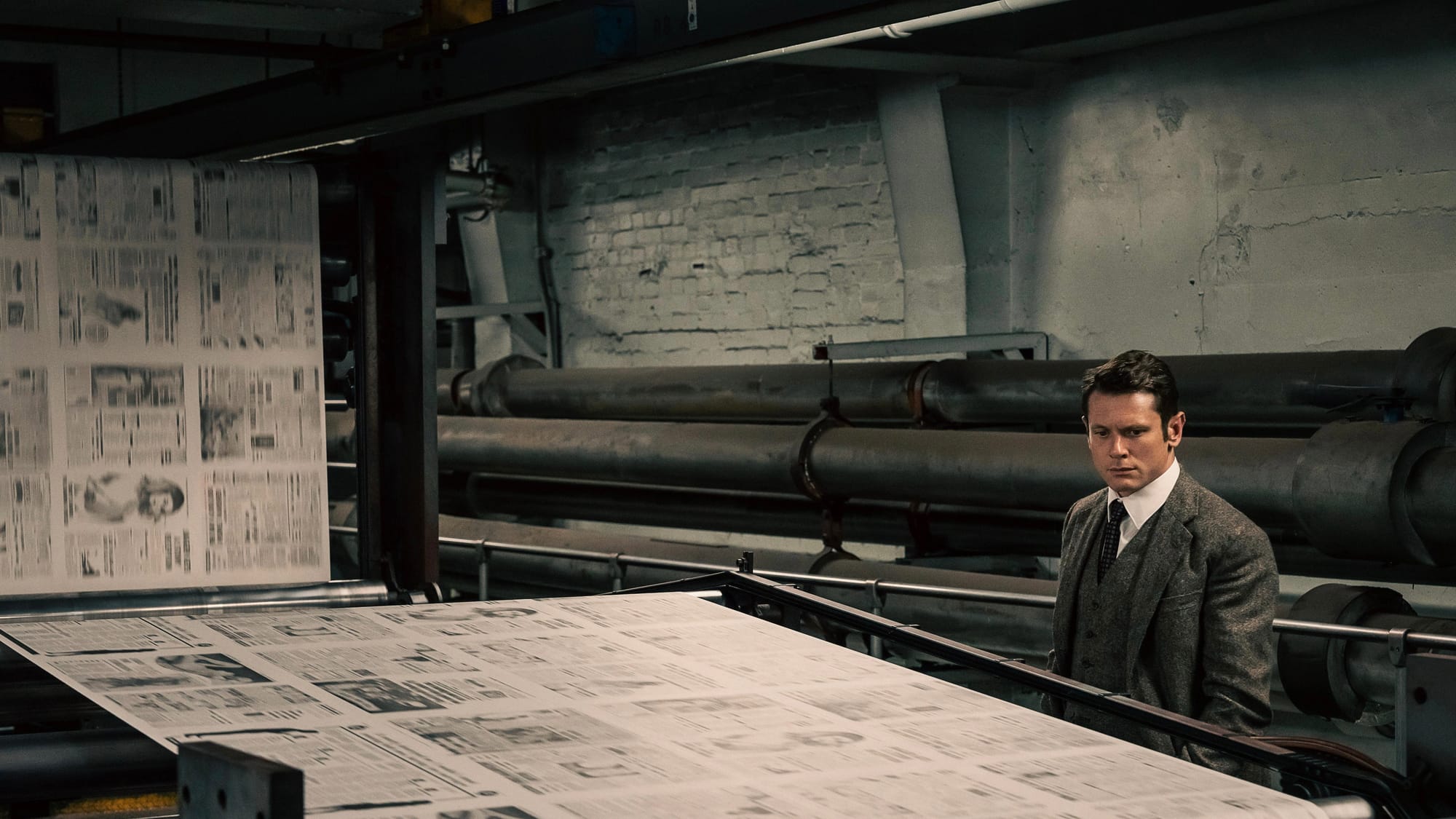
Ink (2026) is the story of how a young Rupert Murdoch and his handpicked editor Larry Lamb turned a failing broadsheet called The Sun into Britain's dominant tabloid. The year is 1969, and the setting is Fleet Street at its most combustible. Guy Pearce plays Murdoch. Jack O'Connell plays Lamb. Claire Foy plays Jules Davies, a fictional journalist through whom the film confronts the period's grinding misogyny inside a male-dominated newsroom.
The official synopsis — describing the film as "an explosive cinematic rollercoaster about a group of visionaries and misfits who had an idea for a new kind of news" — reads like tabloid copy in its own right, which is probably the point. What the trailer actually delivers is something more formally ambitious: rapid-cut montage, handheld urgency, and the particular brand of velocity that Boyle has been deploying since Trainspotting (1996). One early reviewer, writing out of the Venice premiere, called it "basically Trainspotting but about newspapers in the 70s," which is simultaneously reductive and entirely accurate as a first impression.
The screenplay comes from James Graham, who adapts his own stage play. That play — Ink, which premiered at the Almeida Theatre in 2017 before transferring to the West End and then to Broadway — is one of the more decorated works of British theatre this decade. It was nominated for Best New Play at the Olivier Awards and won two Tony Awards during its 2019 Broadway run, including Best Featured Actor in a Play for Bertie Carvel's performance as Murdoch. Graham brings to the adaptation an institutional fluency with how power corrupts institutions: his work has consistently mapped the intersection of authority and public life, from Parliament to the tabloid press. Here, adapting his own material, he approaches the Murdoch origin myth with what Variety described as "the mechanics of a heist" — Boyle supplying the velocity.
Venice, Then Everywhere
Ink had its world premiere as the opening film of the 83rd Venice International Film Festival on September 2, 2026, where it competed for the Golden Lion. It was Boyle's first time bringing a film to Venice, a notable omission from a career that spans 28 Days Later (2002), Slumdog Millionaire (2008), and last year's 28 Years Later (2025). The film earned a four-minute standing ovation on opening night. At Venice, it won the Soundtrack Stars Award – Special Prize for Daniel Pemberton's score. It subsequently screened at Telluride, the Toronto International Film Festival, and the BFI London Film Festival.
The critical response has been warm rather than rapturous. IndieWire's Venice review called it "a vividly directed if overcooked political parable about How We Got Here Now" — a summary that also neatly encapsulates the film's commercial pitch. The trailer's coda, reportedly featuring a montage that spans from the newsroom to contemporary media figures including Trump and Elon Musk, tells you exactly how much historical distance Boyle and Graham are — or aren't — willing to maintain. The film does not want to be a period piece. It wants the audience to feel the present in every frame of 1969.
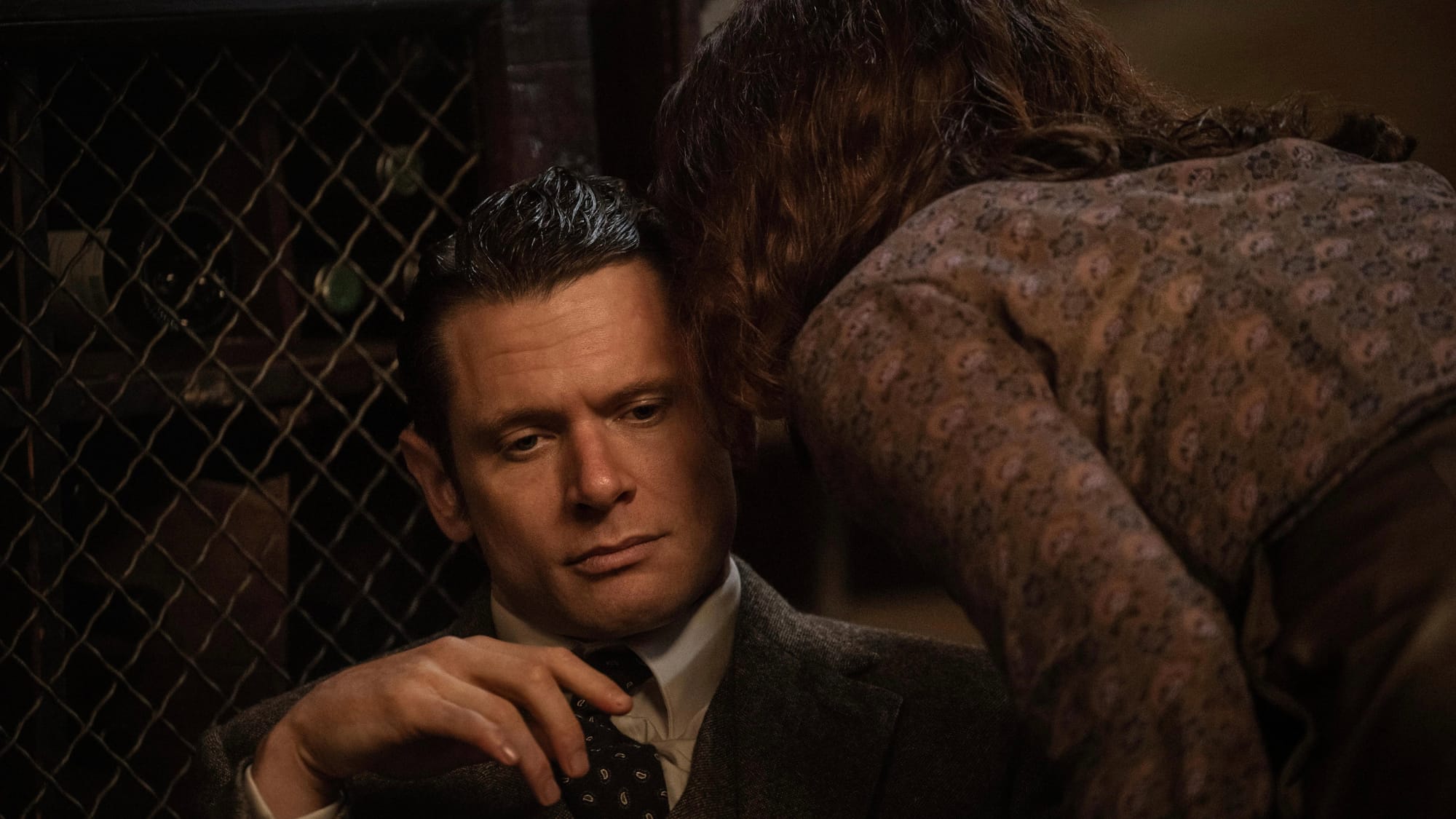
At the Venice press conference, Boyle was explicit that Ink does not "monsterize" Murdoch — a creative choice that cuts against the dominant cultural grain but also gives the film something more interesting than a villain portrait. Guy Pearce's Murdoch, in the footage available, is a force of nature rather than a figure of pure malice. The moral weight lands on O'Connell's Lamb, who Boyle has described as the story's true protagonist. The Rotten Tomatoes consensus, as it stands, frames O'Connell's performance as the film's load-bearing element: "ably anchored by Jack O'Connell's superb performance."
Netflix's Oscar Architecture
Netflix's deployment of Ink follows a template the streamer has refined across multiple award cycles. The Venice slot, the festival circuit, the December theatrical window for Oscar qualification, and the January streaming premiere — this is the same infrastructure the platform built around Marriage Story, Roma, and Maestro. Ink arrives in theaters on December 11, 2026, beginning its Oscar-qualifying run, then moves to the platform on January 8, 2027. StudioCanal handles UK theatrical release on the same streaming date.
The awards geometry is not subtle. Graham's adaptation puts the film in the adapted screenplay conversation. O'Connell is positioned for Best Actor. Pearce — fresh from his first career Oscar nomination for The Brutalist — is back in the Best Supporting Actor conversation with what early observers are calling comparable intensity. Boyle himself received the Gotham Film Awards Director Tribute this November, a soft but meaningful signal from the awards circuit. Composer Daniel Pemberton, already honored at Middleburg for his score, adds another lane to a campaign that Netflix is running wide.
What the trailer is actually selling, though, is something simpler than awards math: the pleasure of watching dangerous people do something dangerous and new. The film is rated R for sexual content, graphic nudity, language, and drug use — a rating that reflects the period's texture and Boyle's refusal to sand the edges off. The newsroom of The Sun as depicted here is not a place of noble truth-telling. It is a pressure cooker staffed by strivers and misfits who understand, before anyone else does, that entertainment and information have become the same product. That Ink arrives in a media environment shaped by exactly that insight — decades of it, compounded — gives the film an almost uncomfortable contemporaneity. The tabloid didn't start the fire. But it built the kindling.
The Cast Around the Stars
Beyond the lead trio, the supporting ensemble includes Blake Harrison, Patrick Kennedy, Angus Imrie, and Brian Gleeson — a cross-section of British character actors whose collective register stretches from sharp comedy to quiet menace. Harrison, in particular, reportedly uses the newsroom ensemble scenes to pivot from the comedic timing that defined his earlier career into something more dramatically complex. Claire Foy's Jules Davies is the film's invented conscience, the character who exists outside the Murdoch-Lamb axis precisely to register what their revolution costs everyone not invited to the table.
The film is a production of StudioCanal, Media Res, and House Productions, with Boyle producing alongside Tracey Seaward, Tessa Ross, and Michael Ellenberg. Tessa Ross also produced Slumdog Millionaire with Boyle — the last time this particular partnership went into an awards season, it won Best Picture. That precedent will be very much on the minds of Netflix's campaign team between now and March.
Ink opens in select U.S. theaters December 11, 2026. It streams on Netflix in the U.S. and Latin America from January 8, 2027. If the trailer's energy is any indication — and trailers for Boyle films generally understate rather than oversell the kinetic experience — this will be one of the noisier arguments of the season. The tabloid is back. It made something dangerous. It made something fun.