The number that keeps echoing through every box office conversation this week is $31.6 million. That is what Godzilla Minus Zero (2026) earned in its North American opening weekend — a record debut for any live-action foreign-language film at the domestic box office, clearing the previous benchmark set by Jet Li's Hero (2004) by a wide margin. For context, that figure is nearly triple the $11.4 million opening posted by its predecessor, Godzilla Minus One (2023). It is the kind of number that rewrites what studios believe is possible from a Japanese import — and it arrived on a weekend when overall ticket sales were up 96.8 percent from the prior frame, suggesting that the film did not merely attract its existing fanbase but genuinely expanded the audience.
 Official trailer
What made the opening so structurally striking was not just the gross but how it was composed. A never-before-seen 74 percent of the weekend gross came from IMAX and premium large format screenings combined — with IMAX alone accounting for $12.7 million, or 40 percent of the domestic total. That is the film leveraging format in a way that most Hollywood blockbusters struggle to replicate. Globally, Godzilla Minus Zero earned $21.3 million from IMAX, setting a new record for the biggest IMAX global opening for a Japanese film. The near-simultaneous worldwide release — Japan, North America, Latin America, Europe, Asia, the Middle East, Australia, and New Zealand all within the same week — was itself a strategic statement by Toho about how it intends to operate going forward. As Toho Global president Koji Ueda noted in a statement, "our first near-simultaneous global release was built on that belief" in a truly global Godzilla audience.
Critically, the film is not riding the wave on hype alone. Godzilla Minus Zero premiered at the New York Film Festival in September before its wide release, and it carries a 90 percent critics score and an A CinemaScore — the kind of audience grade that historically sustains legs into subsequent weekends. Its predecessor eventually crossed $57.1 million domestically, a record for a Japanese live-action film in North America. With a budget of less than $20 million, it is well on pace to blow past that total. The domestic cumulative through its first week already sits at approximately $39 million according to The Numbers, suggesting weekday holdover was solid. The film is also the 39th entry in the Godzilla franchise and the 34th produced by Toho — a lineage that, until Minus One, had rarely been treated as a serious awards or box office proposition in Western markets.

All of that is the preamble to this weekend. The IMAX-first strategy that Toho deployed from the outset was designed precisely to front-load the premium gross, which means the second weekend becomes the first real signal of whether Godzilla Minus Zero has the kind of broad, non-specialist appeal that sustains a long theatrical run — or whether it already captured its core audience in week one. That question gets answered this weekend because for the first time, the film faces legitimate wide-release competition.
The more commercially imposing challenger is Ebenezer (2026), Paramount's gothic reworking of A Christmas Carol directed by Ti West — the filmmaker best known for his precise, controlled horror work in the X trilogy. The cast includes Johnny Depp as Ebenezer Scrooge, alongside Andrea Riseborough, Rupert Grint, Daisy Ridley, Sam Claflin, Tramell Tillman, and Ian McKellen — a lineup that signals Paramount is treating this as a serious tentpole, not a seasonal throwaway. The film is rated PG-13, runs just under two hours, and was shot primarily in London, Kent, and Dublin, giving it the textural weight of a production that took its period setting seriously. Screenwriter Nathaniel Halpern, who is known for his television work, adapted the Dickens novella. Hans Zimmer composed the score. The budget, per industry reports, came in at approximately $38 million — a modest commitment for a Paramount wide release with this profile, particularly given that Depp reportedly took a pay cut to star. Reviews are mixed at around 50 percent on Rotten Tomatoes, which complicates projections. Gold Derby currently forecasts a $22 million opening, which would place it at number one ahead of Godzilla Minus Zero's projected second-weekend total of $12–15 million.
The more interesting creative proposition, though commercially the smaller bet, is How to Rob a Bank (2026), David Leitch's action-crime film from Amazon MGM Studios and 87North. The film stars Nicholas Hoult, Zoë Kravitz, Pete Davidson, Anna Sawai, Rhenzy Feliz, and Christian Slater — a cast that skews younger and more genre-savvy than the Dickens crowd. The premise is built around a crew of social media-conscious bank robbers whose viral fame draws the attention of a veteran FBI agent and a software engineer. It is a concept well-suited to Leitch's kinetic, technically precise action filmmaking, and the R rating and two-hour runtime suggest this is not a film pulling its punches for the widest possible audience. Gold Derby forecasts a $7 million opening, which would put it in fourth place — a respectable result for an original mid-budget action film in a market that has not been kind to them. The original release date had been Labor Day weekend before it was shifted to November, which often signals either confidence in the holiday corridor or the need to distance from stronger competition.
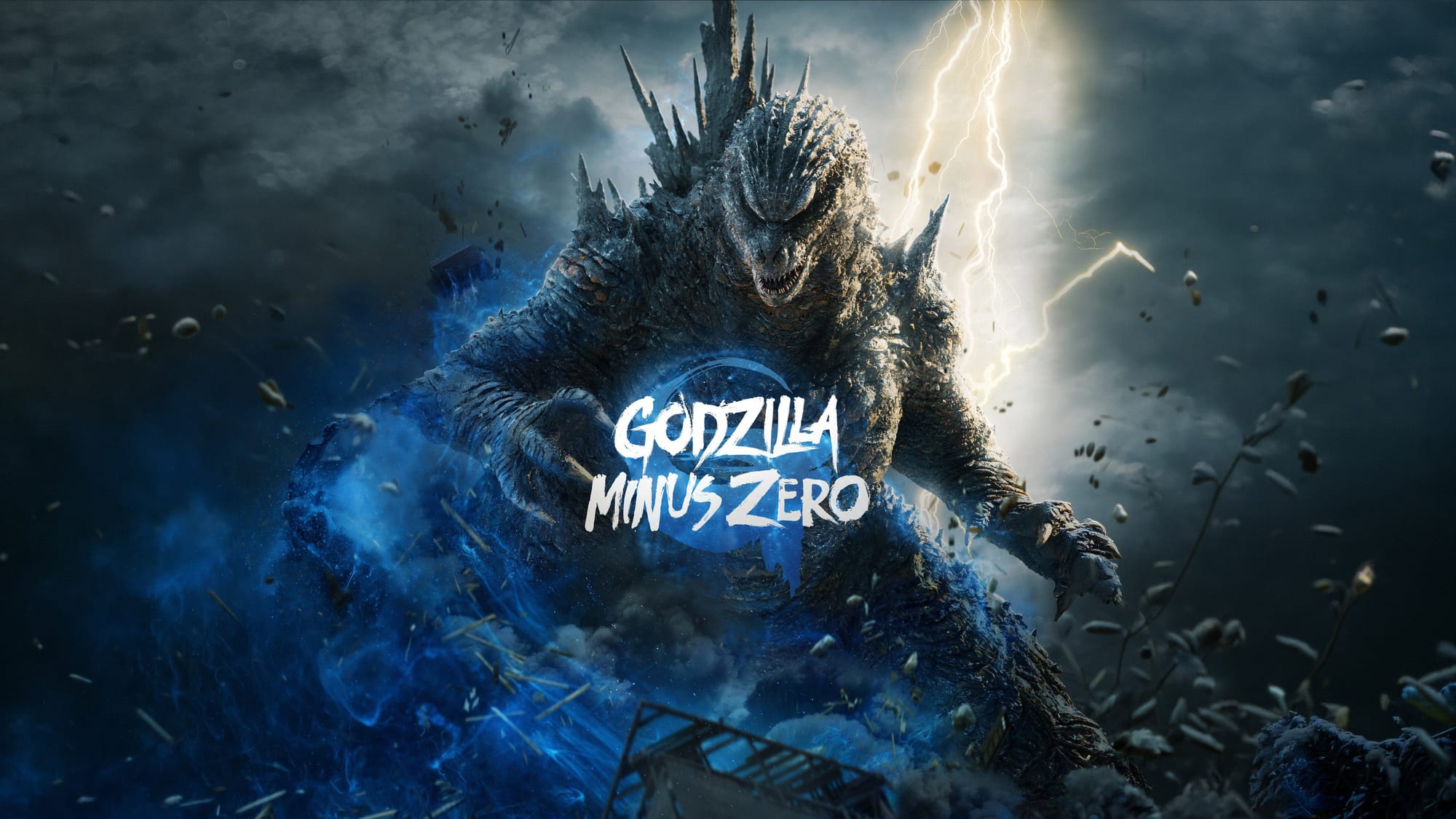
What this weekend actually tests is a specific hypothesis about Godzilla Minus Zero: whether its first-weekend dominance was a function of pent-up demand from a highly motivated core audience — kaiju enthusiasts, Yamazaki devotees, Toho loyalists — or whether the film has genuine crossover traction that will keep it performing at scale over multiple weekends. The IMAX concentration is a double-edged data point. It signals an enormously passionate audience willing to pay premium prices. It also means that if those premium screens start going to Ebenezer or any other incoming release, the film's per-theater average could compress quickly. A drop to $12–15 million would represent a 52–62 percent decline from opening weekend — sharp, but within the range for a film whose opening skewed so heavily toward premium formats.
The broader context matters here. Godzilla Minus Zero is not competing in a vacuum; it is competing at the beginning of the holiday season corridor, a stretch of weekends that runs straight into Thanksgiving. The Godzilla brand has never had more cultural momentum than it does right now, and Toho has clearly decided to treat the character's cinematic future as a global franchise event rather than a domestic Japanese proposition with an international afterthought. That strategic shift is what made week one historic. Whether it makes week two, three, and four sustainable is what this weekend begins to answer.
Ti West versus Takashi Yamazaki. Depp's first real commercial lead in years versus a kaiju that just shattered records nobody thought were breakable. And a Leitch action film lurking in fourth, trying to prove that mid-budget theatrical genre cinema still has a pulse. It is a meaningfully crowded frame — and the numbers on Monday morning will carry implications that extend well beyond any single weekend.