Chip Zdarsky did not come to Avengers to run a victory lap. He came to pick through the wreckage. Avengers #1 (2026), written by Zdarsky with art by Marco Checchetto, colors by Matthew Wilson, and letters by Cory Petit, opens in a Marvel Universe still raw from Avengers: Armageddon — a world where superheroes failed publicly, where casualties are on the ledger, and where the public has turned against the very concept of costumed intervention. The question the issue asks is not "how do we save the world?" It is something bleaker: "do we still have the right to try?"
That framing alone makes this book different from most flagship relaunches. But what makes it the week's sharpest flashpoint is an end-page revelation that transforms a relaunch into an argument Marvel may not have intended to invite — one that reaches back to 2007, to J. Michael Straczynski and Joe Quesada's One More Day, and to the most radioactive editorial decision in Spider-Man's history.
The Roster as Argument
The basic premise is structurally deliberate: Avengers: Armageddon cleared the board, and the old guard have all tapped out for one reason or another, leaving Spider-Man, Wolverine, Daredevil, Luke Cage, a diminished Captain Marvel, and the wildcard presence of Miracleman to fill the void. When picking the characters for the lineup of this new-look Avengers team, Zdarsky has chosen personality over power. That is a meaningful editorial statement. This is not the Avengers of Thanos-level punch-offs. This is Hell's Kitchen logic applied to Earth's mightiest heroes — moral weight, street-level guilt, and complicated histories doing more structural work than cosmic power sets.
By taking that intrigue and adding a variety of characters with similar but different guilt complexes — Daredevil, Captain Marvel, and Miracleman — Zdarsky begins providing this current roster with subtle chemistry that continues to lure in readers as the team dynamics begin to take form. Zdarsky focuses on immediately forging a bond between Matt and Carol Danvers, the latter of whom is still adjusting to a new world where her powers are a shadow of their former self. It is not the most glamorous team dynamic Marvel has ever written, but it may be the most honest one in years. These are heroes processing failure, not heroes preparing for triumph.
Chip Zdarsky and Marco Checchetto open Avengers #1 with a world that has already had enough of superheroes making decisions for everybody else. By making the world turn against superheroes in Avengers: Armageddon, he's forcing Earth's mightiest to take the backseat. This is the same instinct that made his Daredevil run — which kicked off in early 2019 as part of Marvel's Fresh Start era, and quickly entered the pantheon of critically acclaimed and adored runs in Daredevil history — so compelling. Zdarsky writes heroes who earn their right to be in the room. He does not assume it.
Checchetto Elevated
Zdarsky reunites with Marco Checchetto after their long Daredevil run, putting a superstar artist on Marvel's flagship series. The elevation is audible — Checchetto expands from the claustrophobic alley geometry of Hell's Kitchen to something approaching genuine spectacle, while retaining the visual precision that made their earlier collaboration so legible under pressure. This issue wouldn't be as exciting as it was if not for the dynamic work of Marco Checchetto and Matt Wilson animating each page with such nuance that you'd think it was ripped right out of a movie.
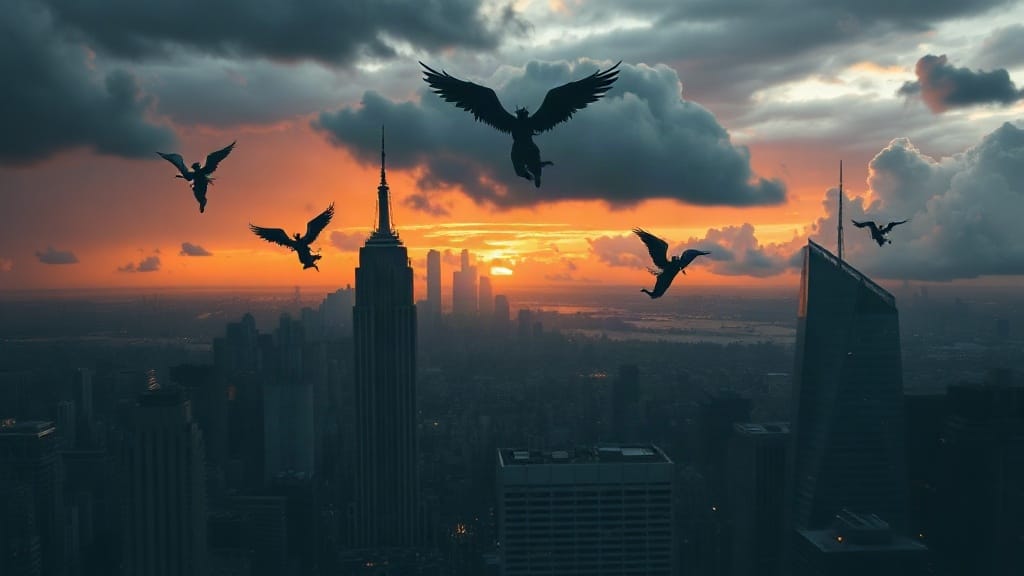
Checchetto can stage a brawl without turning the page into a Where's Waldo of random fists — a skill that becomes critical when Zdarsky gives us a literal Armageddon as angelic-like beings descend upon the world, taking back deals Mephisto has made, deals not ready to be paid. There is a nice chaotic quality to it all as fights break out and angelic beings descend. Wilson's color work earns its own mention: the palette shifts between cold municipal grays and sulfur-tinged infernal light with enough discipline that the theological threat feels visually different from the street-level chaos surrounding it. Zdarsky gives the team a reason to exist beyond nostalgia, while Checchetto, Wilson and Petit deliver a visual package that can handle a tense argument one minute and a wild superhero throwdown the next.
The Last Page and Its Nineteen-Year Shadow
Everything above would make for a solid, well-crafted debut. What makes it combustible is the final sequence.
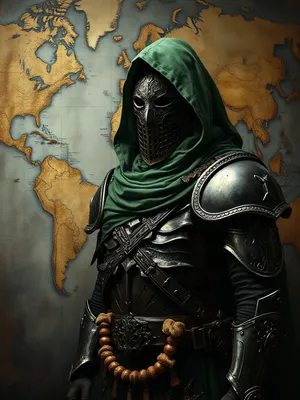
The issue's plot engine is straightforward enough: following the events of Avengers: Armageddon and Captain America, Doctor Doom has deposed Mephisto in Hell and declared all contracts null and void. The angelic enforcement agents descending on New York are not biblical in any straightforward sense — they are cosmic debt collectors, arriving to reclaim what those voided deals had promised. By building on years of continuity and creating an interesting hook, this story suddenly feels like it has more weight than all these other Mephisto stories.
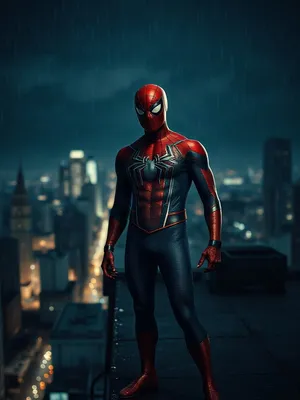
Then comes the gut-punch. The issue reveals that Peter and Aunt May are facing death after Mephisto's contracts are nullified. According to a mysterious figure, reality is responding by reclaiming what was promised, resetting everything that those agreements changed. A mysterious girl confronts Spider-Man at the end of the issue. Peter initially cannot remember making a deal himself, asking who he made it with and what he received — until Mephisto's name changes that.
The deal in question is, of course, the deal. One More Day is a four-part 2007 storyline written by J. Michael Straczynski with art by Joe Quesada. The storyline set the stage for a restructuring of the Spider-Man titles, and the events regarding Peter Parker and Mary Jane's marriage were met with highly negative criticism, although the artwork received praise. The story saw the events after Peter Parker publicly unmasked during the Superhero Registration Act that kicked off Marvel's Civil War, and Aunt May is shot by a sniper targeting him. As she lay in critical condition, Peter Parker and his wife Mary Jane Watson exhausted every medical and mystical option available. Enter Mephisto, Marvel's resident devil. He offers Peter a deal: he will save Aunt May's life — in exchange for Peter and Mary Jane's marriage. Aunt May lives, the marriage is wiped from continuity, and Peter Parker wakes up single again. The marriage, which began in 1987's Amazing Spider-Man Annual #21, had lasted twenty years in real time.
Nearly two decades on, that decision still functions as an open wound in the Spider-Man readership — proof that some editorial choices create more mythology in their wrongness than they would have in their rightness. Avengers #1 is a great story that leans into the awareness of how much fan intrigue there will be in seeing how the deal from One More Day is impacted by Mephisto's contracts being voided. The issue does not resolve anything. It simply reopens the room and lets the air in — which is both its brilliance and its provocation.
Zdarsky's Explicit Disclaimer
What sharpens the conversation is that Zdarsky has gone on record to close the door that his own comic just opened. Appearing on Dom of X, Zdarsky made his position clear, saying: "I'm not the guy to bring those characters back together... I'm not that guy." He continued to acknowledge that One More Day really made the deal feel as big and important as a "big martyr moment" for Peter and Mary Jane. Nevertheless, do not expect Zdarsky to retcon One More Day in The Avengers.
That is a structurally interesting position to be in. The writer has built an engine whose most obvious fuel source is a resolution he has explicitly declined to provide. The issue suggests Spider-Man's One More Day deal is unraveling, putting the Spider-Marriage back at Marvel's center. Mysterious cosmic agents appear to correct the scales, seemingly targeting Aunt May after the One More Day bargain. And yet the writer says that payoff belongs to someone else's book, possibly Amazing Spider-Man itself — as our own coverage of Amazing Spider-Man #1003 and Joe Kelly's post-milestone arc has been tracking.
This creates a genuinely unusual situation: a flagship Avengers launch that functions simultaneously as its own story and as a teaser for a resolution it will never deliver. Whether that is elegant architecture or frustrating misdirection will depend on how much of the One More Day fallout actually migrates into the pages of this book over coming arcs, and how much remains parked in the Spider-Man titles as a separate editorial conversation.
The Structural Verdict
Zdarsky complicates the situation with the heroes of the Marvel Universe rocked from the events of Avengers: Armageddon — which featured failures that resulted in mass death — but also a world that has turned against them, outlawing heroes. That double pressure — external threat and internal delegitimization — is a more sophisticated premise than Marvel's flagship book has operated on in some time. The One More Day thread gives it an emotional nerve that cosmic-scale threats alone rarely generate.
Checchetto is one of the best artists in Marvel's bullpen, and this story is proof why he really should be one of the publisher's top guys. Zdarsky's script moves with intensity and urgency, even if there are a few problems with the setup. But Checchetto's art is a gorgeous fit for a story that mixes personal drama and large-scale chaos. As we noted in our deeper structural analysis of this relaunch, Zdarsky's decision to anchor the book in accountability rather than spectacle is what separates it from the relaunches that preceded it.
Avengers #1 (2026) is a first issue that earns its place as a flagship — not by being the loudest book on the shelf, but by being the one with the most to say about what a superhero team actually costs the people inside it. The One More Day thread is not a stunt. It is a stress test, applied to a character and a continuity that has been carrying that particular weight for nearly twenty years. Whether Zdarsky's refusal to resolve it makes the tension productive or merely cruel remains the most interesting open question in Marvel's current lineup.