On November 12, 2026 — three days before Xbox's official 25th anniversary — Xbox CEO Asha Sharma posted on X and ended the longest silence in the rebooted Wolfenstein franchise's history. "Wolfenstein 3 is officially in production at MachineGames," she wrote, calling the series "one of gaming's most important franchises." MachineGames followed with its own reply: "His reputation precedes him. Wolfenstein 3 is in production." That is the full extent of what anyone has been told. No platforms. No release window. No trailer. Just a photograph of a script page and a franchise confirmation that the industry had been waiting nearly a decade to receive.
 Gameplay
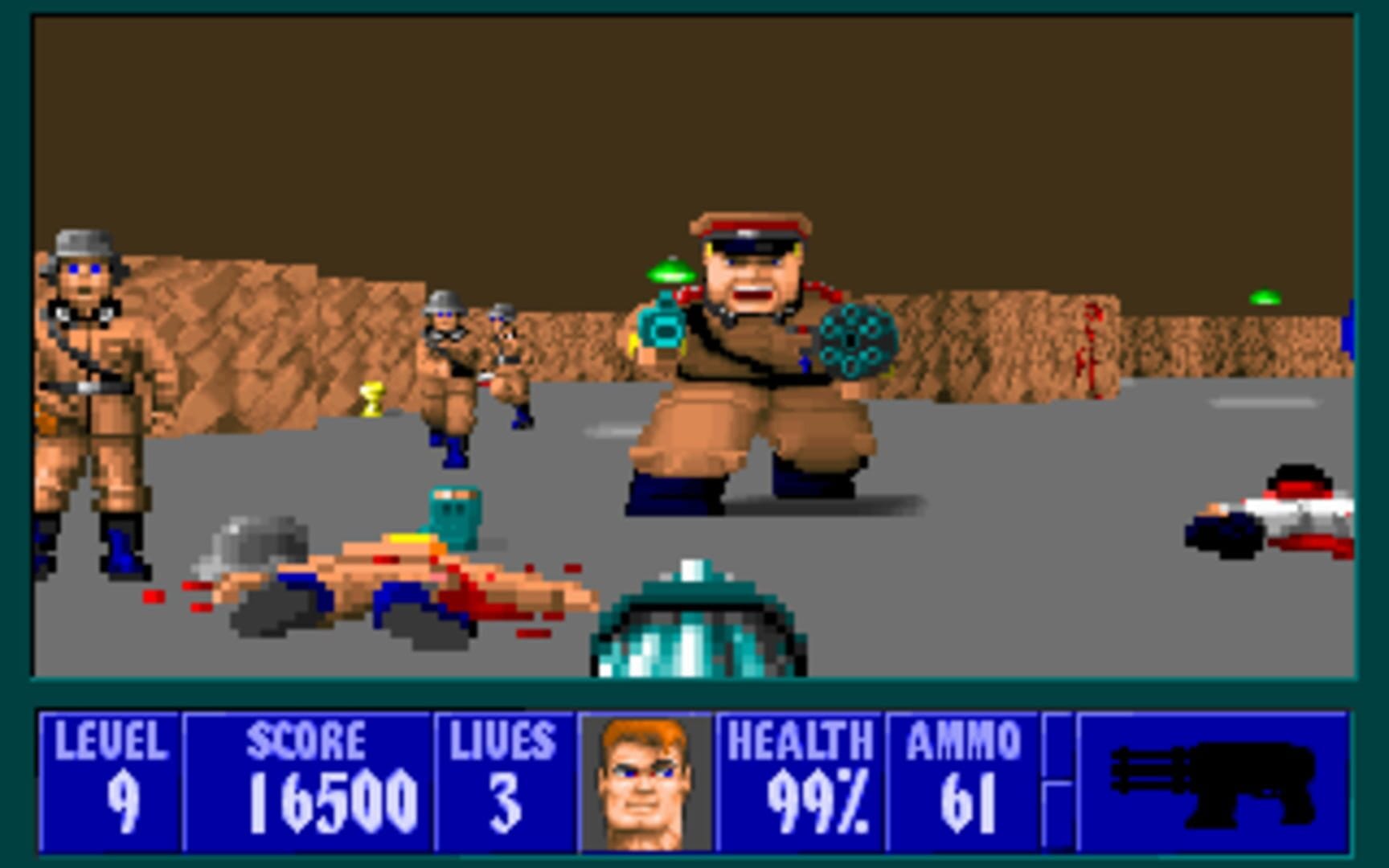
The last mainline entry, Wolfenstein II: The New Colossus (2017), shipped on October 27, 2017. It was a critically acclaimed, narratively ambitious first-person shooter that ended on an open note — the kind of ending that explicitly invites a third chapter. Nine years passed. The studio released two spinoffs in 2019, Wolfenstein: Youngblood and Wolfenstein: Cyberpilot, then pivoted entirely to a licensed project: Indiana Jones and the Great Circle (2024), which launched to an 86 Metascore on Xbox Series X|S and became the highest-rated Xbox console exclusive of that year. The detour was artistically successful, but it also meant that BJ Blazkowicz had been left in narrative limbo for the better part of a hardware generation.
MachineGames had not been entirely quiet about their intentions. In February 2026, studio director Jerk Gustafsson said publicly that the studio intended to finish the trilogy — "we're not done with it" — without specifying when. That same month, a casting call surfaced with plot details centered on a character named Sofiya, and performance capture was reportedly scheduled to begin in April, with shooting extending into 2027. The signals were there for anyone reading them. What Sharma provided on November 12 was not new information so much as official confirmation of what the evidence already suggested.
The script page itself is the most specific artifact to emerge from the announcement. The first chapter is titled "Nazitraz" — a word that communicates genre, tone, and geography in a single coinage — and the opening scene is set inside an interrogation cell. BJ Blazkowicz speaks with a German-speaking character named Otto. Bethesda also confirmed that Brian Bloom returns as Blazkowicz, with Debra Wilson back as Grace Walker, the resistance leader from The New Colossus. MachineGames followed the script reveal with a photograph from a motion capture session. These two images are, collectively, the entire public record of Wolfenstein 3.
What Sharma chose not to say is at least as significant as what she did. The announcement came packaged inside a cascade of Xbox anniversary content — Fable gameplay footage, Halo's Firefight mode coming as a free Winter Update, confirmation that id Software has begun its next project, Slaughter Mode arriving for DOOM: The Dark Ages, 25 original Xbox titles launching on PC via backward compatibility. Wolfenstein 3 was the marquee news item in a deliberately curated information drop. And yet it arrived with almost nothing attached. No platform list means no commitment on whether the game comes to PlayStation. No window means no accountability on delivery. No strategy means the Game Pass question — a structurally important one for any first-party title — goes unanswered entirely.
This is an increasingly familiar mode of announcement for the games industry, and Xbox has deployed it before with mixed results. It addresses fan demand and generates media coverage without binding the publisher to anything. When a franchise has been dormant for nearly a decade, there is obvious value in simply confirming it exists. The danger is that confirmations without commitments can calcify into background noise. The gap between "in production" and "shipping" can be measured in years, and the industry's track record on announced-but-undated projects should temper enthusiasm appropriately. The anatomy of a troubled announcement is not always visible at the moment of its unveiling.
MachineGames' position, however, is more credible than most. The studio has demonstrated an unusual consistency across its Wolfenstein run — Wolfenstein: The New Order (2014) established MachineGames as a studio capable of narrative ambition inside a pulp genre frame, and The New Colossus doubled down on that instinct, dividing audiences but impressing critics. The Indiana Jones project, whatever skeptics expected from a licensed detour, only reinforced that the Swedish developer has genuine authorial range. The confirmed return of Bloom and Wilson suggests continuity of vision, not a reboot or a soft reset. The casting call's introduction of Sofiya as a central character hints at meaningful expansion of the ensemble rather than a replacement for existing leads.
Wikipedia's entry on MachineGames notes that "a third Wolfenstein game has been in development since at least September 2018" — which means the studio has been working toward this for the better part of eight years, interrupted by the pivot to Indiana Jones and presumably by pandemic-era disruptions. Performance capture beginning in April 2026 and extending into 2027 places the project at a stage where the narrative architecture is locked enough to begin recording performances, but far enough from completion that any release date would be speculative. Some observers have suggested 2029 as the earliest plausible window, which would make the trilogy's arc span fifteen years from The New Order's debut.
The announcement's context matters too. Sharma was using the Xbox 25th anniversary as a platform to demonstrate that the first-party pipeline is alive — and Wolfenstein 3 was her most emotionally resonant card to play. It signals that MachineGames remains committed to the franchise that defined it, that Bethesda's internal studios continue to operate with authorial independence after the Microsoft acquisition, and that Xbox is willing to surface long-gestating projects rather than keep them under wraps until they are six months from launch. That last point reflects a strategic choice: build anticipation early and sustain a conversation about first-party output across a multi-year development cycle.
Whether that strategy serves the game or becomes a liability depends entirely on what MachineGames delivers when it finally surfaces footage. For now, what exists is a script page, a chapter title, two actors confirmed, and a franchise finally acknowledged after nine years of silence. It is exactly as much as Sharma intended to give — and precisely calibrated to generate exactly this response. The more interesting announcement will be the next one. Long-running sequel franchises at Xbox have recently been showing signs of life across the board, but Wolfenstein carries a specific cultural weight — a pulp anti-fascist lineage that stretches back to 1992 — that few of its stablemates can match. The question is not whether MachineGames can finish the trilogy. The question is what nine years of elapsed time, a hardware generation of changed expectations, and a world that looks rather different than 2017 will do to the story they intend to tell.