The final trailer for Lanterns (2025) arrived without fanfare, and that itself is a statement. No orchestral swell borrowed from a Christopher Nolan score. No rapid-fire cuts designed to obscure a thin premise. What HBO and DC Studios delivered instead is a two-minute document of deliberate restraint — a show that appears to understand what it is and, more importantly, what it refuses to be.
What the Trailer Actually Shows
The footage centers on Hal Jordan and John Stewart, two Green Lanterns operating on Earth, not in the cosmic theater one might expect from the IP. The visual grammar is unmistakably prestige television: wide shots of flat American landscapes, close-ups held a beat too long, dialogue that sounds like it carries weight. The tone sits closer to True Detective than to Green Lantern (Green Lantern, 2011) — a comparison the creative team has leaned into publicly, and one the trailer earns through atmosphere rather than just assertion.
The central mystery involves a murder with apparent extraterrestrial dimensions, threading the cosmic mythology of the Green Lantern Corps into a grounded procedural framework. Power rings appear sparingly. Constructs are used as punctuation, not decoration. The alien threat implied in the final frames is presented through shadow and suggestion rather than full CGI exposure — a choice that, if maintained throughout the series, reflects genuine confidence in the material.
The Jordan-Stewart Dynamic
Kyle Chandler plays Hal Jordan as a man carrying institutional exhaustion — a veteran of something vast and unglamorous, now operating on a planet that does not fully understand what he is. Aaron Pierre's John Stewart functions as the series' moral and emotional compass, his performance in the trailer suggesting a character whose idealism has not yet been tested by the specific disillusionment Chandler's Jordan radiates. The tension between them is not antagonistic; it is generational. That distinction matters for a long-form narrative.
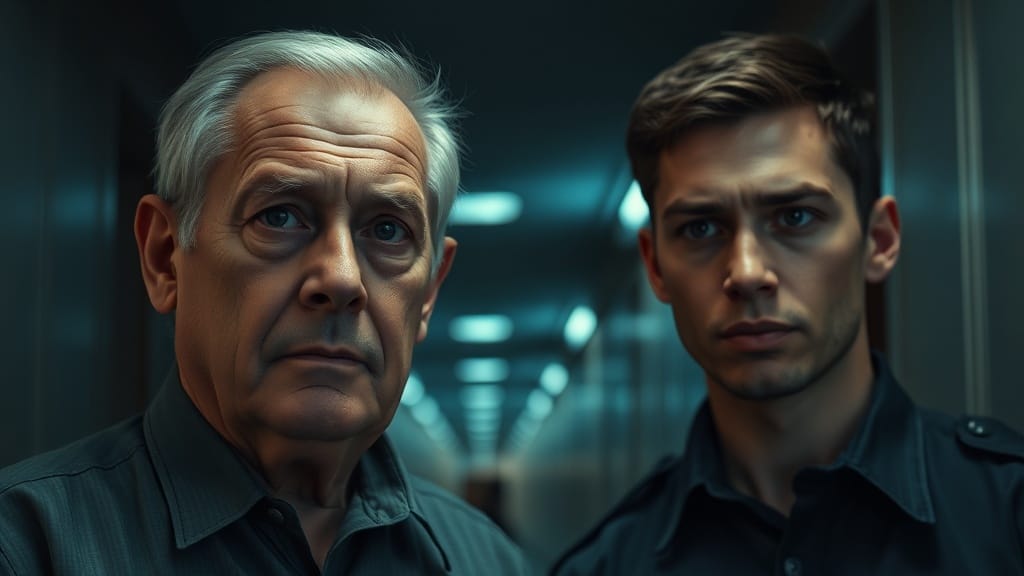
This is the first live-action adaptation to treat John Stewart as a co-equal protagonist rather than a supporting figure, which corrects a structural oversight that dates back decades of DC media. The trailer frames both characters with identical visual weight — same shot duration, same compositional centrality — signaling an intentional parity that the scripts will need to honor.
The Showrunner Calculus
Chris Mundy, whose fingerprints are on Ozark and whose sensibility aligns with methodical, character-driven crime narratives, is the chief architect here. The trailer reflects that pedigree in its pacing and in what it withholds. Superhero fatigue is a real market condition, and Mundy's approach — using the genre mythology as the backdrop for a human-scale investigation — is a structurally sound response to that condition. Whether it sustains across a full season is the open question no trailer can answer.
James Gunn's involvement as DC Studios co-chair adds a layer of franchise accountability. Lanterns is positioned as a foundational title in the new DCU continuity, which means it carries obligations beyond its own narrative. The trailer shows no visible strain from that weight, but serialized television has a way of revealing structural compromises that a curated two-minute cut can disguise.
What the Visuals Commit To
The production design deserves specific attention. The Earth-bound sequences use color grading that drains warmth from familiar American spaces — highways, diners, government buildings — creating environments that feel surveilled rather than safe. When green light does appear, it registers as intrusion rather than salvation. That inversion of the expected emotional register is either the series' defining visual idea or a tonal choice it will abandon once the spectacle demands escalate. The trailer suggests the former. The budget realities of a long season often enforce the latter.

One sequence stands out: a construct formation filmed from below, the camera tracking upward through the light structure rather than pulling back to admire it. It is a framing decision that prioritizes the character's effort over the audience's awe. Small choices like that accumulate into a series' identity.
Measured Expectations
The honest assessment of this trailer is that it successfully demonstrates what Lanterns is trying to be. It does not confirm that the series achieves it. The procedural-meets-cosmic premise is genuinely difficult to sustain — True Detective itself collapsed under the weight of its own ambitions in its second season, and that show had no mythology obligations to a shared universe.
The casting is strong. The visual approach is coherent. The tonal commitment is evident and disciplined. These are necessary conditions, not sufficient ones. What the final trailer for Lanterns earns is legitimate anticipation — the specific kind that comes not from hype, but from evidence that the people making the show know what story they are telling.
That is rarer than it should be. It is worth noting.