Kenichirō Katsura died on September 30, 2026, while receiving treatment for an unspecified illness. He was 59 years old. The news was announced on October 5 by his wife, Satoko Miyachi, herself an animator, through her account on X. A private funeral had already been held with close relatives only. The illness was never named. The gap between his death and its announcement — five days — was itself quietly characteristic of an industry where the individual tends to be absorbed by the project, even in grief.
 Official trailer
There is no single masterwork attached to Katsura's name, no franchise-defining credit that guarantees his inclusion in the retrospectives. That is precisely why his death deserves more than a brief obituary. Careers like his are the structural tissue of anime: not the directors or composers who receive profiles, but the animators and animation directors who arrive on a series, translate a character designer's static drawings into motion, and then move on to the next production. When they die young, the industry moves on with them.
Two Eras, One Set of Hands
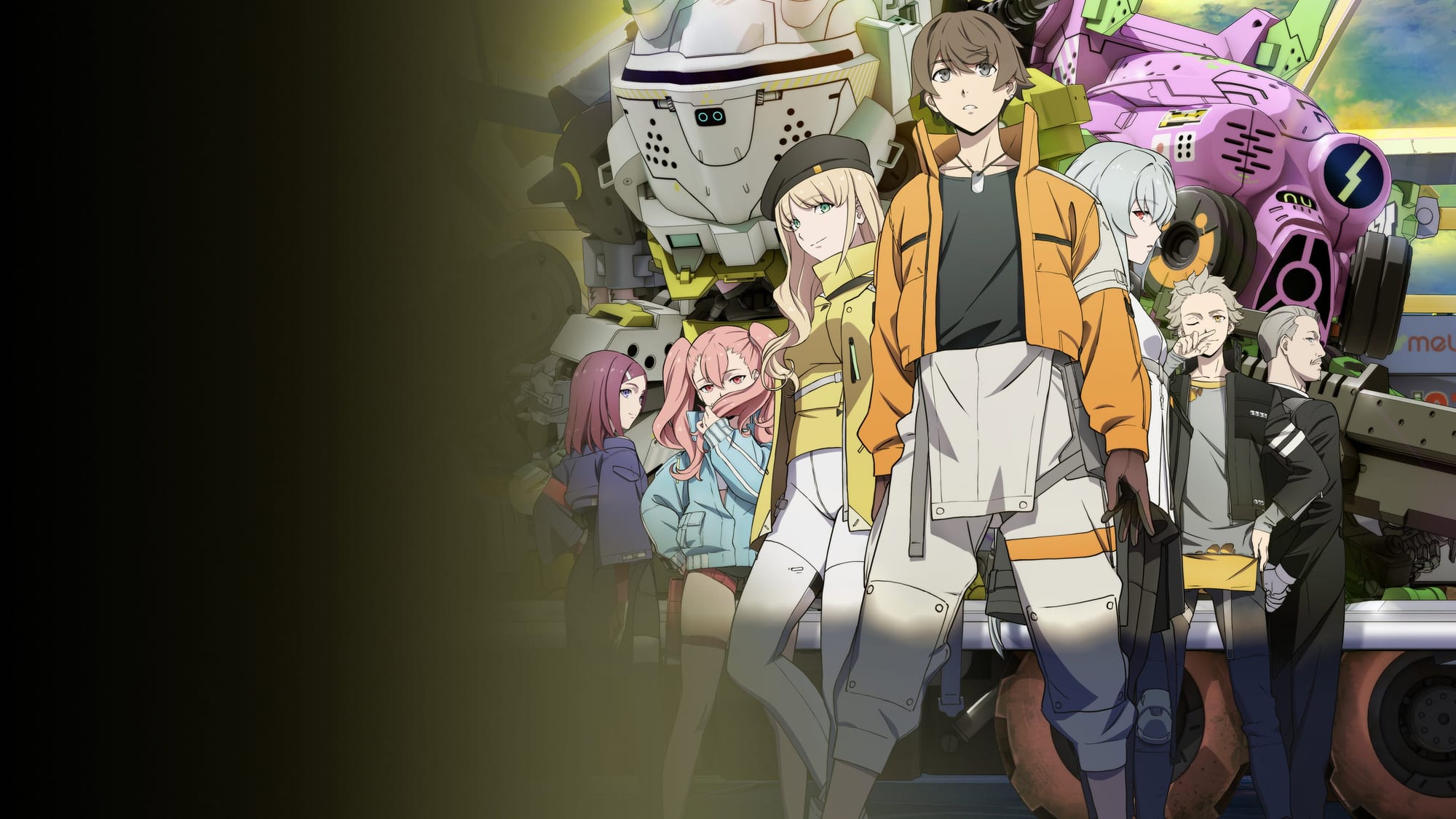
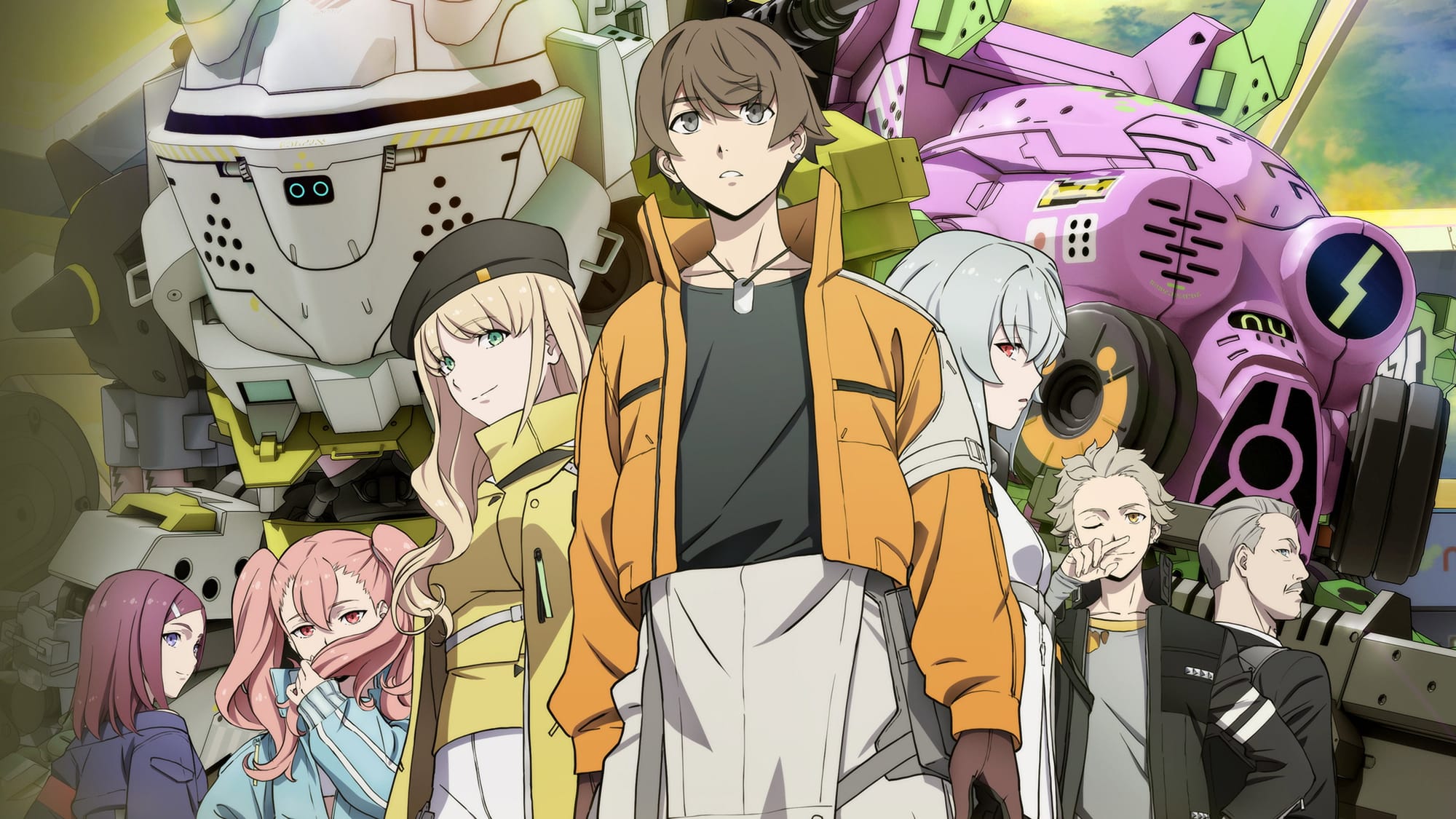
The biographical bracket that has defined coverage of Katsura's death is clean and somewhat misleading in its neatness. On one end: Macross 7 (1994), the Studio Nue and Ashi Production mecha musical that ran 49 episodes from October 1994 to September 1995 and followed a rock band fighting an alien threat with the power of song. On the other: Synduality: Noir (2023), an 8-bit Studio production that aired in two parts through 2023 and 2024, set in a post-apocalyptic world where a young salvager pilots a mech alongside an amnesiac android companion.
Thirty years of anime separate those two titles. What Katsura's role was in each tells you something important about the shape of a mid-level career in this industry. On Macross 7, he served as animation director on four episodes and contributed to the Encore OVA as both episode director and animation director. He also served as character designer for Macross 7 Plus and as character designer and animation character designer for Macross 7 the Movie: The Galaxy's Calling Me! These are not incidental credits. The animation director is responsible for correcting key animation to match the series' visual standard — it is detail work, exacting and largely invisible when done well.
By the time Synduality: Noir came along, Katsura had ascended to the role of chief animation director across both seasons, as well as serving as animation character designer — adapting the original character concepts by neco into the expressive, mobile forms that viewers encountered week to week. That role, chief animation director, is supervisory and corrective at scale: it means reviewing and revising the output of the entire animation staff to ensure visual consistency across dozens of episodes. It is work that multiplies in invisible complexity with every production it touches.
The Depth of the Filmography
Between Macross 7 and Synduality: Noir, Katsura built a filmography that reads less like a highlights reel than like a ledger of service. He was chief animation director on The Fruit of Grisaia, The Eden of Grisaia, How to Keep a Mummy, and eight episodes of That Time I Got Reincarnated as a Slime, among others. He directed the Utawarerumono OVA. He was character designer and chief animation director on Knight's & Magic (2017), a series whose production committee issued a formal condolence statement following his death — as did the Synduality: Noir committee.
As an episode key animator, his reach was wider still: Ranma ½ (1989), Magic Knight Rayearth 2 (1995), Date A Live II, BLUE LOCK 2nd Season. He contributed key animation to Gintama the Movie: Yoshiwara in Flames (2026), released in Japan in February of this year — one of the last productions to bear his name. His credits span more than three decades and cross nearly every genre of TV anime, from mecha to isekai to sports.
What this filmography describes is not the career of a man who failed to ascend. It is the career of a man who did ascend — to chief animation director, to character designer, to episode director — and who kept working at that level across studios and formats into his late fifties. Fifty-nine is not old. It is not, by any reasonable standard, the age at which a working craftsperson should be described in the past tense.
The Question Nobody Is Asking Officially
The cause of Katsura's death has not been disclosed. His family's statement named an illness and nothing else. That is their right, and speculation serves no one. But his death arrives in a context that the anime industry has never successfully argued its way out of.
The conditions facing Japanese animators — particularly those working in the invisible middle tier of the industry, as key animators, animation directors, and chief animation directors — have been described by workers and observers for years in terms that range from grinding to medically dangerous. Many animators in Japan work as freelance contractors, paid per cut or per episode, which means that the structural protections of employment — benefits, guaranteed wages, meaningful recourse against overwork — often do not apply. Karoshi, death by overwork, is a recognized legal and social category in Japan, with government compensation frameworks that acknowledge the phenomenon while doing little to prevent it. The anime industry has produced documented examples of workers hospitalized from exhaustion, cases of animator suicides classified as work-related incidents, and ongoing reports of studios demanding schedules that violate labor regulations.
None of this means Katsura's death was caused by his working conditions. It means that when a 59-year-old chief animation director dies while undergoing treatment for an undisclosed illness, the question of how he was living and working is not an impertinent one. The industry's structural habit — of listing credits without preserving the human context around them, of issuing condolences without confronting causes — is itself a form of institutional forgetting.
Institutional Memory and the Uncelebrated Middle
One detail in the coverage of Katsura's death is worth sitting with. His wife, Satoko Miyachi, is also an animator. She was the one who announced his death to the public. Two animators, married, both working in the same industry — that is not a rare arrangement in Japan's tightly networked animation world. It is also a reminder that the people who make anime are not abstractions. They are workers with families and health problems and careers that stretch decades without the visibility that makes those careers culturally legible.
Katsura worked on Macross 7 when mecha anime was among the most commercially vibrant genres in Japan, when a 49-episode run for a franchise sequel was standard practice, when the craft of animation direction was embedded in enormous industrial machines. He worked on Synduality: Noir in an era of shorter-run, digitally distributed anime where the chief animation director's role is, if anything, more demanding per episode — because the pressure to deliver visual quality across fewer episodes with tighter turnarounds has only intensified as streaming platforms have reshaped what audiences expect.
That arc — from the analog scale of 1990s TV anime to the compressed intensity of 2020s streaming production — is a story the industry rarely tells about itself with any honesty. It is easier to celebrate the output than to account for what it cost the people who produced it. Katsura's filmography will persist in databases and credit rolls. The question of what it means for an industry to repeatedly lose mid-career craftspeople before they reach 60 is the kind of question that tends to dissolve between announcements.
Miyachi asked fans to remember the characters and drawings they loved, and to someday return to his work. That is a fitting request. It is also, quietly, a more specific one than it appears: to watch Macross 7 and know that the faces in it passed through Katsura's hands; to watch Synduality: Noir and understand that the visual coherence of its cast was his sustained labor across two full seasons. The anime industry is presently obsessed with preserving the legacy of its properties. It is considerably less practiced at preserving the memory of the people who built them.
Kenichirō Katsura was born on December 4, 1966, in Fukushima, Japan. He died on September 30, 2026. He was 59.