Today is November 3. In Japan, that date has carried a specific ceremonial weight since 1954 — it is the anniversary of the original Godzilla's theatrical debut, and Toho has long treated it as something close to a national occasion for the franchise. The date is formally known as Godzilla Day, the anniversary of the theatrical release of the original 1954 film in Japan. This year, the occasion has been elevated into a structural release strategy: Godzilla Minus Zero is scheduled to be released theatrically in Japan by Toho on November 3, while simultaneously, the film holds Godzilla Day Early Access screenings exclusively in IMAX in North America, ahead of its nationwide theatrical rollout on November 6. The gap between those two dates — three days — is not incidental. It is the architecture of a premium format launch.
 Official trailer
The near-simultaneous release in Japan and North America marks the first time in the history of the Japan-produced Godzilla series that such a rollout will take place. That fact alone reframes what Godzilla Minus Zero represents commercially. Previous Japanese entries, including Yamazaki's own Godzilla Minus One (2023), reached American audiences weeks after their domestic openings — the standard lag that positions foreign-language films as specialty acquisitions rather than event cinema. Here, the calculus is different. IMAX Early Access exists as a tiered incentive: the format's loyalists get the film before the general public does, and what they are getting has been built specifically for the format they prefer.
Godzilla Minus Zero was shot entirely in Japan as the first-ever Japanese production to be Filmed for IMAX, shot with high-definition digital cameras certified by IMAX, and optimized in sound and imagery unique to IMAX screens. That distinction is technical and commercial at once. GKIDS and Toho's joint announcement framed the film's IMAX certification as a foundational selling point — not a premium add-on applied in post, but an originating condition of the production. For a franchise built on practical suit performance and miniature sets, the decision to shoot natively for IMAX's 1.43:1 aspect ratio is a significant technological and aesthetic commitment. It also raises the stakes for the sequel in a way that a conventional wide release would not. When a film is the first of its national origin to achieve a format milestone, the format itself becomes part of the critical conversation.
What Yamazaki Is Following
The pressure attached to Godzilla Minus Zero is inseparable from what Godzilla Minus One achieved. Filming occurred in Chūbu and Kantō from March to June 2022 on a reputed $10 million budget. The film grossed $116 million worldwide, becoming the highest-grossing Japanese Godzilla film at the global box office. More consequentially for everything that followed, Godzilla Minus One won the Oscar for Best Visual Effects — the first win for any Godzilla film and the first Japanese-language film to earn a win in the VFX category. VFX Director Kiyoko Shibuya became the first woman of color to be nominated in the category, and also the first to win.
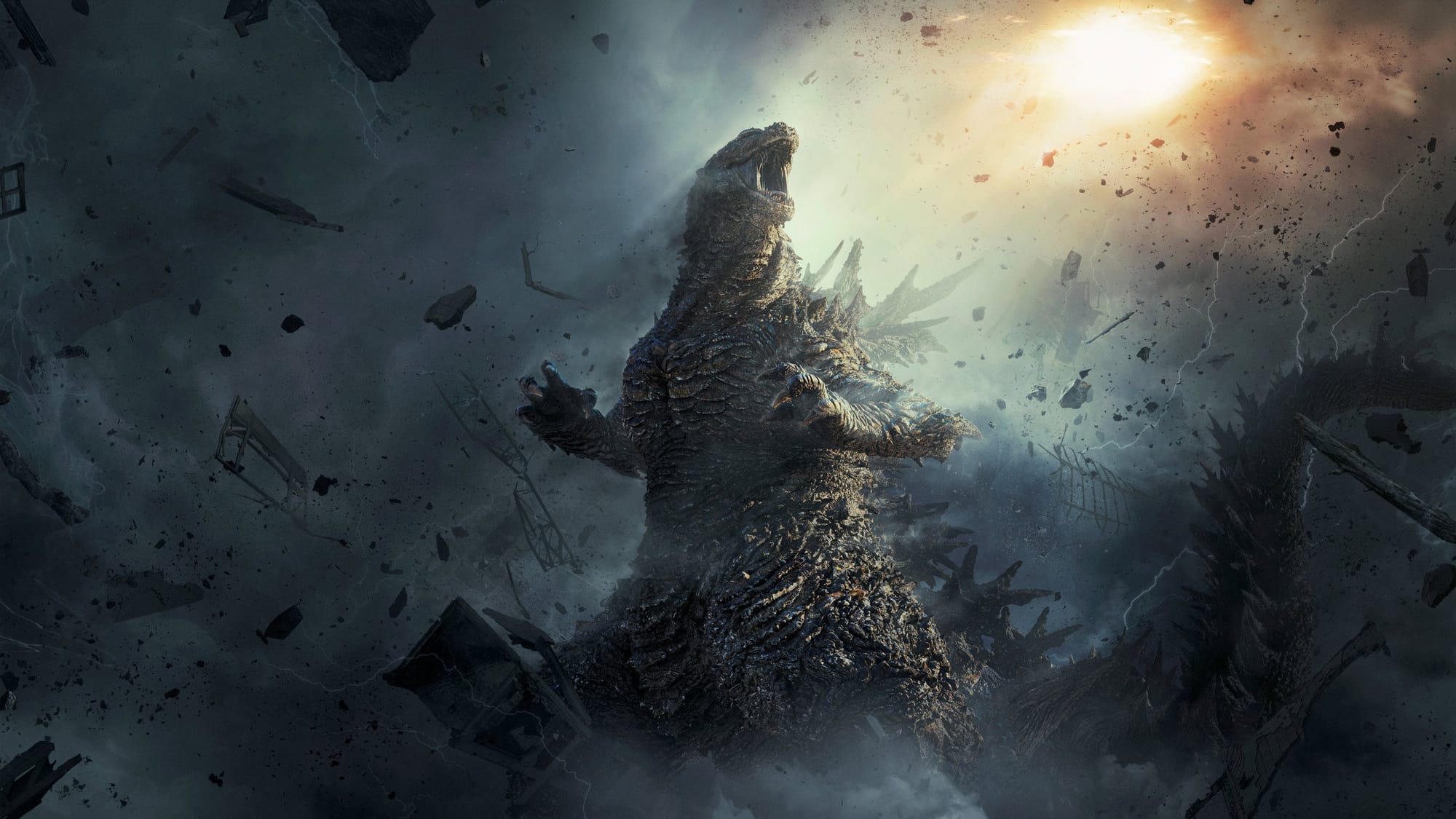
That Oscar win, which landed at the same ceremony that awarded Oppenheimer, carried resonance that extended well beyond box office mathematics. The two films share a historical substrate: atomic devastation, its perpetrators and its survivors, the weight of 1945 encoded into genre fiction. The Academy's recognition of Minus One within that context was received by many Japanese Americans as something beyond a technical award. It was an acknowledgment of what the franchise has always been about — the monster as trauma made visible. Yamazaki now has to answer that legacy with a sequel, which is a considerably harder problem than building something new.
The Sequel's Proposition
Godzilla Minus Zero starts two years after the events of Minus One, and continues to follow the Shikishima family as they and the rest of Japan face a new calamity: King Ghidorah. It is 1949 when the flying dragon decimates Matsumoto City. Kōichi Shikishima (Ryunosuke Kamiki), the former kamikaze pilot who found redemption by taking on Godzilla, is trying to live a normal domestic life with Noriko (Minami Hamabe), whom he has married, and their adopted little daughter, Akiko.
The introduction of Ghidorah as the film's primary threat is a meaningful structural choice. In the original Showa-era films, Ghidorah functioned as an external cosmic menace — a creature with no connection to Japan's specific historical wounds. Yamazaki's recasting of the monster within a 1949 postwar setting rewires that function entirely. The film's villains range from the American military and government to the kaiju Ghidorah, both of which are destructive. The geopolitical underpinnings work as a reminder of what war causes and continues to cause. Hiroshima is also directly referenced in the form of flashbacks, with Min Tanaka playing a character who not only survived 1947's Godzilla attacks but the 1945 bombing.
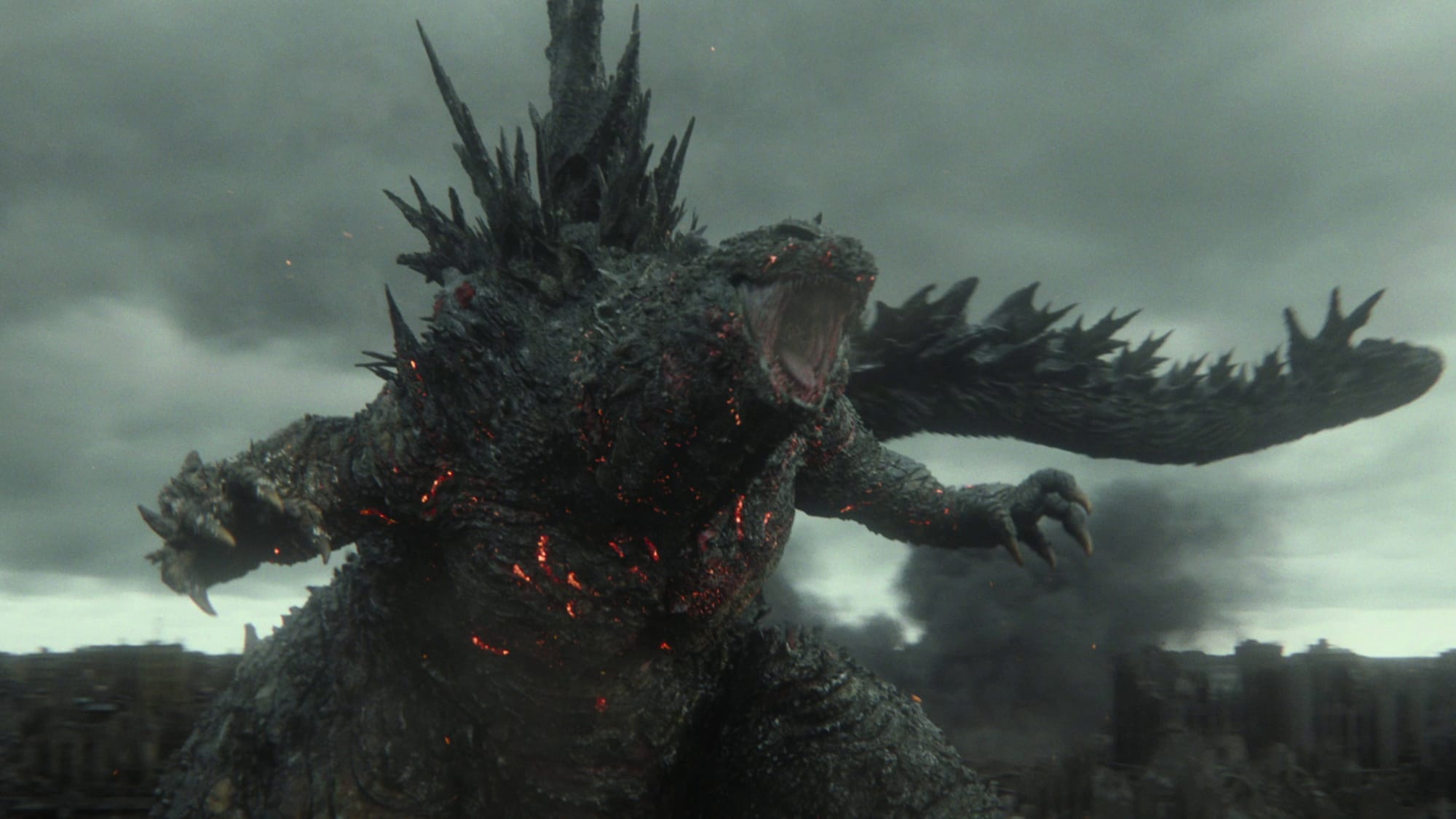
Like 1991's Godzilla vs. King Ghidorah, Yamazaki's film retcons the triple-domed destroyer's origins. The visual effects overseen by Yamazaki are stunning, bestowing a kind of predatory grace upon Ghidorah when he's airborne and a true city-crushing weight to him and Godzilla on the ground. The film stars Ryunosuke Kamiki and Minami Hamabe, with Takashi Yamazaki serving as writer, director, and VFX supervisor. He holds all three roles again — the same configuration that produced the Oscar win, and the same configuration that makes the film's production economy legible. Yamazaki's VFX company, Shirogumi, does in-house what American productions export to effects houses at multiples of the cost.
The Release Strategy as Argument
The IMAX Early Access model does something specific that a standard wide release does not: it concentrates opening-day revenue into the highest per-ticket format available while creating a cultural event around a single date. The Godzilla Day IMAX Early Access will be followed by the wide release in both standard and premium formats on November 6. This marks GKIDS' second stewardship of a Godzilla franchise film from Toho for North American release, following Toho's acquisition of GKIDS in 2024.
The strategy has precedent and pressure behind it. IMAX has spent several years proving that a format-gated early access window generates demonstrable demand — as Kynari documented with Dune: Part Three's record-breaking BFI IMAX presale performance, audiences will move earlier and pay more for format priority when the film justifies it. The question for Godzilla Minus Zero is whether a Japanese production — however Oscar-decorated, however technically innovative — can sustain that level of premium-format urgency in a North American market that has historically processed foreign-language films through an arthouse filter rather than a blockbuster one.
Minus One's performance offered a partial answer. The film was particularly popular in the IMAX format, which contributed to over 13% of its domestic sales. That number matters because it was achieved without the film having been designed for IMAX. Minus Zero eliminates that constraint. The vertical frame ratio, the certified sound mix, the native resolution — these are not retrofitted features. They are the intended presentation. IMAX is the right format here because it's the intended presentation: the first Japanese film Filmed for IMAX.
The film premiered at the 64th New York Film Festival on September 26, where critics responded to its scale. Yamazaki has made a Godzilla film that encapsulates destruction and resilience staged at a massive scale and is necessary to see in a packed theater. That last phrase — necessary to see in a packed theater — is precisely the argument that IMAX Early Access is designed to enforce. The format does not simply enhance the experience; it manufactures the social condition under which the experience is most legible. Godzilla and Ghidorah fighting across 1949 Japan, rendered in IMAX's full frame with its calibrated audio, is a fundamentally different object than the same film projected on a multiplex screen at half the resolution.
This is also, in a quieter way, consistent with a broader pattern in which Japanese cultural production is being received with a seriousness in the West that would have been unlikely twenty years ago. The Oscar win did institutional work. The IMAX certification does infrastructural work. Together they position Godzilla Minus Zero not as a foreign-language specialty title that premium formats happen to accommodate, but as a film that was made for those formats from the first frame. That distinction is what today's simultaneous Japan-and-IMAX opening is designed to communicate. Whether the North American box office validates it begins now.