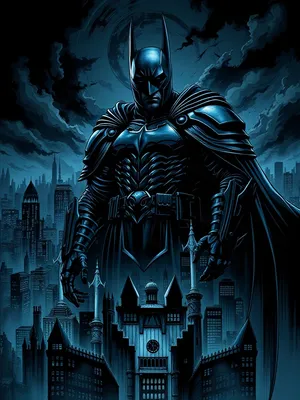
When the Marvel Universe needs to signal existential scale, it increasingly looks outside its own mythology. Godzilla Conquers the Multiverse #1, out today, July 22, pairs Knull — the god of the symbiotes, Marvel's most elaborately constructed cosmic villain of the last decade — with Toho's Godzilla, a licensed property that Marvel does not own and cannot canonize. That choice is not a creative accident. It is a structural admission.
Knull's Problem Is Credibility
Knull had everything a modern Marvel cosmic villain needs on paper: a creation myth retrofitted into decades of Venom continuity, dominion over the living abyss, a design language — black, tendril-heavy, theologically hostile — that reads as genuinely primordial. Rey en Negro (King in Black, 2021) built him up across months of tie-ins and treated his arrival as an extinction-level event. Eddie Brock killed him. The universe moved on. The problem with engineering a god-tier threat is that the moment a street-level character defeats it, the threat ceiling for the entire universe quietly lowers. Knull's defeat did not just end a story — it depreciated the currency of cosmic horror inside Marvel continuity.
So what do you do with a villain whose menace has already been cashed in? You give him a co-star who has never lost that menace, because he exists outside the ledger entirely.
Godzilla as Narrative Infrastructure
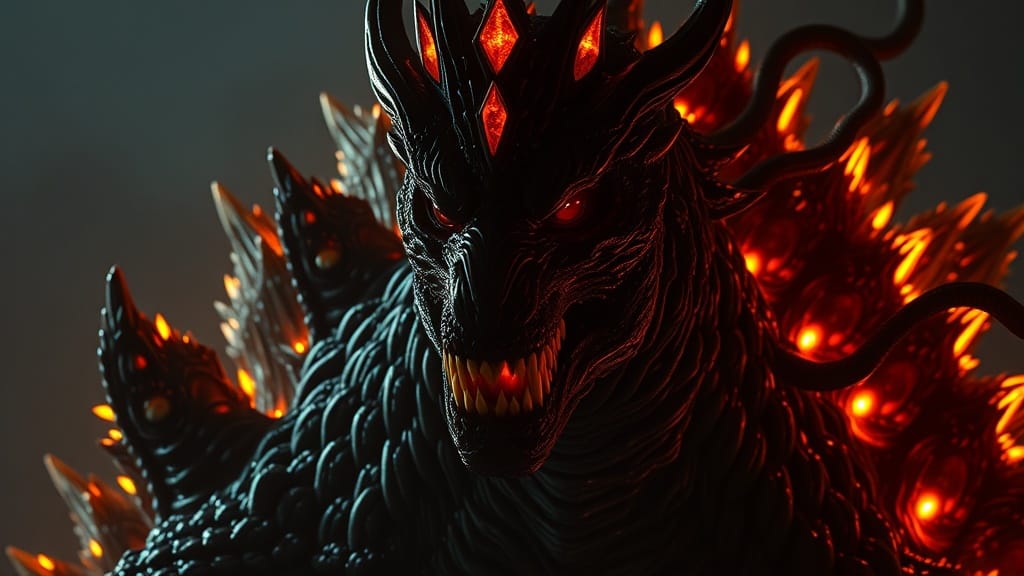
Godzilla does not need an origin retcon. He does not have a defeat on record inside Marvel continuity. He arrives with 70 years of audience-calibrated dread that no amount of comic book housekeeping can undo. In structural terms, he functions less as a character and more as a threat-amplifier — a unit of measurement Marvel's own cosmology can no longer reliably generate from within. When Knull stands next to Godzilla, Knull borrows scale. That is the transaction the crossover is built on.
This is not unprecedented. Marvel's history is threaded with moments where internal narrative inflation forced the company to reach for external anchors — whether through licensed properties, cosmological resets, or the periodic "everything you knew was a shadow of something older" retcon. What is notable about Godzilla Conquers the Multiverse #1 is how little it tries to disguise the mechanism. Godzilla is not Marvel's. He will not stay. The story knows this and proceeds anyway, which suggests the editorial calculus prioritized spectacle legibility over mythos coherence.
The Multiverse as Permission Structure
The multiverse framing does specific work here. It allows Godzilla to be present without requiring Toho's kaiju to be absorbed into 616 continuity — a legal and narrative clean room that lets Marvel stage the encounter without permanent consequences. But that same structure reveals the second-order problem: the multiverse, deployed as liberally as Marvel has deployed it since Guerras Secretas (Secret Wars, 2015), has become a device for consequences-free spectacle. When anything can happen across infinite realities and nothing has to stick, the dramatic weight of any single encounter depends entirely on how impressively it is staged rather than what it costs the characters or the continuity.
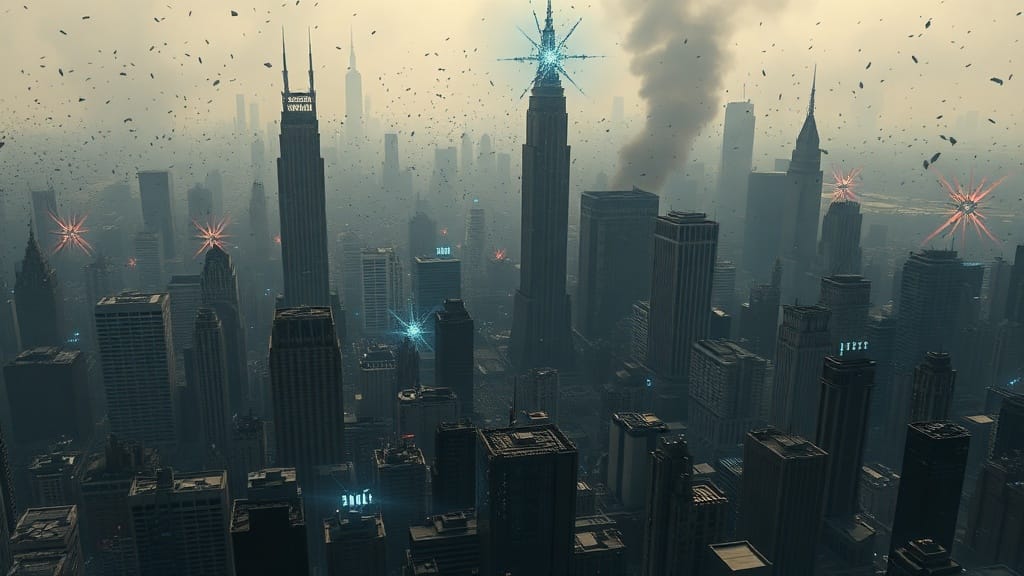
Knull plus Godzilla plus the multiverse is, in that sense, a perfectly logical product of Marvel's current narrative grammar: maximum iconographic voltage, minimum permanent stakes.
What It Actually Delivers
None of this makes Godzilla Conquers the Multiverse #1 a bad comic book. The premise is, by design, irresistible — two of genre fiction's most visually commanding monsters occupying the same panel geography is the kind of image that justifies a first issue on spectacle alone. If the creative team has the discipline to treat Godzilla as more than a hype mechanism and Knull as more than a foil, there is a genuinely interesting story available here about what the symbiote god of darkness does when he encounters something older, larger, and indifferent to his theology.
But the conditions that made this crossover feel necessary are worth sitting with. A universe healthy enough in its own threat architecture does not need to license its crises. The fact that Marvel's answer to "what scares the god of the void" is a Toho trademark is a diagnostic, not just a premise. The monster is borrowed. The anxiety that summoned him is entirely Marvel's own.