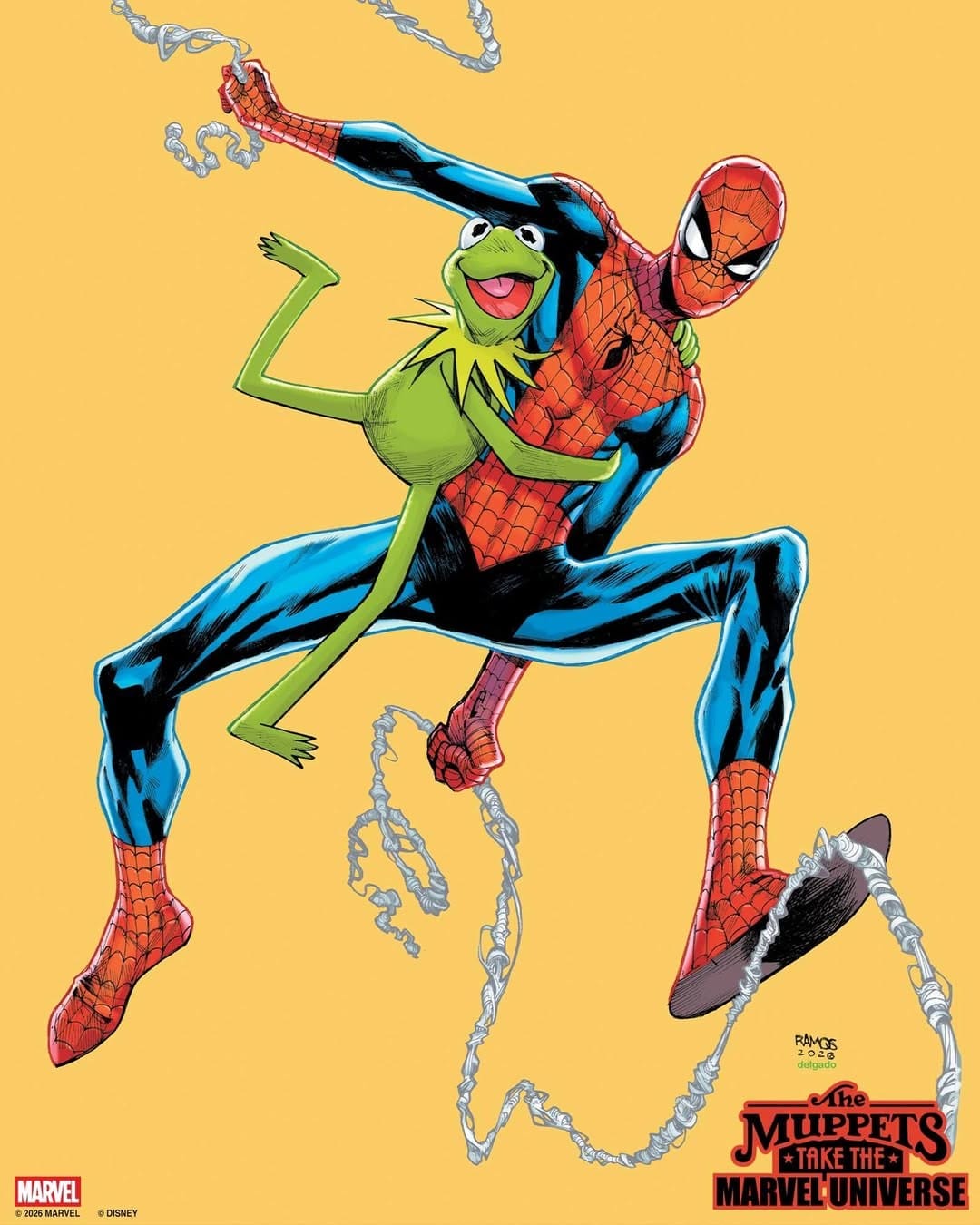
There is a version of The Muppets Take the Marvel Universe #1 that exists purely as corporate fan service: a one-shot anthology built to fill a calendar slot, sell variant covers and remind Disney's quarterly report that two of its most recognisable libraries are, technically, talking to each other. That version is real. But it is not the only thing on the page, and treating it as the whole story misses the more interesting question the book raises about how nostalgia gets processed inside a single corporate owner.
Released by Marvel Comics on September 23, 2026, the one-shot celebrates the 50th anniversary of The Muppet Show (1976). It gathers six short stories from a roster of writers and artists who, for once, seem to have been chosen because they understand comedy rather than because they were available.
Six Stories, Six Bets on Tone
The centrepiece is "The Greatest Show (Not) on Earth" by Chip Zdarsky and artist Pete Woods, a 25-page story in which Rowlf is kidnapped by the interdimensional TV tyrant Mojo. Kermit, Miss Piggy and Fozzie go after him with help from Spider-Man, Black Panther, Wolverine and Emma Frost. Mojo is exactly the right villain: a Marvel character who is already a parody of television ratings culture, dropped into a story about the most famous fictional TV company ever staged.
The rest of the anthology pairs characters by temperament rather than popularity:
- "A Terrible Invention" by Kyle Starks and Mike Henderson puts Dr. Bunsen Honeydew and Beaker in a lab with Bruce Banner and Hank Pym. Three scientists with a documented history of experiments going wrong, and Beaker.
- "Pigs of the Galaxy" by MacKenzie Cadenhead and David Baldeón sends the Pigs in Space crew, led by Miss Piggy, into an adventure with Rocket and Groot.
- "Bad Man" by Phillip Kennedy Johnson and Áthila Fabbio introduces Wolverine to Dr. Teeth and the Electric Mayhem.
- "Just What the Chef Ordered" brings the Swedish Chef into the orbit of Doctor Strange and Clea, with art by Paco Medina.
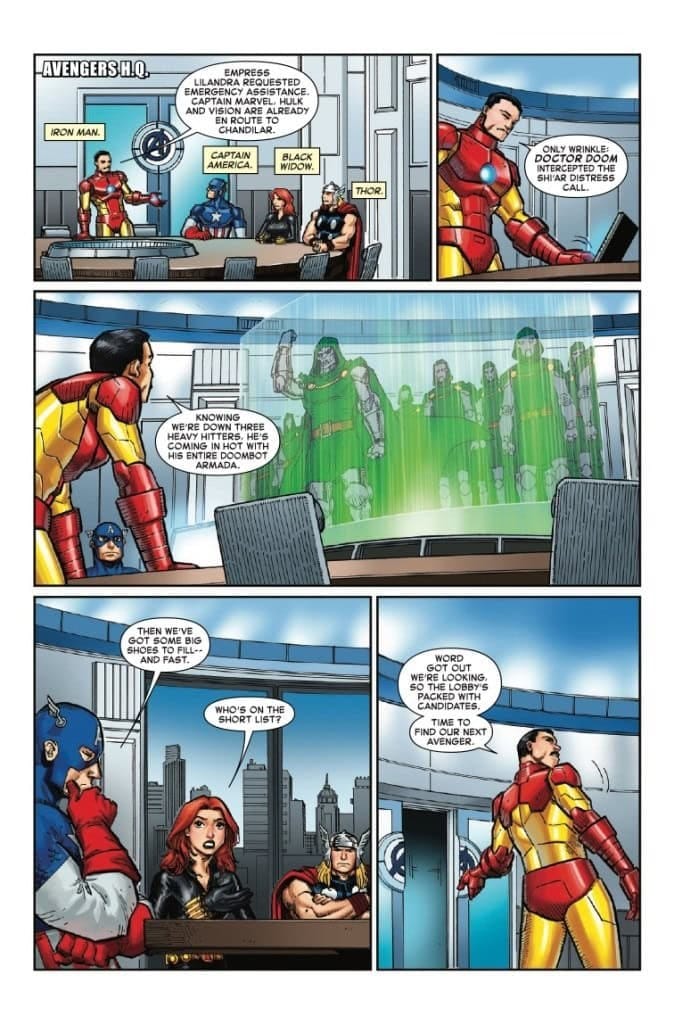
- "Muppets Assemble!" by Adam F. Goldberg and E.J. Su closes the book with the Muppets auditioning for the Avengers.
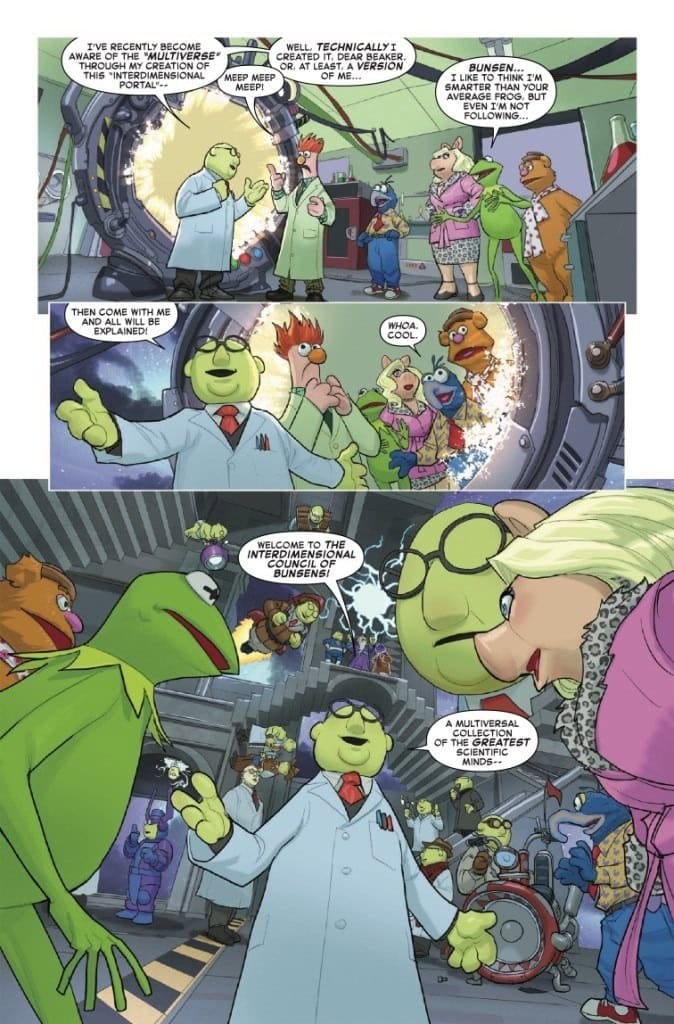
Early reviews have been warm. AIPT scored the issue 8.4 out of 10, praising how the creators capture the Muppets' chaotic comic rhythm while noting that the shorter stories have little room to develop their premises. That is the anthology format's usual trade-off, and here it is mostly a fair one.
The Synergy Trap
Brand synergy inside a single corporate parent is a seductive editorial strategy because it appears to create value from nothing. No licensing fees change hands. No rights negotiations slow production. The brief writes itself: take Property A, introduce it to Property B, let familiarity do the heavy lifting. In practice, the arithmetic only works when the two properties share an emotional register. When the tonal gap is too wide, the collision produces not friction but noise.
The Muppets and Marvel should, on paper, be a bad match. Marvel's house style is serial melodrama: stakes, continuity, consequence. The Muppets run on the opposite principle. Nothing matters, the show must go on, and the building is usually on fire. What makes this one-shot work is that its best stories do not try to reconcile those registers. They let the Muppets puncture Marvel's seriousness, which is exactly what the original series did to every celebrity who walked through the stage door.
Why the Muppets Survive Every Owner
This is not the Muppets' first corporate crossover, and it will not be the last. Since Disney acquired the characters in 2004, they have been revived, rebooted and repackaged across film, streaming and theme parks, most recently in the 50th-anniversary Muppet Show special that premiered on Disney+ and ABC in February. The reason they keep surviving is structural. The Muppets were designed, from their earliest days on television, to absorb whatever format they were placed in and make fun of it from the inside.
That design philosophy belongs to one man. As we explored in our Jim Henson Legacy on what would have been his 90th birthday, Henson's great invention was treating the frame itself as a stage. A Marvel comic is just another frame. The fact that Kermit can walk into it and still be recognisably Kermit is the strongest argument for his creator's method.
For Marvel, the stakes are lower but not trivial. Crossover one-shots have become a reliable part of its publishing calendar, from monster team-ups to Disney-adjacent specials, and anniversary events like the Fantastic Four's 65th show the publisher leaning ever harder on its archive. The Muppets Take the Marvel Universe #1 is the rare case where the synergy produces something with a comic voice of its own. It is still corporate fan service. It just happens to be funny.
Further reading: The Muppets on Wikipedia.