Within 24 hours of its July 7 premiere, Ghost in the Shell (2026) had already been declared both a masterpiece and a desecration. Science SARU — the studio co-founded by Masaaki Yuasa, now steered by a new creative axis — released its first episode to simultaneous applause and organized outrage. The ratio on social media was close enough to be irrelevant. What mattered was the speed: the verdict came before most people had finished watching.
That tells you everything about what was actually being judged.
The Weight of the Shell
Few franchises in anime carry as much accumulated mythology as Ghost in the Shell. Mamoru Oshii's 1995 film didn't just adapt Masamune Shirow's manga — it rewrote the philosophical grammar of the medium, installing questions about consciousness, embodiment, and identity into the visual language of cyberpunk. Kenji Kamiyama's Stand Alone Complex series expanded that grammar into geopolitical territory. Every subsequent iteration — film, series, live-action remake — has been received not as a new work but as a constitutional amendment, subject to strict originalist scrutiny.
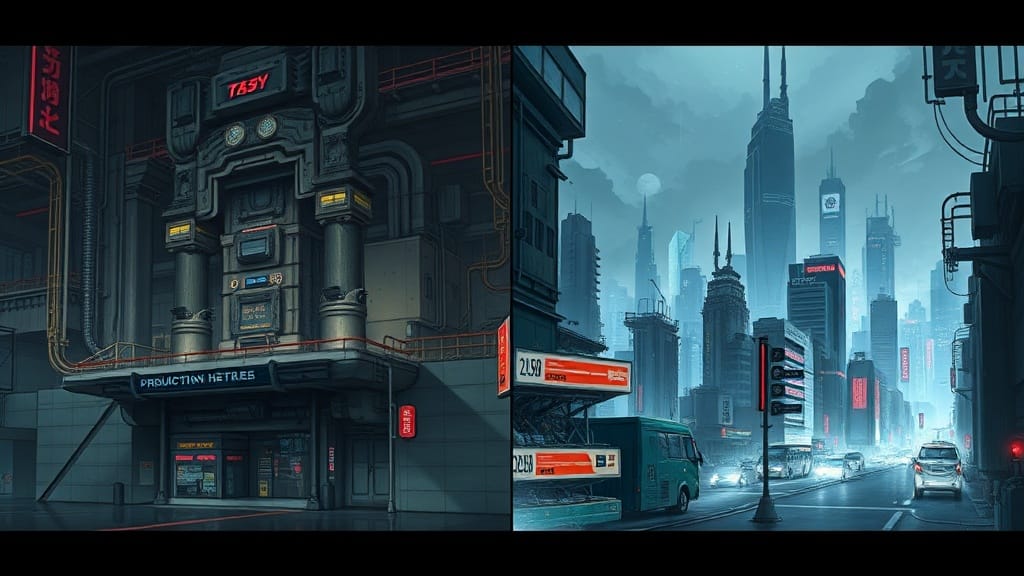
Science SARU entered this space with full knowledge of the minefield. Their aesthetic signature — fluid, expressive, occasionally grotesque character animation prioritizing emotional kinetics over photorealistic precision — is the polar opposite of Production I.G's dense, architectural visual philosophy that defined the franchise's golden era. That contrast alone was enough to mobilize the opposition before a single frame aired.
Quality Is Not the Argument
Here is what the backlash is not about: craft. The 2026 premiere demonstrates a command of pacing and visual rhythm that is, by any reasonable standard, exceptional. Science SARU's handling of Major Kusanagi's interiority — rendered through negative space and strategic stillness rather than expository dialogue — shows a team that understands the source material's philosophical core rather than just its aesthetic surface. The action sequences move with a kinetic looseness that is disorienting precisely because it is unfamiliar, not because it is incompetent.
The negative reaction, when you strip away the hyperbole, is not a critique of execution. It is a claim of ownership. The argument, stated plainly, is that Ghost in the Shell belongs to a specific visual tradition, and any departure from that tradition constitutes a breach of contract with the audience.
That is a coherent position. It is also a deeply conservative one that, if applied consistently, would have prevented Stand Alone Complex from existing in the first place — since Kamiyama's serialized, politically procedural approach was itself a radical departure from Oshii's contemplative, elliptical cinema.
The Ownership Problem
Cultural franchises develop a peculiar gravitational field over time. The longer and more intensely an audience engages with a property, the more the audience begins to experience their interpretive relationship with it as a form of co-authorship. This is not pathological — it is how fandom generates the energy that keeps intellectual properties commercially viable across decades. But it produces a structural tension: the deeper the investment, the more threatening any creative evolution becomes.
Science SARU is not an outside interloper. It is one of the most formally sophisticated studios working in Japanese animation today, with a track record of handling thematically dense material — Eizouken ni wa Te wo Dasu na!, Inu-Oh, Heike Monogatari — with both rigor and genuine originality. The decision to hand them a franchise of this weight was not careless. It was a deliberate bet that formal reinvention is the only sustainable path for a property that has already been exhaustively interpreted in its original register.
The fandom's refusal to grant that bet even 24 hours of good faith is the most revealing data point in this entire episode.
What Divided Audiences Are Actually Saying
The split that emerged within a single day of the premiere maps cleanly onto a pre-existing fault line in anime discourse: the tension between preservation and evolution, between franchise as monument and franchise as living form. Audiences who came to Ghost in the Shell through Oshii or Kamiyama are measuring Science SARU against a fixed standard. Audiences encountering the franchise for the first time — or those who follow Science SARU specifically — are evaluating the work on its own terms.
Neither group is watching the same show. That is the actual division. Not quality, not fidelity to theme, not even aesthetic preference in any neutral sense — but the irreconcilable gap between an audience that needs a text to remain stable and one that needs it to move.
Ghost in the Shell (2026) will not resolve that gap. Nothing could. But it is asking the right question: at what point does the protection of a franchise's iconography become indistinguishable from its calcification? Science SARU isn't desecrating the shell. They're asking whether anyone is still inside it.
Going Upstream to Shirow
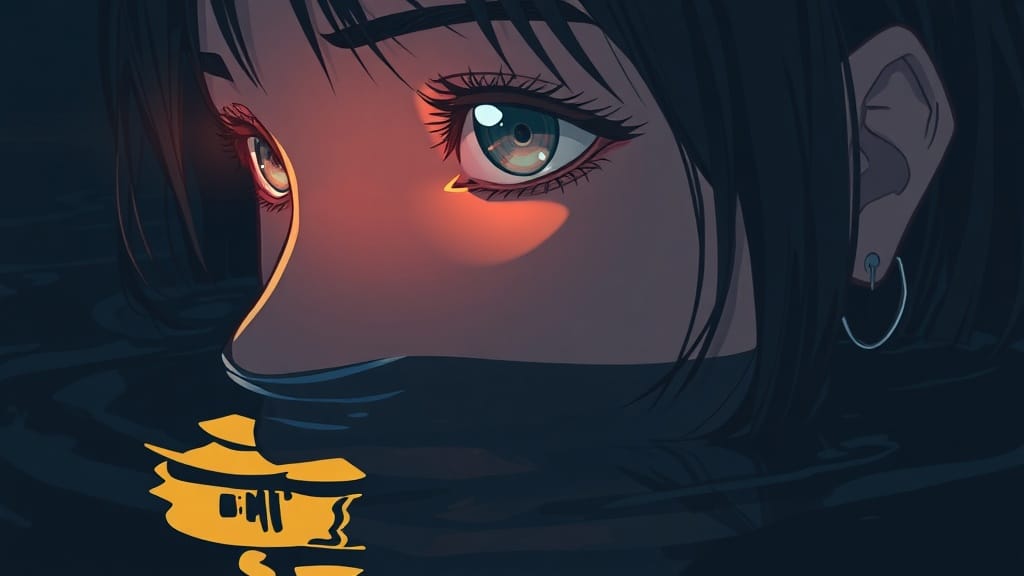
Part of what divides the audience is that Science SARU broke the franchise's hall of mirrors by going back to the source. Rather than inheriting the visual grammar Mamoru Oshii canonized in 1995 — rain-slicked Niihama, teal shadows, the Major descending into dark water — the studio anchored its production design in Masamune Shirow's original manga, serialized in Young Magazine between 1989 and 1990. Prosthetics are not elegant here. Cyberization looks like engineering, not transcendence.
Shirow's work was procedural, obsessed with hardware and darkly comic in ways Oshii deliberately cut. The series restores that texture: Section 9 runs as a bureaucratic machine with budget constraints and interdepartmental friction, and Motoko Kusanagi operates with tactical pragmatism rather than existential melancholy. She is not searching for her soul; she is building a case file. The animation follows the same logic — instead of the fluid, expressive movement of Keep Your Hands Off Eizouken! (2020), cybernetic bodies carry the slight delay of real mass, and thermoptic camouflage glitches rather than shimmers.
That is the bet some viewers read as betrayal. Fidelity to the manga is a method, not a result, and the series is at its strongest when it stops gesturing at its own legacy and commits to the procedural grit Shirow encoded in the source.