George Fenton died on October 5, 2026, unexpectedly, at 76, two weeks short of his 77th birthday. If you grew up in Britain, you have heard his music thousands of times without once thinking of him. If you grew up anywhere else, you have almost certainly watched a whale surface, a weatherman wake up to the same morning again, or a march to the sea in Gandhi (1982) with his notes underneath it. That anonymity was not an accident of his career. It was the career.
Fenton was nominated for the Academy Award five times, across four films, and never won. The usual reading is bad luck: he kept running into bigger names in stronger years. The more interesting reading is that the Oscars, like most prizes for film music, reward a signature. They reward the score you can identify from four bars, the composer whose fingerprints are on the picture. Fenton spent fifty years doing the opposite. He wrote what the film was, not what he was.
An actor who changed his name
He was born George Richard Ian Howe in Bromley, Kent, on October 19, 1949. He never went to music college. He sang in church choirs, fell for the electric guitar at seven, studied the organ at twelve, and then took a turn that explains much of what came after: he became an actor. In 1968 he was cast in Alan Bennett's play Forty Years On, and because another performer was already registered under his name, he took his mother's maiden name instead. George Howe became George Fenton on a stage, not in a studio.
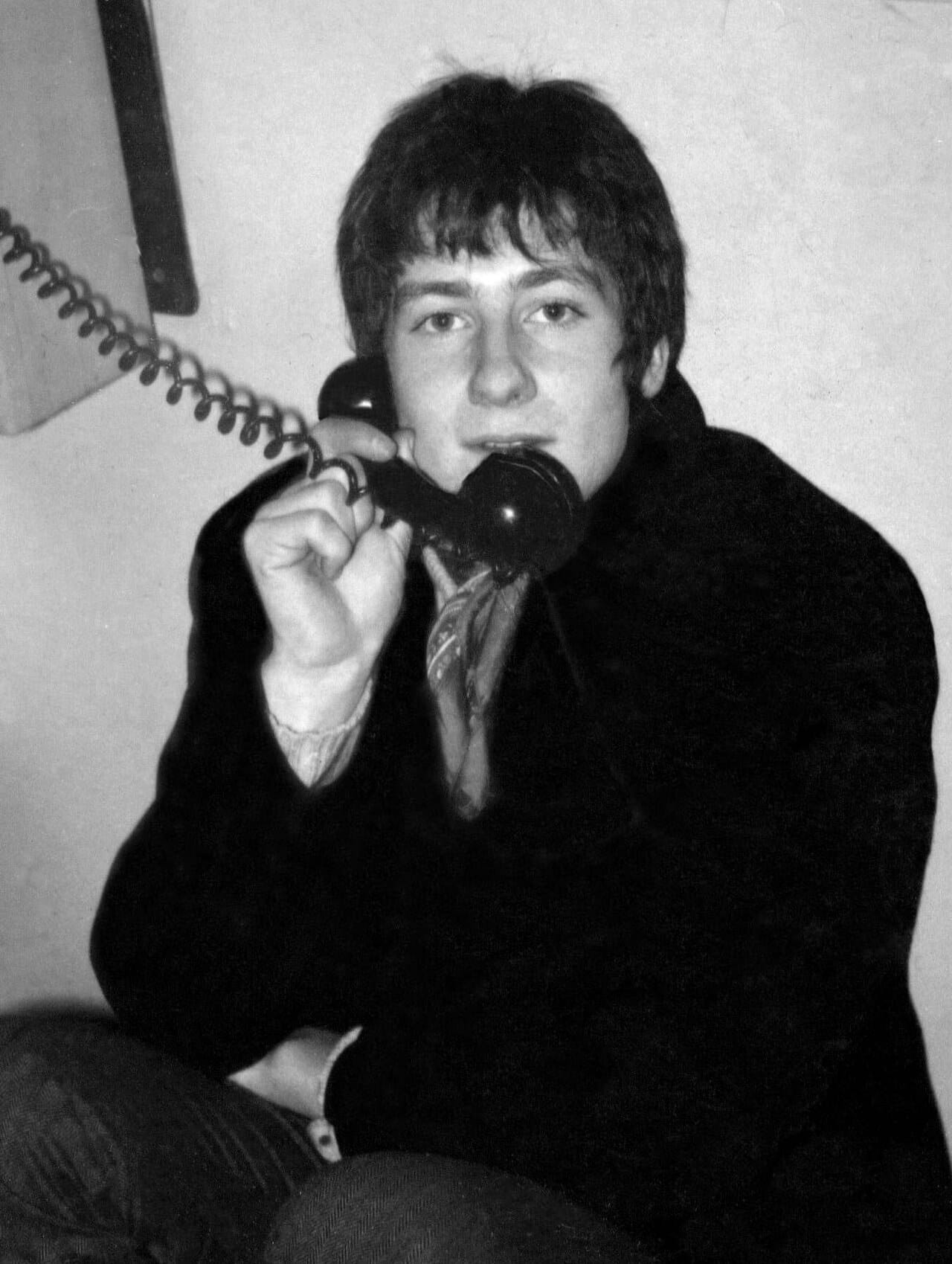
Bennett stayed a lifelong friend and pushed him away from acting and toward composing. The theatre trained him in a discipline most film composers learn late, if ever: music on stage exists to serve a scene that is already happening in front of the audience. When director Peter Gill asked him to score Twelfth Night for the Royal Shakespeare Company in 1974, Fenton had already spent years watching how a cue lands or dies in a live room.
Five nominations, no signature
His film breakthrough came with Richard Attenborough's Gandhi, which he scored with Ravi Shankar and which earned him his first Oscar nomination. Then came Cry Freedom (1987), nominated twice, for score and for the title song written with Jonas Gwangwa. Then Dangerous Liaisons (1988), all lace and menace, and The Fisher King (1991), where he had to hold Terry Gilliam's fever dream and Robin Williams' grief in the same frame.
Put those four scores side by side and they sound like four different composers: Indian classical textures, South African choral protest, eighteenth-century pastiche with a knife in it, and a modern New York fairy tale. That is precisely why voters never crowned him. Compare Hans Zimmer, whose sound became a genre in itself. Zimmer's scores tell you who wrote them. Fenton's tell you what film you are watching.
The same chameleon instinct carried him through Hollywood comedy and romance, from Groundhog Day (1993) to You've Got Mail (1998) and Ever After (1998), and through his long partnership with Nicholas Hytner, beginning with The Madness of King George (1994) and running through The History Boys (2006) and The Lady in the Van (2015). None of these sound alike. All of them sound right.
The quietest collaborator Ken Loach ever had
The clearest proof of his method is the nearly twenty films he scored for Ken Loach, from Land and Freedom (1995) and My Name Is Joe (1998) to The Wind That Shakes the Barley (2006), I, Daniel Blake (2016) and The Old Oak (2023). Loach is famously suspicious of anything that tells an audience how to feel. Fenton's music for him is so sparse it is sometimes barely there, a few bars under a closing image, a thread of strings that withdraws the moment it is noticed. For a composer, that is the hardest brief there is: to be essential and almost absent at once.
The ocean, the poles and the news
And yet the work that reached the most people was the work where he was allowed to be enormous. Beginning with The Trials of Life in 1990 and Life in the Freezer, Fenton became the sound of David Attenborough's natural history era. The Blue Planet (2001) and Planet Earth (2006) won him two Primetime Emmys, a BAFTA and an Ivor Novello, and The Blue Planet became a live concert piece played against the footage on the big screen. In the documentary, the subject is not a character with a point of view. It is a planet. A composer without an ego was exactly what it needed.
Then there is the strangest part of his legacy. By sheer number of listens, his most-heard music is not a film score at all but television: the theme for Bergerac, the music for Bennett's Talking Heads and The Jewel in the Crown, and the BBC news themes that announced the headlines to British households for decades. Television themes are the most anonymous music ever written, as our look at the classic TV themes of a generation shows: everybody knows the tune, almost nobody knows the name.
The price, and what it bought
So the scorecard reads the way it was always going to read. Five Oscar nominations, no statuette. Over a hundred feature films. BAFTAs, Emmys, Ivor Novellos, a CBE. A family announcing that he died "unexpectedly," survived by his wife Amanda, his children Gemma, Grace and Bridget, and six grandchildren. As Deadline's obituary notes, the industry will remember him for Gandhi and The Blue Planet. The fuller picture is on his Wikipedia page, a filmography so varied it reads like several careers stitched together.
Having no signature cost George Fenton the Academy Award. It also bought him something rarer: a body of work in which the films come first, every time. Directors as different as Attenborough, Gilliam, Hytner and Loach trusted him because he never asked a movie to sound like George Fenton. The best tribute is to go back to one of those films and notice, perhaps for the first time, who was holding it together.