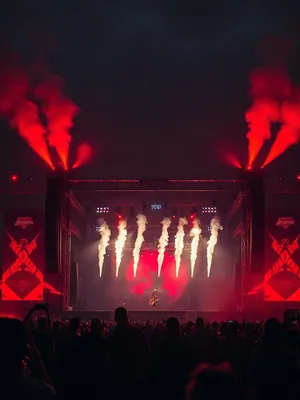
Disney doesn't do announcements quietly. D23 2025, held at the Anaheim Convention Center, was less a fan convention than a coordinated detonation — a carefully staged sequence of trailers, reveals, and executive promises designed to dominate the cultural conversation for months. The question worth asking isn't what they showed. It's what they showed that has a real chance of mattering.
Marvel's Doomsday Bet Dominates the Room
The Russo Brothers' return for Avengers: Doomsday anchored the presentation, and for good reason: it's the single biggest structural bet in Marvel Studios' current slate, tasked with reuniting a sprawling, post-Endgame roster into something resembling the collective urgency the franchise built its reputation on. The footage and cast reveals leaned into scale — an ensemble large enough to justify the "Doomsday" stakes in the title — but scale was never the franchise's actual problem in its post-Endgame phase. Coherence was. D23's presentation answered "how big" emphatically. It answered "how coherent" barely at all, which is the gap every subsequent marketing beat between now and release will need to close.
Pixar's Quiet Bet on Original Ideas
Amid a Disney slate increasingly built on sequels, adaptations, and franchise extensions, Pixar's D23 presence carried a different kind of weight: a studio that built its reputation on original storytelling, trying to prove that reputation still means something commercially. Original animated features have grown genuinely rare at the tentpole-budget level industry-wide, making any studio's renewed commitment to them worth watching regardless of the individual project's specifics — not as nostalgia for Pixar's 2000s output, but as a test of whether original ideas can still justify nine-figure budgets in the current risk-averse studio environment.
Star Wars Returns to the Big Screen
After years of the franchise living almost entirely on Disney+, D23's Star Wars programming signaled a deliberate return to theatrical releases — a meaningful strategic pivot for a franchise that had, by 2025, started to feel more like a streaming content pipeline than a film series. Theatrical Star Wars carries different cultural weight than a Disney+ series drop; it's an event in a way episodic streaming content structurally can't replicate, and Disney's choice to prioritize it again suggests an acknowledgment that the franchise's TV-first strategy had costs the studio was no longer willing to absorb.
What Actually Has a Chance of Mattering
Strip away the staging and the applause lines, and D23 2025 boils down to three genuine bets rather than a uniform wall of good news: whether Doomsday can convert scale into coherence, whether Pixar's original-content push can find an audience in a sequel-saturated market, and whether Star Wars' return to theaters can recapture the event-film status the streaming era diluted. None of those bets are safe. That's precisely why they're the parts of the presentation worth actually tracking between now and whenever each promise comes due — everything else was noise engineered to fill a convention hall for an afternoon.