The rumor hardened into fact on July 13–14, 2026: Adam Driver is in negotiations to play the villain in Marvel's X-Men reboot. No character name was attached to the leak, but every source pointed to the same role. There is only one X-Men villain that moves the needle like this. The conversation is about Magneto.
Driver's résumé splits cleanly into two registers. On one side: Historia de un matrimonio (Marriage Story, 2019), BlacKkKlansman (2018), Annette (2021), a body of work defined by controlled implosion — men carrying enormous interior pressure who eventually crack in precise, surgical ways. On the other: Kylo Ren, the single most compelling villain the Disney-era Star Wars produced, a character who worked not because of the mythology around him but because Driver made rage legible as grief. That dual citizenship — auteur cinema and franchise spectacle — is exactly what this casting requires. The question is whether the MCU will actually use it.
Because the burden here is specific and heavy. Sir Ian McKellen's Magneto in X-Men (2000) and its sequels was built from gravitas and restraint: a survivor whose ideology had been earned in ash and wire. He didn't need to dominate a scene physically because history did it for him. Michael Fassbender's version in X-Men: Primera generación (X-Men: First Class, 2011) ran on something rawer — kinetic fury, a man becoming his own worst outcome in real time. Between those two performances, the character accumulated two and a half decades of audience memory. Driver doesn't inherit a blank slate. He inherits a monument.

The MCU's actual challenge isn't casting Magneto. It's writing a Magneto that justifies existing after McKellen and Fassbender already drew the map.
That's a screenwriting problem before it's an acting problem. Marvel's current creative phase, post-Endgame, has demonstrated an uneven appetite for moral complexity. When it commits — Wandavision (WandaVision, 2021), the better episodes of Loki (2021) — the machinery can support genuinely difficult characters. When it doesn't, villains flatten into motivation delivery systems. Magneto as a character demands the first mode absolutely. His argument — that humans will always persecute what they cannot control, and that mutants who wait for coexistence are waiting for their own extermination — is not a supervillain monologue. It is a coherent political philosophy rooted in historical atrocity. Soften it and you lose the character entirely.
Driver has the tools. His physicality is unusual for the role — where McKellen brought age and Fassbender brought a kind of predatory elegance, Driver brings something more ungainly and therefore more volatile. He's an actor who makes you feel the cost of every decision a character makes. That quality, applied to Magneto's particular form of tragic certainty, could produce something genuinely new rather than reverential.
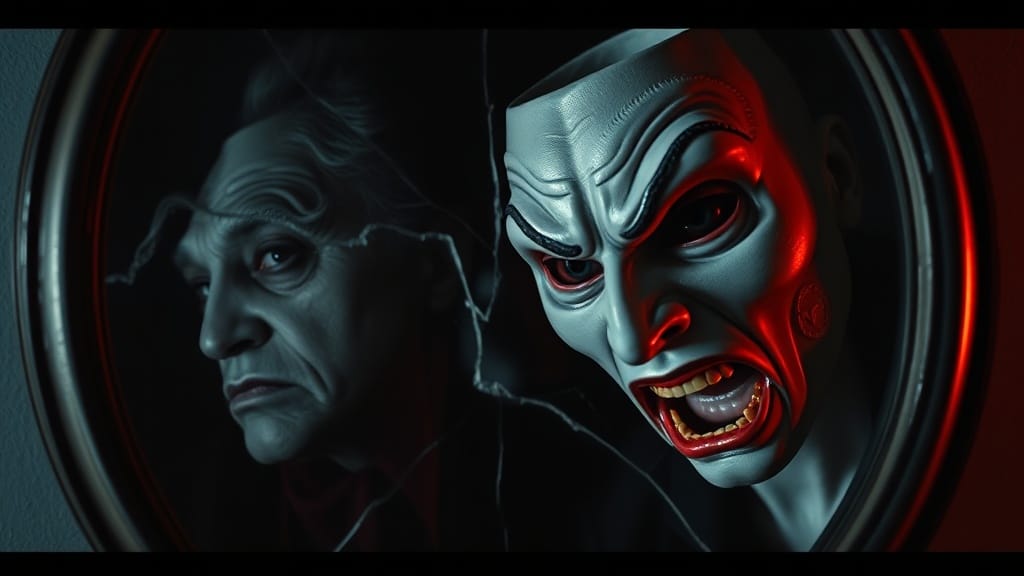
What Marvel must resist is the impulse to sand down the ideology. The MCU has a documented habit of giving villains comprehensible grievances and then undercutting them in the third act — a structural tic that worked as surprise in Iron Man 3 (2013) and has since calcified into formula. Magneto cannot be redeemed in act three. He cannot be wrong in a way that lets the audience off the hook. His tragedy is that he is, by most historical measures, correct about human nature — and that being correct has made him monstrous.
Driver's casting suggests someone in that development room understands the assignment. Whether the final film honors that understanding is a separate bet entirely.
The X-Men reboot has no confirmed release window as of this writing. But the moment Driver's name attached to this role, the project stopped being a question of spectacle and became a question of nerve.